
Palatal expansion at RPDO
Palatal Expander in Richmond, VA for Kids, Teens, and Adults
Somebody told you the upper jaw is too narrow. Maybe it was your child's dentist. Maybe it was your own orthodontist, years ago, right before they said you were "too old" to fix it.
Now you have questions. Does a palatal expander actually help? Does it hurt? And why does it feel like every kid in Richmond has one?
At Richmond Pediatric Dentistry & Orthodontics, our orthodontists provide palatal expanders in Richmond, VA for children, and bone-anchored expansion for qualifying older teens and adults, at four offices across the area. For adults, we typically use MASPE, a slower version of MARPE. This page covers how we decide who needs one, what the first week is really like, and how the process works.
- Pediatric dentists and orthodontists in one Richmond practice
- Four orthodontic offices: Short Pump, Patterson Avenue, Mechanicsville, and Midlothian
- Expanders for children, plus MASPE for qualifying teens and adults
- Free orthodontic consultations
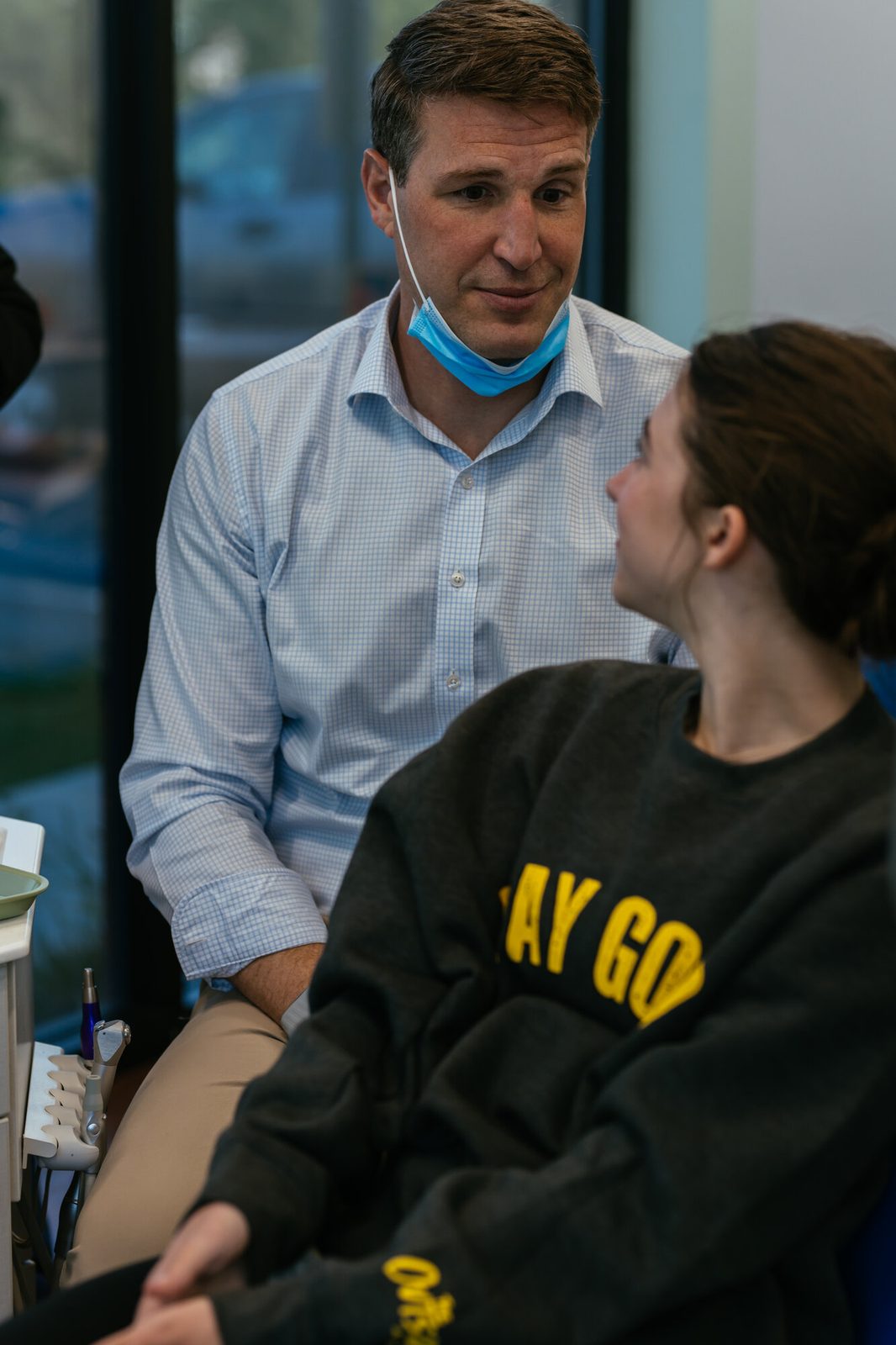
The short answer: A palatal expander widens a narrow upper jaw. Standard expanders work best while a child is still growing. Older teens and adults may qualify for bone-anchored expansion, which at RPDO usually means MASPE. Treatment involves a period of turning the expander, then several months of holding while new bone forms.
What Is a Palatal Expander?
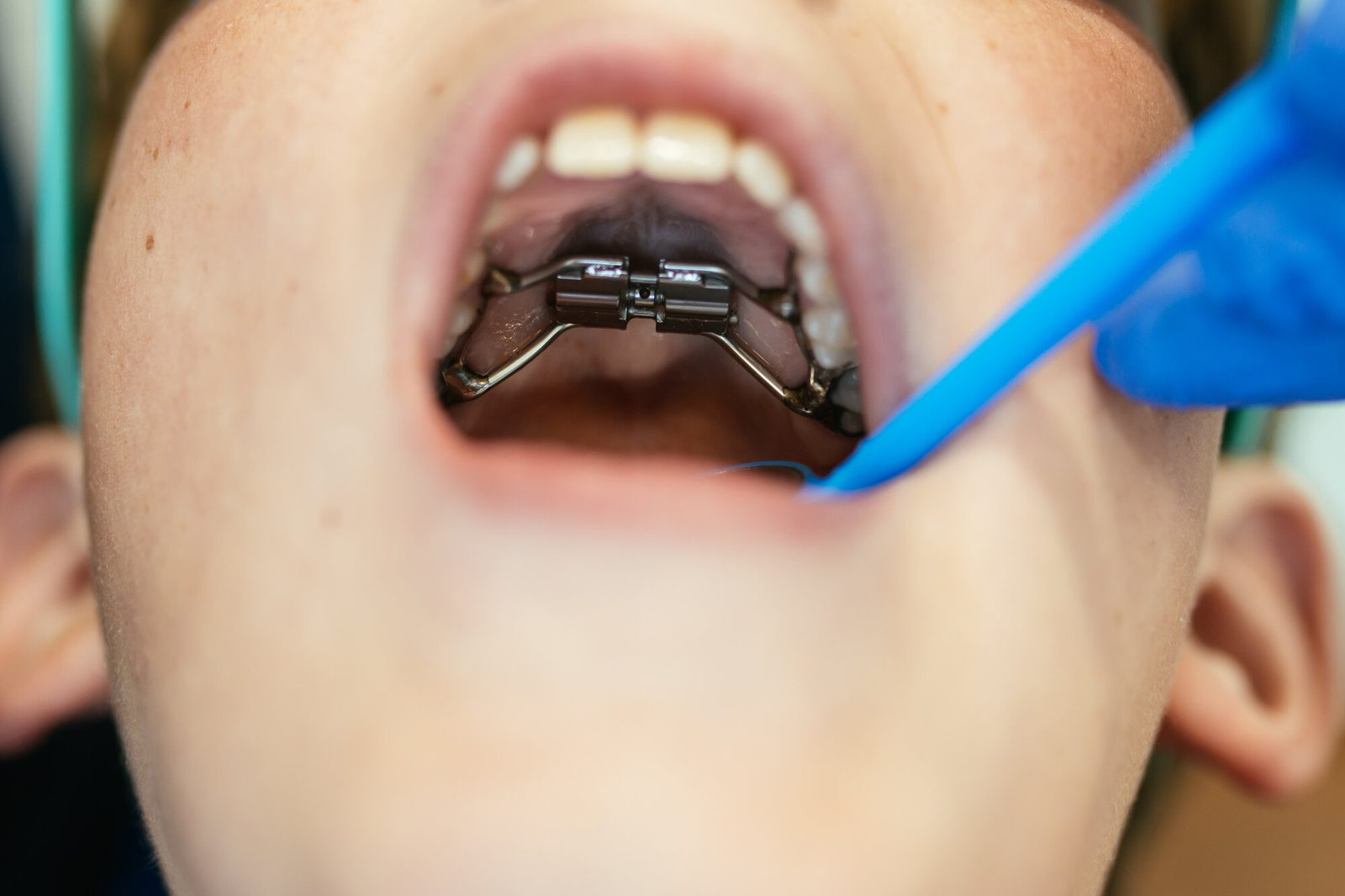
A palatal expander (also called a palate expander) is an orthodontic appliance that widens a narrow upper jaw. It sits against the roof of the mouth and gently pushes the two halves of the upper jaw apart along a seam called the midpalatal suture. New bone fills in the space.
In kids, that seam is still flexible, so a standard expander attached to the back teeth does the job. In most adults, the seam has matured. That is where a bone-anchored expander (MARPE, or its slower form, MASPE) comes in.
The result is a wider upper arch. That can mean room for crowded teeth, a corrected crossbite, and in some patients, a wider floor to the nose.
Does My Child Really Need a Palate Expander?
Not always. A lot of the time, no.
Parents in Richmond ask us this all the time, often after hearing that half the kids on the soccer team have one. It is a fair question. An expander is a real appliance with a real adjustment period, and it should only go in when there is a structural reason for it.
We recommend expansion when we see one of these:
If your child's bite is fine and the only concern is mild crowding, we will usually say so and wait. The American Association of Orthodontists recommends a first orthodontic check by age 7, and most kids we see at that age don't need treatment yet. Our Phase 1 orthodontic treatment guide explains how we make that call.
Want a second opinion on an expander another office recommended? Bring the records. We are happy to take a look.
Signs of a Narrow Palate or Upper Jaw
Some signs are easy to spot at home. Others show up only at an exam.
- Upper back teeth that sit inside the lower back teeth when your child bites down
- A chin or lower jaw that slides off center when the teeth come together
- Crowded or overlapping front teeth, or adult teeth with nowhere to go
- A high, narrow roof of the mouth
- Dark triangles in the corners of the smile (a "narrow smile")
- Mouth breathing, snoring, or a tongue that rests low in the mouth
A posterior crossbite shows up in somewhere between 7 and 23 percent of children, and most are on one side only, according to a review in the Journal of the Canadian Dental Association. Posterior crossbites often persist without treatment, which is why orthodontists usually like to evaluate them while a child is still growing. Our page on crossbite correction in Richmond goes deeper.
Is an expander worth a look?
Three quick taps and we'll point you to a sensible next step. This isn't a diagnosis. Only an exam can tell you that.
Who is the expander question about?
What brought you here?
Which office is easiest for you?
Your next step
How a Palatal Expander Works
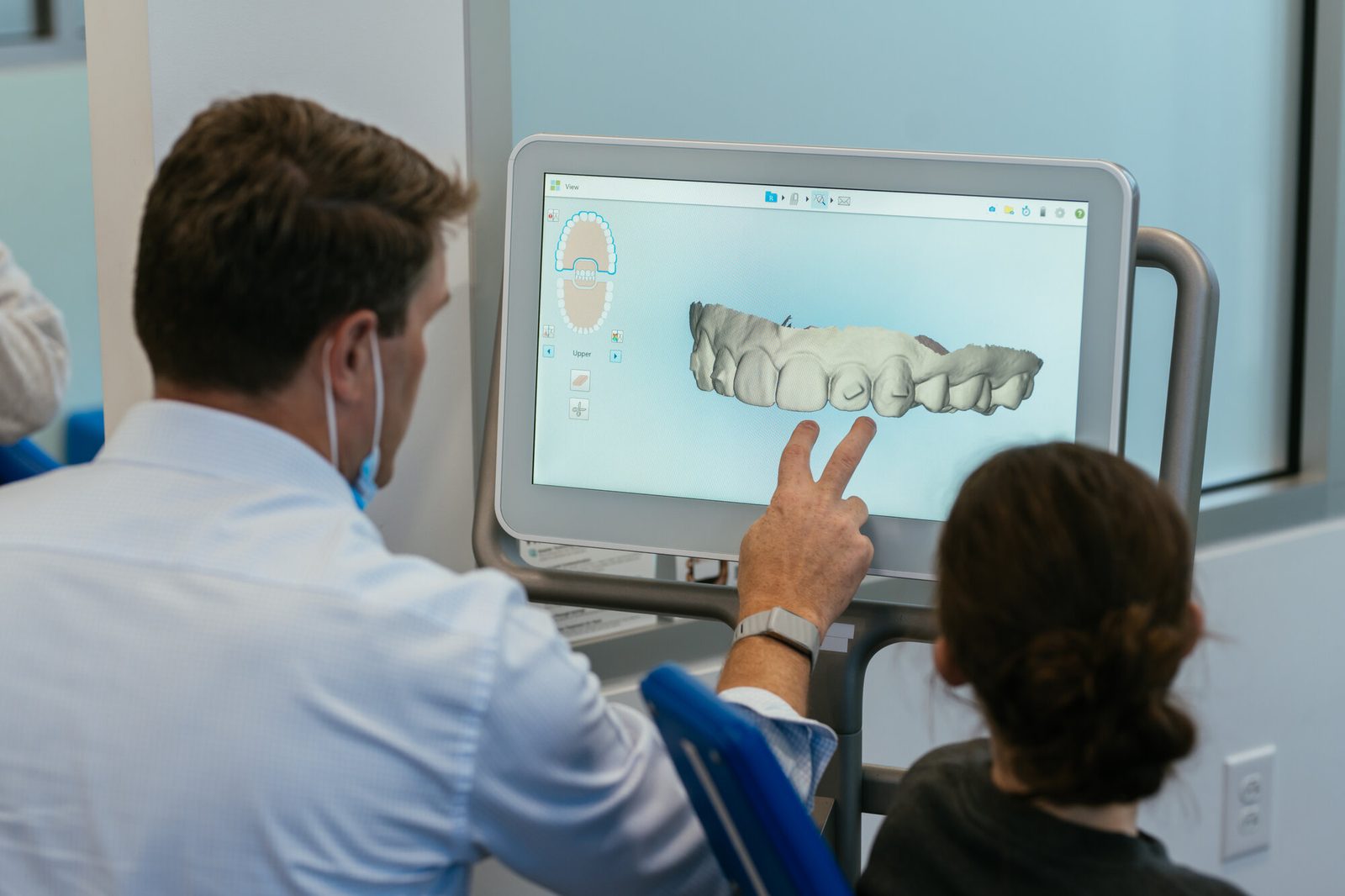
The most common kids' expander is a rapid palatal expander, sometimes called an RPE or Hyrax. It is custom made from a scan of your child's teeth, attached to the upper back molars, and has a small screw in the middle.
Here is how treatment usually goes:
Fitting
One visitThe expander is cemented to the back teeth. No shots, no drilling.
Active expansion
Usually a few weeksA parent turns the screw with a small key on the schedule we give you. Each turn moves it a fraction of a millimeter.
The gap appears
During expansionA space opens between the two front teeth. That means it is working.
Holding phase
About 3 to 6 monthsThe expander stays in, unturned, while new bone fills the seam.
What comes next
VariesMany kids move on to braces or aligners. Some are done until their teens.
The gap between the front teeth surprises almost every parent. It is expected, it is temporary, and in many kids it starts closing on its own once turning stops.
Turning the key
This is the part parents dread. You slide the key into a tiny hole, push it toward the back of the mouth until it stops, and remove it. That's one turn.
It is harder to do the first night than the tenth. Some parents set a phone alarm. Some hand the job to the other parent. We walk you through it in the office before you go home, and we would rather you call us than guess.
One Mechanicsville parent, Karen F., wrote that our orthodontic team member Jeannette "showed so much care when we had trouble turning it and even went the extra mile to meet us at the office near our house to help us out."
Karen F., Mechanicsville parent, Google review
Types of Palatal Expanders
There isn't one expander. The right one depends on age, how mature the suture is, and what we are trying to fix.
| Expander | How it works | Usually a fit for | Fixed or removable |
|---|---|---|---|
| Rapid palatal expander (RPE / Hyrax) | Metal frame on the back molars with a center screw turned by a parent | Growing kids with a narrow arch or crossbite | Fixed |
| Haas expander | Similar to an RPE, with acrylic pads that also press on the palate | Growing kids needing more support against the palate | Fixed |
| Quad helix | A spring wire that expands slowly with no daily turning | Younger kids with a crossbite | Fixed |
| Removable expander | An acrylic plate with a small screw that widens in small steps | Mild cases in younger kids who will wear it consistently | Removable |
| MARPE | An expander anchored to the palate bone with small temporary screws | Older teens and adults whose suture has matured | Fixed |
| MSE | One specific MARPE design with four screws | Same patients as MARPE | Fixed |
| MASPE | A bone-anchored expander turned on a slower schedule | Older teens and adults; our usual approach for adult expansion | Fixed |
| Surgical expansion (SARPE) | Surgery loosens the upper jaw, then an expander widens it | Adults whose suture won't respond to MARPE | Fixed |
For posterior crossbites in kids, a Cochrane review found that a fixed quad helix corrected the bite faster than removable expansion plates, though the evidence is limited. A removable option depends on the child wearing it, so we only suggest one when we think it will work for your family.
Not sure which expander fits?
Our orthodontists will look at the bite, the suture, and the timing, then tell you plainly whether an expander makes sense.
Real RPDO results
What expansion can look like
One patient's upper arch and bite, before and after treatment that included a rapid palatal expander and braces.
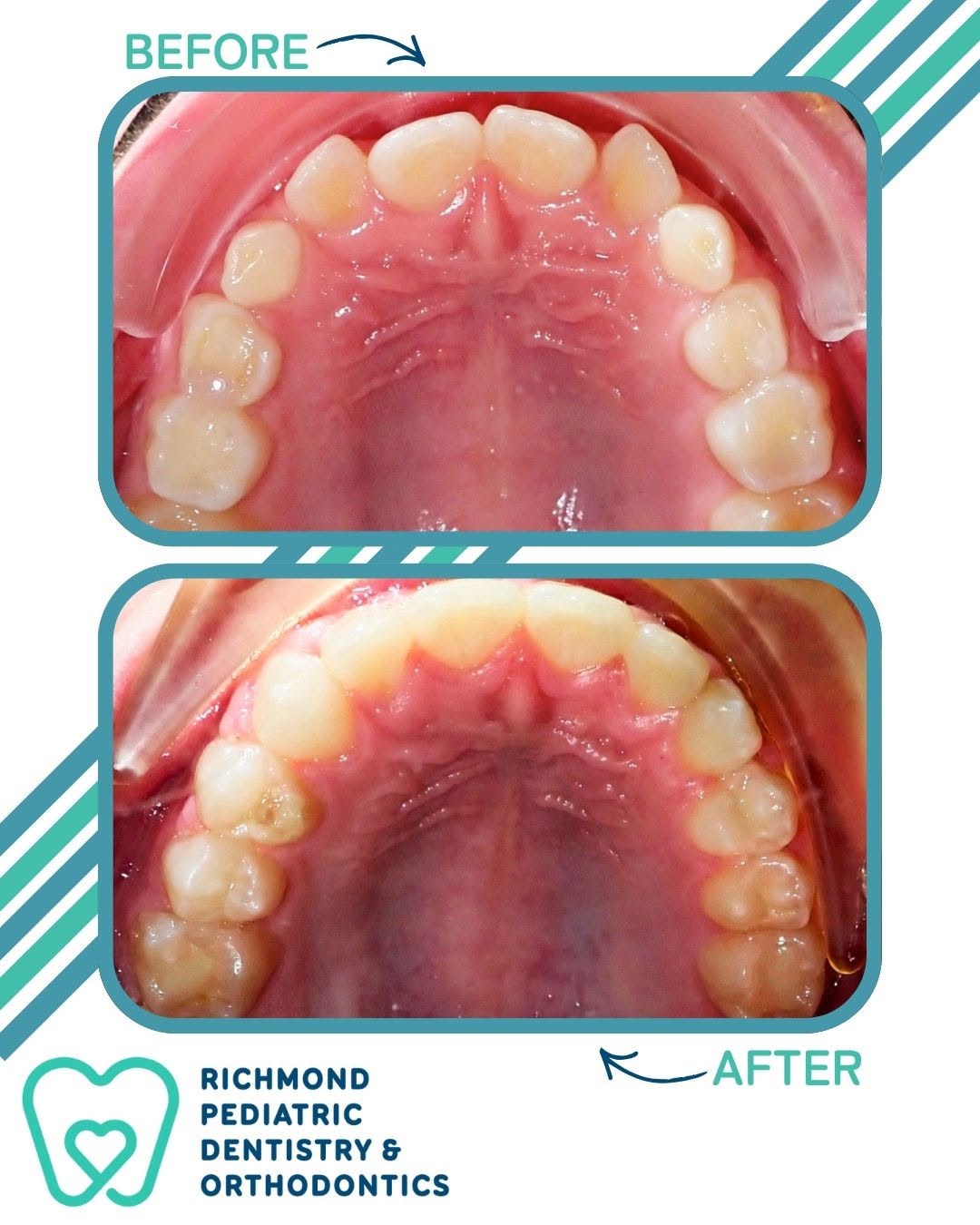
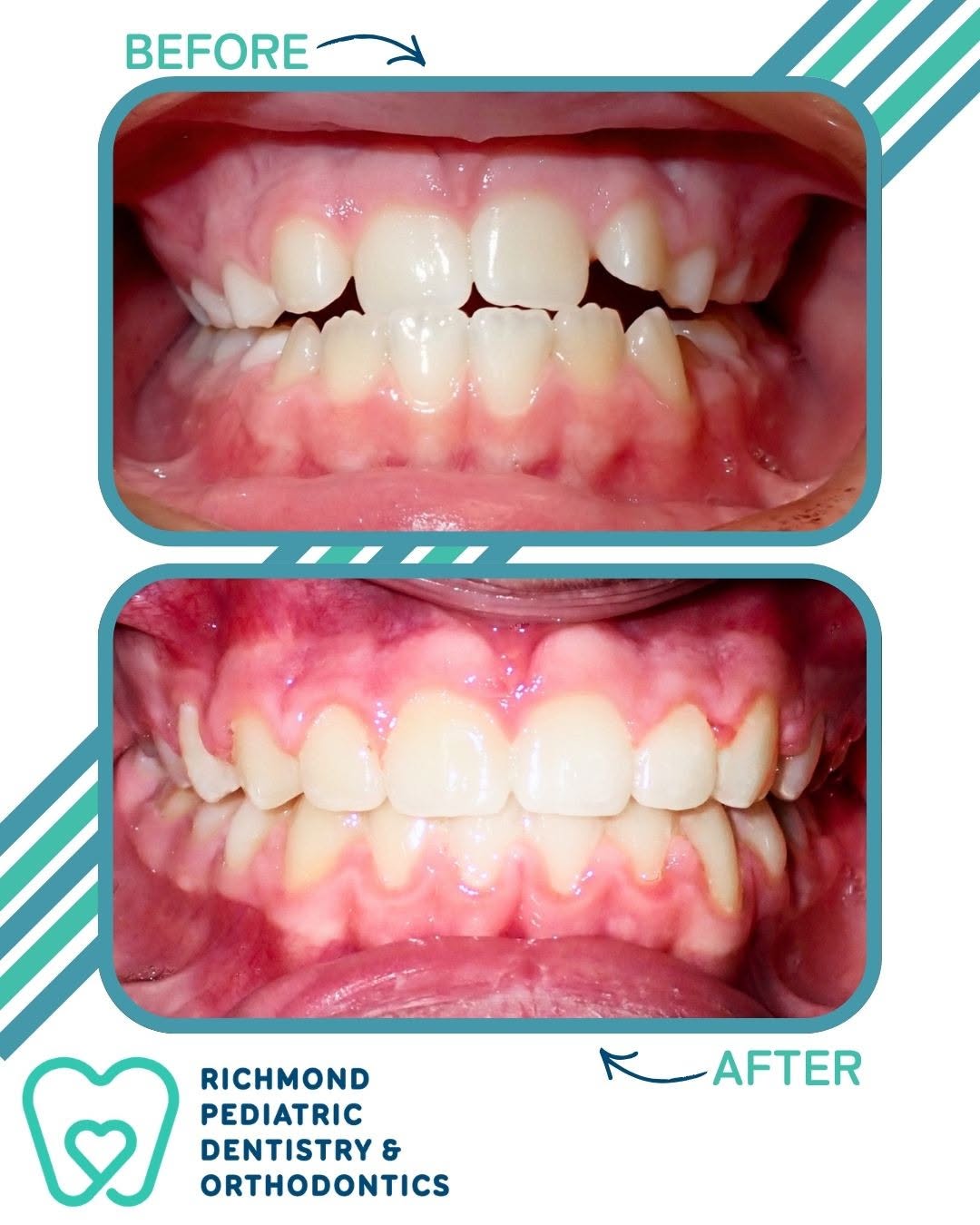
Results vary from patient to patient. Your orthodontist will talk through what is realistic for you.
Palate Expanders for Adults in Richmond: MARPE and MASPE
Adults have been told for decades that expansion is for kids. That was mostly true when the only option was an expander anchored to teeth. Once the suture matures, a tooth-anchored expander tends to tip the teeth outward instead of widening the bone.
Bone-anchored expansion changed that. At RPDO, most adults who are candidates follow the slower MASPE approach.
What is MARPE?
MARPE stands for miniscrew-assisted rapid palatal expansion. Small temporary screws (often four), called TADs or mini-implants, anchor the expander directly into the bone of the palate. When the screw is turned, the force goes into the bone rather than the teeth.
Placement is done in the office with numbing and usually takes well under an hour. With classic MARPE, the screw is turned daily for several weeks. A gap opens between the front teeth, and the appliance then stays in for several months while bone fills in. Braces or Invisalign usually follow to finish the bite.
MARPE vs. MSE vs. MASPE
The names confuse almost everyone. The short version:
MARPE
MARPE is the category: any expander anchored to bone with mini-screws.
MSE
MSE (Maxillary Skeletal Expander) is one well-known MARPE design, developed at UCLA.
MASPE
MASPE is the same kind of appliance turned on a slower schedule. The "S" stands for slow. It is a turning protocol, not a different device and not surgery.
Why we usually choose MASPE for adults
With MASPE, the turns are spaced farther apart than with rapid expansion. Each adjustment is smaller, and the active expansion phase takes longer, often a couple of months or more instead of a few weeks.
For you, that means:
- Smaller adjustments, spaced farther apart
- More time between steps for the suture to respond
- A longer expansion phase overall, which is the tradeoff
Your scans and exam confirm whether MASPE, classic MARPE, or a different plan fits you best.
Am I too old for a palate expander?
Age is a clue, not a cutoff. Imaging studies show the suture matures on its own timeline. Some teens already have a fused seam. Some people in their twenties and beyond still have one that responds.
Published studies of adult bone-anchored expansion report the suture separating in roughly three out of four to nine out of ten patients, and the odds drop as age goes up. A 2021 review in the European Journal of Orthodontics found high success overall, while noting the studies behind it had real limitations. Younger adults tend to do better. That is why we look at your own anatomy, usually with a 3D X-ray called a CBCT scan, before recommending anything.
What if the suture doesn't split?
It happens, and you deserve to hear that before you start, not after. If the seam doesn't separate, the plan changes. Options can include a minor surgical assist that loosens the bone so the expander can finish the job, or a different approach entirely.
What can go wrong with adult expansion
Bone-anchored expansion works well for many adults, and it still carries risk. Reported side effects include:
- Soreness for a few days after the screws are placed
- Tongue irritation from the appliance
- A mini-screw loosening or the appliance needing repair
- Some outward tipping of the back teeth
- Thinning of the bone on the cheek side of the back teeth
- Uneven expansion from one side to the other
We talk through each of these at your consultation. Our adult orthodontics page covers what else adult treatment involves.
Palate Expanders, Breathing, and Sleep
A lot of families find us after reading that expanders help kids breathe better. Here is where the evidence actually stands.
In growing children, palatal expansion can widen the floor of the nose along with the jaw. Some families notice easier nasal breathing afterward. Results vary, and no one can promise them.
An expander is not a treatment for sleep apnea on its own. Only a physician can diagnose sleep-disordered breathing. If your child snores, stops breathing at night, or breathes through their mouth all day, start with your pediatrician or an ENT. We are glad to coordinate with them if a narrow palate is part of the picture.
Adults considering expansion for breathing should work with a sleep physician too. Our airway orthodontics page explains how we fit into that team.
Will an Expander Change My Face?
Social media has turned the MSE expander into a "jawline" trend. Some people are even buying expanders online and turning them without a doctor. Please don't.
What's realistic
Expansion widens the upper jaw and the smile. The nose can widen slightly at the base. Some adults feel their smile looks fuller because the dark corners fill in.
What it is not
A way to sculpt cheekbones or reshape a jawline. Doing it without supervision can damage gums and roots and leave a bite that is harder to fix.
Does a Palatal Expander Hurt? What the First Week Is Like
Most expander pages say "mild pressure" and move on. Here is the fuller picture, from the families who have been through it.
The first two or three days are the hardest.
Expect pressure across the cheekbones and nose after turns. Kids often have more trouble with swallowing and extra saliva than with pain.
Speech changes for a bit.
A lisp is common in the first week or two. It usually fades as the tongue gets used to the new hardware.
Food will get stuck.
Rinse with water after eating. A water flosser or small interdental brush helps clear the space under the appliance. Our tips for cleaning teeth with braces or aligners apply here too.
It gets easier fast.
Most kids stop noticing it within a couple of weeks.
What can you eat with a palate expander?
Soft foods are your friend the first few days: yogurt, smoothies, pasta, eggs, mashed potatoes, soup.
After that, most foods are fine if cut into small pieces.
Avoid:
- Sticky candy like taffy, caramel, and gum
- Hard foods like ice, hard pretzels, and popcorn kernels
- Chewing on pens, pencils, or fingernails
Our list of braces-friendly candy works for expander kids too.

How Much Does a Palatal Expander Cost in Richmond?
Every plan is different, so we go over your costs at your consultation, before anything starts. Adult expansion varies more than a child's expander because it can include 3D imaging, the mini-screws, the appliance itself, and the braces or aligners that follow. What affects the cost:
- The type of expander. A bone-anchored adult expander involves mini-screws and more imaging than a child's expander.
- How long treatment runs, including the holding phase and follow-up visits
- What comes next, since many patients move on to braces or aligners
- Your insurance benefits
Insurance. Many dental plans with orthodontic coverage help with an expander when it is part of treatment, often up to a lifetime orthodontic maximum. For adults whose expansion is tied to a documented breathing or sleep problem, medical insurance sometimes contributes. We will help you check.
Payment plans. See our flexible financing options and insurance information.
Get your numbers before you decide
Bring your insurance card to a free consultation and we will walk you through the plan and the costs.
What Richmond families say
Real Google reviews from families across the Richmond area
Where to Get a Palatal Expander in the Richmond Area
Palatal expander and adult expansion (MASPE) consultations are available at our four orthodontic offices. Our West End office on Gaskins Road is pediatric dentistry only, so West End families usually head to Short Pump or Patterson Avenue for orthodontic visits.


Richmond (Patterson Avenue)
8503 Patterson Ave, Richmond, VA 23229

Mechanicsville
7521 Right Flank Rd #110, Mechanicsville, VA 23116

Midlothian
13901 Coalfield Commons Pl, Suite 101, Midlothian, VA 23114
Families come to us from Henrico, Glen Allen, Tuckahoe, Chesterfield, Hanover, and across RVA. Midlothian families can also read about airway orthodontics in Midlothian.
Why Richmond Families Choose RPDO for Palatal Expansion
Pediatric dentists and orthodontists in one practice.
Our pediatric dentists often notice a narrow palate or crossbite at a routine cleaning, years before anyone would think to see an orthodontist. That means earlier answers and one set of records.
Orthodontists who treat every age.
Dr. Kevin Bibona and Dr. Payton Cook are specialty-trained orthodontists who treat children, teens, and adults. Dr. Bibona trained at the VCU School of Dentistry and was named a 2025 Virginia Living Top Dentist.
Over 100 years in Richmond.
We are privately owned and have cared for Richmond families for generations.
We tell you when you don't need one.
An expander is a tool, not a default.
Palatal Expander FAQs
Straight answers to what Richmond families ask us most.
Does a palate expander hurt?
Most kids and adults feel pressure, not sharp pain. It is strongest for two or three days after the appliance goes in and briefly after turns. Over-the-counter pain relief approved by your doctor usually handles it. For adults, placing the mini-screws uses local numbing, and soreness afterward typically lasts a few days. With MASPE, turns are spread out over a longer period than with rapid expansion.
What is the best age for a palate expander?
For a standard expander, results are most predictable while a child is still growing, often between about 7 and the early teens. That is why the AAO recommends an orthodontic check by age 7. Older teens and adults may still be candidates for bone-anchored expansion, such as MASPE.
How long do you wear a palatal expander?
Active turning usually lasts a few weeks. The expander then stays in place for about three to six months so new bone can fill in. Adult expansion with MASPE takes longer to turn, often a couple of months or more, followed by a similar holding phase. Braces or aligners often follow.
Why is there a gap between my child's front teeth?
The gap means the two halves of the upper jaw are separating, which is the goal. It is temporary. In many kids it begins closing once turning ends, and braces can close any remaining space.
Can adults get a palate expander without surgery?
Many can. MARPE and its slower form, MASPE, use small temporary screws in the palate bone to widen the upper jaw without jaw surgery. Success is higher in younger adults, and a 3D scan helps predict whether your suture will respond.
What is the difference between MARPE and MASPE?
Both use mini-screws to anchor the expander to the palate. MARPE generally refers to rapid expansion, while MASPE uses a slower turning schedule. At RPDO, MASPE is our usual adult approach when bone-anchored expansion is appropriate.
Is a palate expander worth it as an adult?
For some adults, expansion may be considered when a narrow upper jaw contributes to a crossbite, crowding, or other bite problems. Whether it makes sense depends on your anatomy, your goals, and the other options in your case.
It is a commitment of several months plus follow-up orthodontics. A consultation with scans will tell you whether you are a good candidate.
Will insurance cover a palate expander?
Dental plans with orthodontic benefits often help when the expander is part of treatment. For adults with a documented sleep or breathing problem, medical insurance sometimes contributes. We check your benefits before treatment starts.
Can a palate expander fix sleep apnea?
Not on its own. Sleep apnea must be diagnosed by a physician. In some patients with a narrow upper jaw, expansion can be one part of a plan a physician leads.
Why are so many kids getting palate expanders?
Awareness of crossbites, crowding, and breathing has grown, and expanders are a common early tool. That doesn't mean every child needs one. We recommend expansion only when an exam shows a structural reason.
Free orthodontic consultations
Talk With a Richmond Orthodontist About Expansion
You don't have to figure out suture maturity or crossbites on your own. Come in, let us take a look, and you will leave knowing whether an expander makes sense, which kind, and what the next steps look like.
Not ready to come in? Start with a virtual smile assessment.
Helping Richmond Smile
Comprehensive Pediatric Dental and Orthodontic Care
At Richmond Pediatric Dentistry & Orthodontics, we strive to deliver radiant, healthy smiles to families across Richmond, VA. Our kind and caring team is committed to providing professional, high quality service in an environment that is relaxing and fun.
Our goal is to make your dental and orthodontic journey with us an amazing experience. Get started today!
