
no age limit
Am I Too Old for Braces? A Richmond Orthodontist's Honest Answer
No. There is no upper age limit for braces. Adults get braces in their 30s, 40s, 50s, 60s, 70s and beyond. What matters more than your age is the health of your gums, your teeth and the bone that supports them.
If those are healthy, your teeth can move at 35, 55 or 75. The biology that moves teeth doesn't switch off at a certain birthday.
Reviewed by Dr. Kevin Bibona, DDS, orthodontist with a certificate in orthodontics from VCU School of Dentistry and a member of the American Association of Orthodontists. Last reviewed October 2026.
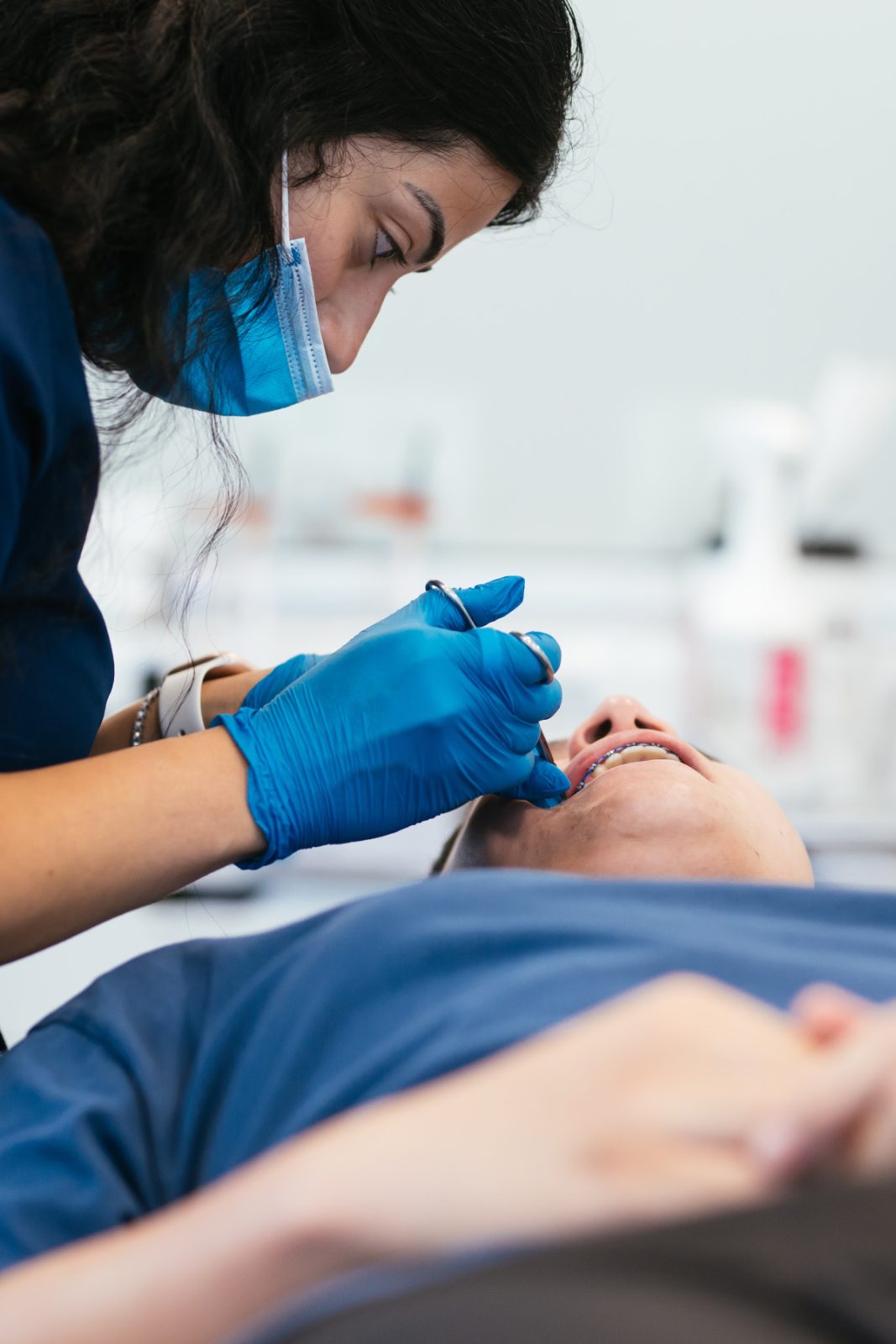
sound familiar?
A Question We Hear Often From Richmond Adults
Many people who ask us this have been thinking about it for years.
Maybe you had braces as a teenager, stopped wearing your retainer, and watched your bottom teeth crowd back in. Maybe braces weren't an option when you were a kid. Maybe you just don't smile in photos anymore and you're tired of it.
Then the doubts show up.
Will I look ridiculous at work? Is it worth it at my age? Did I wait too long?
Here's what we tell adults from Short Pump to Midlothian: the calendar isn't what decides this. Your gums, your bone and your goals do. A short exam answers the question for your mouth specifically.
You would also be in good company. According to the American Association of Orthodontists, one in three orthodontic patients is an adult.
the short version
At a Glance: Adult Braces at RPDO
- Age limitNone. Healthy gums and bone support are what matter.
- How long it takesMost adult treatment runs 12 to 24 months. Minor corrections can finish faster.
- OptionsMetal braces, tooth-colored ceramic braces, and Invisalign or Spark clear aligners.
- Typical cost in Richmond$3,000 to $7,000 or more, depending on your case.
- ConsultationFree, with no referral needed.
- WhereFour orthodontic offices in Short Pump, Mechanicsville, Midlothian and on Patterson Avenue in Richmond.
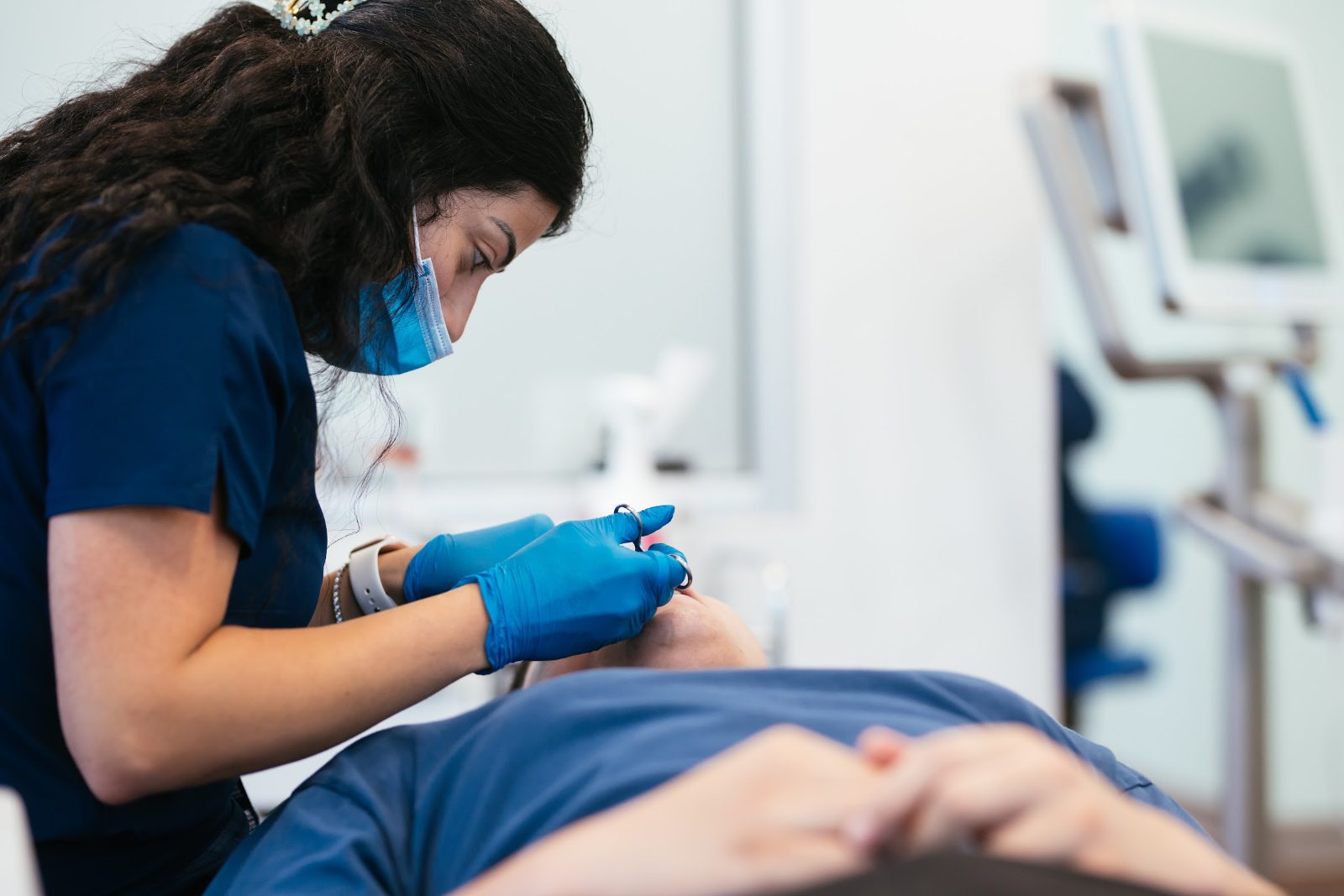
what we check instead
What Actually Decides Whether Braces Will Work for You?
Age gets the attention. These are the things we check instead.
Gum health
Teeth move through bone, and the gums protect that bone. If you have active gum disease, it needs to be under control before treatment starts.
That doesn't rule you out. It means your dentist or periodontist treats the gums first, and then we move teeth.
Bone support
As we get older, the bone and gum tissue around the teeth can thin. We look at this on x-rays at your consultation.
Most adults have plenty of support to work with. When support is reduced, we plan lighter, slower movement and set realistic goals.
Dental work you already have
Crowns, bridges, implants and missing teeth all change the plan. They rarely end it.
Brackets and aligners can work with crowns. Implants don't move, so we plan around them. Bridges connect teeth together, so they need extra thought.
Sometimes your general dentist will want your teeth lined up first so a crown or implant can be placed in the right spot. We coordinate with them.
Your health and habits
Some medical conditions and medications, especially ones that affect bone, can change how teeth respond to treatment. Tell us your full health history so we can plan for it.
Grinding, clenching and smoking matter too. None of them automatically disqualify you, but we want to know about them up front.
free, no referral needed
Wondering If It's Too Late for Your Teeth?
decade by decade
Braces in Your 30s, 40s, 50s and Beyond
Here's what we usually see at each stage.
In your 30s
Plenty of adults start treatment in their 30s.
A lot of people in their 30s had braces as teens and their teeth have shifted. Others are fixing crowding they've lived with since middle school. How long treatment takes depends more on your case than on your age.
In your 40s
Crowding often gets gradually worse with age, especially in the lower front teeth. Many people notice it for the first time in their 40s.
This is also when bite problems can start to show up as worn or chipped teeth. When your bite is part of the cause, correcting it may help limit further wear.
In your 50s
By now most adults have some dental work. That's fine. It just means we look closely at your crowns, fillings and gum health before we start.
Some people in their 50s start because their dentist recommends it before restorative work. Teeth in the right position make it easier to place crowns, bridges and implants well.
In your 60s, 70s and older
Healthy teeth can still move. Dr. Ching-Chang Ko, who chairs the orthodontics division at Ohio State's College of Dentistry, has said he treats patients in their 70s and 80s.
The goal at this age is often practical: a bite that doesn't wear teeth down, teeth that are easier to keep clean, or room for a needed restoration.
We take extra care with bone and gum support, and we keep the plan realistic.
an honest answer
Is Getting Braces as an Adult Worth It?
Sometimes it isn't, and we'll tell you that.
If one slightly crooked tooth doesn't bother you and isn't causing a health or bite problem, you don't need braces just because your teeth aren't perfectly straight.
Treatment starts to make sense when:
- Crowding is getting worse over time
- Your bite is wearing down or chipping teeth
- Your teeth are hard to clean, and your dentist keeps pointing at the same spots
- Your dentist needs teeth moved before an implant, crown or bridge
- You've spent years avoiding your smile in photos
So the real question for most adults is whether fixing the problem would make enough of a difference in your health, comfort or confidence to be worth a year or two of treatment. That's a personal call, and the consultation gives you the facts to make it.
Is it time to fix your teeth? Take the 60-second check
Six quick questions about your teeth and bite. No email required, and nothing is saved or sent anywhere.
What you flagged
This self-check is general education, not a diagnosis. Only an orthodontic exam can tell what is going on with your teeth and bite.
adults vs. teens
How Is Adult Treatment Different From Teen Treatment?
The biggest difference is growth. Kids and young teens are still growing, and orthodontists can use that growth to guide the jaws. Adults are done growing.
That changes a few things:
- Treatment can take a little longer. Adult bone is denser, so teeth may move more slowly. The AAO notes this doesn't affect how well treatment works.
- Jaw width needs a different approach. A child's narrow upper jaw can be widened with a standard expander. Adults need bone-anchored expansion, known as MARPE (miniscrew-assisted rapid palatal expansion). We typically use MASPE, the slower version, which widens the upper jaw gradually using small anchors in the palate. See how adult palatal expansion works.
- Some severe bite problems need a team. When the jaws themselves are out of position, part of the fix may involve an oral surgeon. We'll tell you plainly at your consultation if that applies to you.
- Retainers are for life. Teeth keep trying to drift at every age. Wearing your retainer as directed is what keeps your results.
There's an upside too. Adults tend to wear aligners as directed and keep their appointments, and that makes a real difference in how smoothly treatment goes.
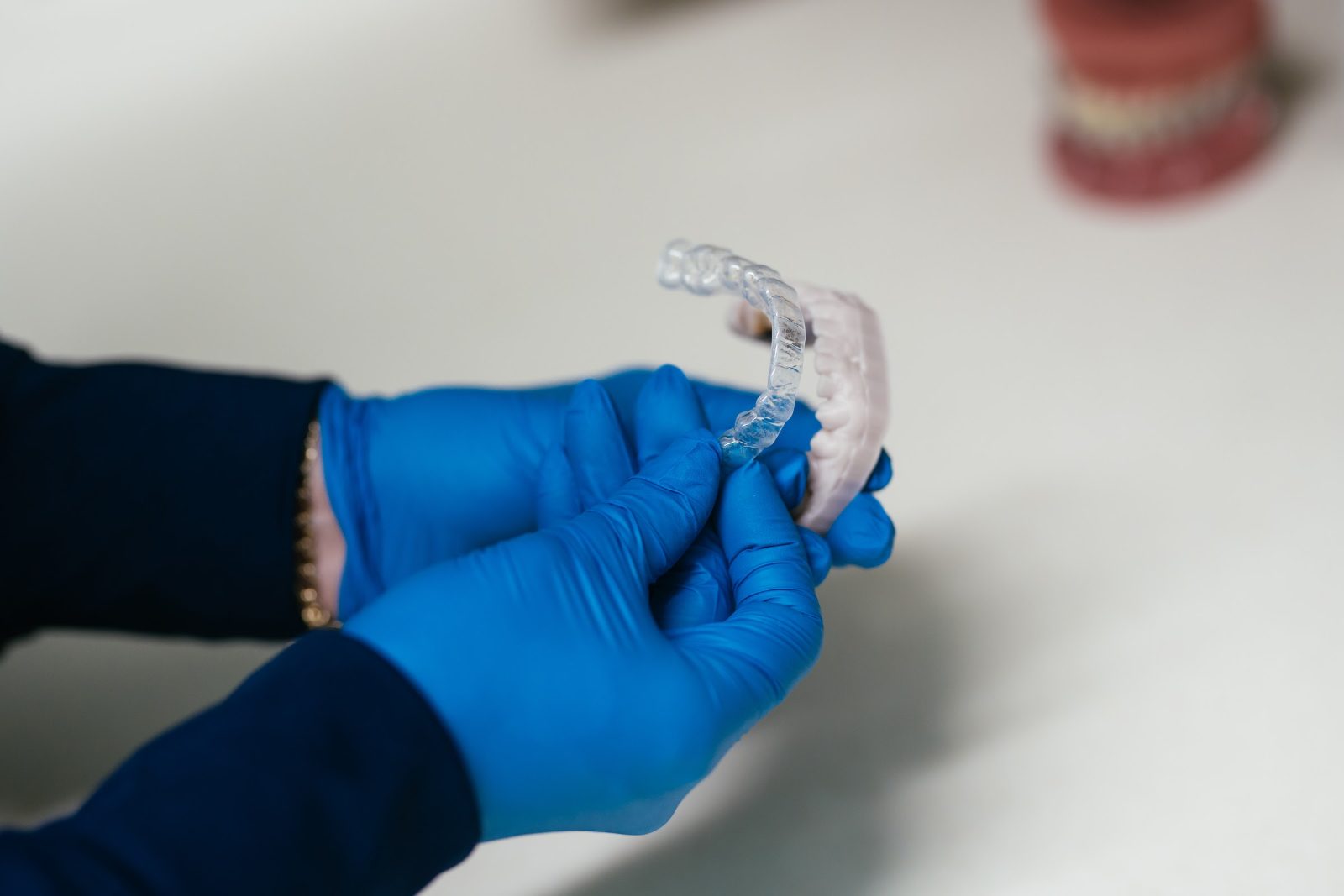
braces, ceramic or clear
Options That Don't Make You Feel Like You're Back in High School
Adult orthodontics no longer means a mouthful of metal.
Will I look strange wearing braces at work?
Probably a lot less than you're picturing. Plenty of adults wear braces and aligners to work, and the people around you will likely notice them less than you expect.
Some adults pick clear aligners because they want treatment to be close to invisible. Others pick ceramic braces for the control of braces with less metal showing. And some pick regular metal braces because they've stopped caring what anyone thinks and just want their teeth fixed.
There's no right adult option. The best one is the one you'll be comfortable wearing for the next year or two.
Your options
- Traditional metal braces are still the most versatile option and usually the most affordable. Today's brackets are smaller and smoother than the ones you may remember.
- Tooth-colored ceramic braces work like metal braces but blend in with your teeth.
- Invisalign and Spark clear aligners straighten teeth without brackets or wires, which is why they're popular with adults. Whether aligners or braces suit you better depends on the tooth movements your case needs, not on your age.
Busy schedule? We also offer Dental Monitoring, which lets you send progress scans from your phone so we can keep an eye on things between visits.
Not sure which fits you? Our braces in Richmond page compares them side by side, and our smile gallery shows real before and after results.
see it for yourself
Meet Our Orthodontic Team Before You Book
Dr. Cook on the question this page answers, a real adult patient, and a quick hello from Dr. Bibona.
for parents too
Already Bringing Your Child to RPDO? You Can Get Treated Here Too
If you've sat in our waiting room during your child's appointment thinking you should really fix your own teeth, you don't need to find another practice.
Despite the word "pediatric" in our name, our orthodontists treat adults too, at the same offices where many families already bring their kids.
At our Short Pump, Mechanicsville and Midlothian offices, pediatric dentistry and orthodontics are under one roof. Your child sees our pediatric dentists. You see our orthodontists.
One practice for the whole family, and one less new place to figure out.
straight answers
How Much Do Adult Braces Cost in Richmond?
$3,000 to $7,000+
Comprehensive treatment in the Richmond area typically runs $3,000 to $7,000 or more. Where you land depends on your case, the type of treatment and how long it takes.
Your free consultation ends with a full fee for your case, so you know the real number before you commit. For the full breakdown, see how much braces cost in Richmond, VA.
A few things adults should know:
Check your dental plan
Many adult dental plans have little or no orthodontic coverage. Some do, so it's worth asking.
FSA and HSA funds
These can usually be used toward treatment.
Payment plans
Payment plans spread the cost over your treatment. See our flexible financing options.
Virginia Medicaid
Virginia Medicaid does not cover braces for adults. Its adult dental benefit excludes orthodontic services for members 21 and older.
one close to home or work
Four Richmond-Area Offices for Adult Orthodontics
Pick the office closest to home or work. Every one offers free adult consultations.

Short Pump
Convenient for Short Pump, Glen Allen, Innsbrook, Twin Hickory, Goochland and Manakin-Sabot
12270 West Broad St.
Richmond, VA 23233
- Orthodontic visits by appointment

Patterson Ave
Our orthodontics-only office, minutes from I-64 and I-195. Convenient for Tuckahoe, the Near West End, the Fan, the Museum District and the rest of the city
8503 Patterson Ave.
Richmond, VA 23229
- Mon to Fri 7:30 a.m. to 4:30 p.m.

Mechanicsville
Convenient for Mechanicsville, Atlee, Ashland and the rest of Hanover County, plus eastern Henrico
7521 Right Flank Rd., Suite 110
Mechanicsville, VA 23116
- Orthodontic visits by appointment

Midlothian
Across from the Midlothian Family YMCA. Convenient for Midlothian, Chesterfield, Bon Air, Brandermill, Woodlake, Moseley, Chester and Powhatan
13901 Coalfield Commons Pl., Suite 101
Midlothian, VA 23114
- Orthodontic visits by appointment
All four offices book through one place.
your first visit
What Happens at Your Free Consultation?
You don't need a referral. Book directly by calling our orthodontic line at (804) 740-7281 or requesting a time online.
More detail on what to expect at your consultation.
- 1
We look at your teeth, gums and bite
We take photos, a digital scan and x-rays so we can see the bone support under your teeth.
- 2
We answer the age question for you
You'll hear whether treatment makes sense for your mouth, what it can fix and what it can't.
- 3
You get a plan and a price
Your options, how long each would take, and the full fee. No pressure to decide that day.
in their words
What Richmond Patients Say About RPDO
Our team has been recognized by Richmond Times-Dispatch, Style Weekly, Virginia Living, and Richmond Magazine, and we are a privately owned practice rather than part of a corporate chain.
questions adults ask
Frequently Asked Questions About Braces as an Adult
Is 30 too old for braces?
No. Plenty of adults start in their 30s, often because their teeth shifted after braces as a teenager. If your gums and bone are healthy, teeth move the same way they do for teens.
Is 40 too old for braces?
No. Plenty of people start treatment in their 40s. If your gums and bone are healthy, your teeth can be straightened the same way a teenager's can, though treatment may take a little longer.
Is 50 too old for braces?
No. Many adults start treatment in their 50s, often because crowding has gotten worse or their dentist wants teeth aligned before restorative work. We check gum and bone health first.
Is 70 too old for braces?
Not necessarily. Healthy teeth can move at 70 and beyond. At this age the goals are usually practical, like a healthier bite or easier cleaning, and the plan depends on bone and gum support.
What is the oldest age you can get braces?
There isn't a maximum age. Before recommending treatment, your orthodontist needs to check your gum health, bone support, teeth and any dental work you already have. Those decide it, not your birth year.
Are braces worth it after 50?
They can be, especially if crowding is getting worse, your bite is wearing down teeth, or your dentist needs teeth moved before restorative work. If a small cosmetic issue doesn't bother you, there's no need to treat it.
Can I get braces if I have crowns, bridges or implants?
Usually, yes. Brackets and aligners can work with crowns, and implants don't move, so we plan around them.
Bridges join teeth together and need extra planning. Bring your dental history to your consultation.
Can I get braces if I've had gum disease?
Often, yes. Gum disease needs to be treated and stable before teeth are moved. Your dentist or periodontist handles that part, and we coordinate the timing with them.
Are clear aligners or braces better for adults?
Neither is better because of your age. The choice depends on the tooth movements your case needs and which option you'll wear consistently. Your orthodontist will tell you which ones can reach your goals.
Do braces hurt more for adults?
Adults feel about the same soreness teens do. Most people notice it for a few days after braces go on or after an adjustment. Over-the-counter pain relievers and soft foods usually help.
How long do adults wear braces?
Most adult treatment takes 12 to 24 months. Minor corrections can be shorter, and complex bite problems can take longer. You'll get an estimate at your consultation.
Will my teeth shift back after treatment?
They can if you stop wearing your retainer. Teeth tend to drift at every age, so plan on wearing a retainer long term. Your first set of retainers is included in your treatment fee.
Does insurance cover braces for adults?
It depends on your plan. Many adult dental plans have little or no orthodontic coverage, while some include a lifetime maximum. We can help you check your benefits, and FSA or HSA funds can usually be applied.
Does Virginia Medicaid cover braces for adults?
No. Virginia Medicaid's adult dental benefit does not include orthodontic services for members 21 and older. Payment plans can help spread out the cost.
Do you really treat adults at a pediatric practice?
Yes. Our orthodontists treat kids, teens and adults at all four orthodontic offices, including parents of kids we already see.
Do I need a referral to see an orthodontist?
No. You can book a free consultation directly at any of our four orthodontic offices.
you're not too old to ask
It's Not Too Late
Maybe you've thought about fixing your teeth for five years. Maybe it's been 25.
Picture smiling in photos without thinking about it, and teeth that are easier to keep clean.
You don't have to decide today whether braces or aligners are worth it. The first question is whether orthodontic treatment would work for your teeth now, and that's what a free consultation in Richmond, Short Pump, Midlothian or Mechanicsville answers.
If you're 35, 55 or 75, you're not too old to ask.
