Crooked teeth mean two different worries depending on whose smile you’re looking at. If it’s your child’s, you’re wondering whether this is a normal stage or the start of a problem. If it’s your own, you’re wondering whether it’s finally time to do something about it.
At Richmond Pediatric Dentistry & Orthodontics, we help families across Richmond, VA answer both questions every week. Our specialty-trained orthodontists, Dr. Kevin Bibona and Dr. Payton Cook, straighten crooked and crowded teeth for children, teens, and adults using braces, Spark Clear Aligners, and Invisalign. And because every plan begins with a free orthodontic consultation, you get real answers before you spend a dime.
Crooked and crowded teeth look different at every age
Most practices offer crooked teeth treatment in Richmond as one problem. It’s really three, depending on whose mouth you’re looking at, and because RPDO is a bi-specialty practice with pediatric dentists and orthodontists under one roof, we see all three every day.
In young children, crooked or gapped baby teeth are usually nothing to worry about. Little jaws are still growing, and baby teeth often shift around as the mouth develops. Our pediatric dentists keep an eye on alignment at every regular checkup, so if something does need attention, you’ll hear about it early instead of being surprised later.
Around ages 6 to 12, permanent teeth start pushing in, and this is when crowding really shows itself. Adult teeth are bigger than the baby teeth they replace, and if the jaw hasn’t made enough room, they squeeze in wherever they can.
The American Association of Orthodontists recommends every child have an orthodontic evaluation by age 7, because at that age our orthodontists can guide jaw growth with early orthodontic treatment and often make future treatment shorter and simpler.
For teens and adults, crooked teeth are either teeth that never got straightened or teeth that moved after braces came off. Both are extremely common, both are fixable, and neither improves on its own.
If your family has kids at different stages, this is where having pediatric dentistry and orthodontics in one practice pays off. Nobody gets handed off to a stranger across town.
What Richmond families say about us
Real reviews from the families we care for across Short Pump, Mechanicsville, Midlothian, and Patterson Avenue.
Parents: you didn’t cause this, and you’re not late
Before anything else, two reassurances. Crowding is mostly a matter of genetics and jaw size, not something a pacifier or a missed appointment did.
And if you’re noticing crooked teeth as your child’s permanent teeth come in, you’re noticing at exactly the right time. The window for guiding growth stays open for years, and the fact that you’re reading this means you’re ahead of it, not behind it.
What causes crooked teeth?
Crowding usually comes down to simple math: the size of the teeth versus the amount of jaw available to hold them. When those numbers don’t work out, teeth tip, rotate, and overlap to find room. A few forces decide how that math turns out:
- Genetics. Jaw size and tooth size are inherited separately, so a child can get a smaller jaw from one parent and larger teeth from the other. That mismatch is the single most common recipe for crowding.
- Bite problems. When the upper and lower jaws don’t meet evenly, as with an open bite, crossbite, or overjet, individual teeth shift to compensate and end up out of line.
- Childhood habits. Years of thumb sucking or pacifier use, chronic mouth breathing, and tongue posture all put steady pressure on a growing jaw, and steady pressure is exactly what moves teeth.
- Losing baby teeth too early. A baby tooth that comes out ahead of schedule leaves a gap, neighboring teeth lean into it, and the permanent tooth underneath loses its parking spot.
- Time. Teeth keep migrating slowly through adulthood, which is why a straight smile at 18 can look crowded at 40, especially without a retainer in the picture.
Why the teeth got crooked matters as much as how they look, because the cause is what determines the treatment. That’s where every evaluation with Dr. Bibona or Dr. Cook begins.
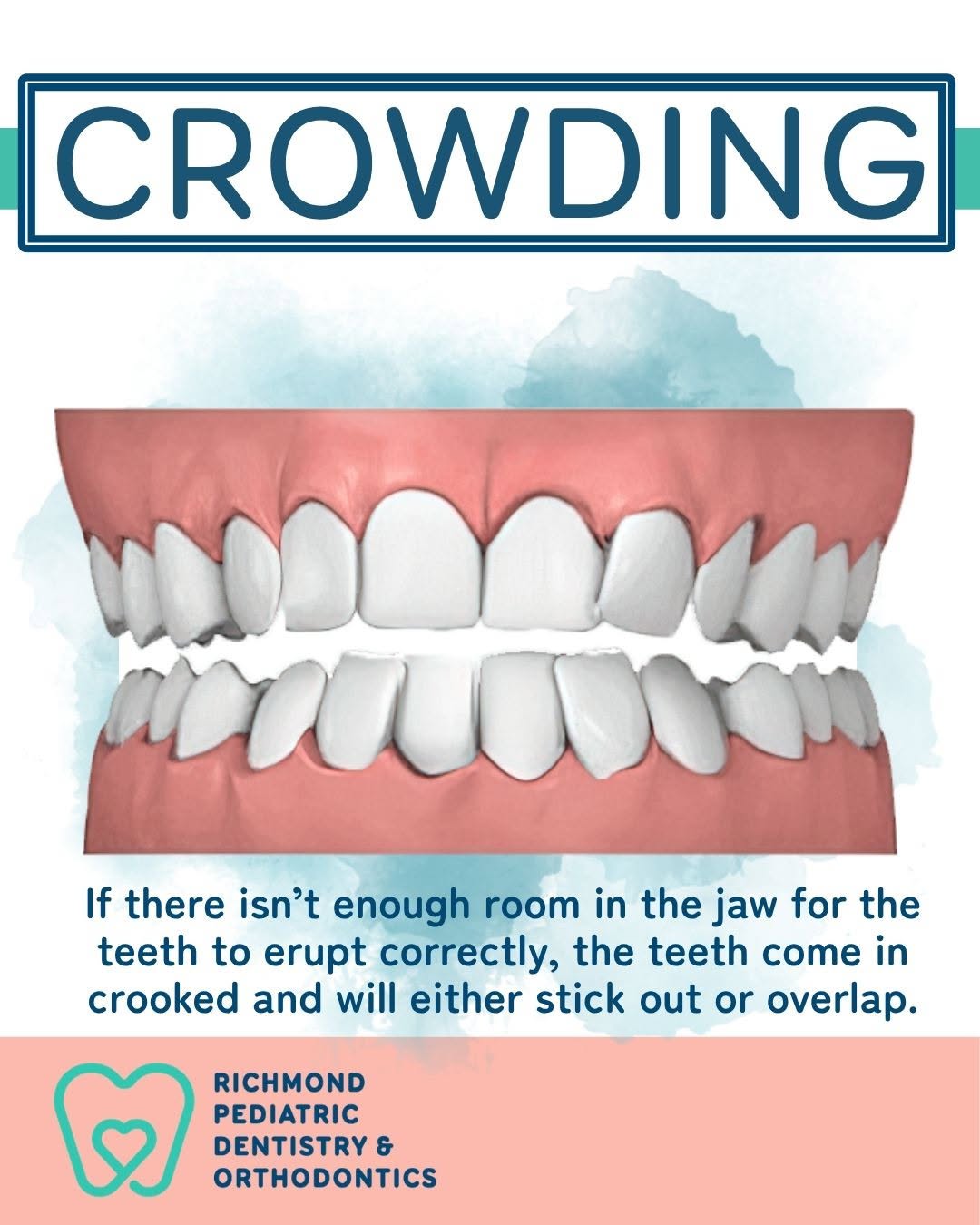
Will crooked teeth straighten out on their own?
Here’s the short, honest answer parents and adults both need: slightly crooked baby teeth may improve as a child grows and the jaws develop, but permanent teeth that come in crooked generally do not straighten on their own. Once an adult tooth erupts crooked, it tends to stay that way or grow more crowded with time, because teeth naturally drift forward and inward throughout life.
So if you’re watching your child’s permanent teeth come in sideways, or you’re an adult hoping your own crowding will somehow resolve, waiting won’t fix it.
Not sure whether you’re looking at a normal stage of development or something that needs treatment? A free consultation with Dr. Bibona or Dr. Cook gives you a clear answer in one visit, and knowing where things stand costs you nothing.
Not sure if it is a phase or a problem?
One free visit with Dr. Bibona or Dr. Cook tells you exactly where things stand, for your child or for you. No pressure, no obligation.
Find out where things standWhat crooked teeth can mean for your health
Straightening teeth changes more than photos. Overlapping teeth create tight corners that toothbrush bristles and floss struggle to reach, and plaque is happy to settle wherever cleaning can’t follow. Over the years, that’s how the same crowded spots keep producing cavities and irritated gums.
Alignment also affects how force moves through your bite. When teeth meet unevenly, a few of them absorb work meant for the whole set, which can mean accelerated wear on some edges and a jaw that puts in overtime.
None of this means a crooked tooth is an emergency, and plenty of people live comfortably with mild crowding. It does mean the decision deserves better information than a glance in the bathroom mirror, which is exactly what a free evaluation provides.
“When a family asks me about crooked teeth, the first thing I check isn’t the front teeth. It’s the bite. The alignment you can see is connected to function you can’t, and getting both right is what makes a result last.” Dr. Kevin Bibona, Orthodontist at Richmond Pediatric Dentistry & Orthodontics
Signs your teeth may be too crowded
Some signals suggest crowding has moved past cosmetic and is starting to affect how the mouth works:
Does any of this sound familiar?
- Floss snags or tears between certain teeth
- Cavities keep showing up in the same crowded corners
- A few teeth look more worn than the rest
- Your jaw aches, clicks, or feels tired by night
- Your child snores or breathes through their mouth at night
- Chewing feels uneven, like one side does the work
If two or more ring true, a free evaluation can tell you whether crowding is behind it.
Book a free consultationOne or two of these on their own may mean nothing. A pattern of them is worth an evaluation, because an exam can tell you whether crooked or crowded teeth are part of the story.
How we straighten crooked teeth at RPDO
Treatment starts with a question, not an appliance: why are these teeth crooked, and how far do they need to move? The answer points to the right tool. And if you’ve been bracing for a worst-case scenario, take a breath. The vast majority of crowding is corrected with braces or clear aligners alone, no surgery involved.
Braces
Braces remain the most dependable option for heavier crowding and bite correction, because brackets and wires let the orthodontist control each individual tooth with precision. Modern brackets are smaller and more comfortable than the ones parents remember from their own school photos, and they work just as well for teens as for adults.
Spark Clear Aligners and Invisalign
RPDO offers both Spark Clear Aligners and Invisalign, and for many cases of mild to moderate crowding, aligners do excellent work while staying nearly invisible. The trays come out for meals and brushing, which makes daily life simpler.
The honest requirement: they need to be worn about 22 hours a day to do their job, and if that’s not realistic for you or your teenager, we’ll recommend braces instead of letting you pick the option that looks easiest. Many of our aligner patients also use Dental Monitoring to scan their teeth from home, which means progress gets checked without a drive across town.
Early treatment for growing kids
For children whose jaws are still developing, sometimes the smartest move is creating room before crowding takes hold. A palate expander or other Phase 1 treatment can widen a narrow arch while growth makes it easy, often turning what would have been a difficult teenage case into a routine one.
Which path fits your mouth, or your child’s, is settled at the consultation, where you’ll see the plan, the timeline, and the numbers before deciding anything. Not ready for an office visit yet? A virtual smile assessment lets us take a first look from photos you submit at home.
Braces or clear aligners?
| Braces | Spark & Invisalign | |
|---|---|---|
| Best for | Heavier crowding and bite correction | Mild to moderate crowding |
| Visibility | Visible, though brackets are smaller now | Nearly invisible |
| Removable | Fixed in place | Out for meals and brushing |
| Depends on you | Works around the clock on its own | Needs about 22 hours of wear a day |
| Good fit for | Kids, teens, and busy schedules | Teens and adults who want discretion |
A real RPDO result
See what straighter looks like
Crowded, crooked teeth can feel like a big project. This is what it looks like when treatment is done.
Adult orthodontics in Richmond: the other half of our name
The “pediatric” in our name is about our dental side. Our orthodontic care has no age limit, and adults are part of every week’s schedule. If you have been quietly waiting for your turn, this is your sign.
We hear it all the time: “I assumed you only saw kids.” The pediatric in Richmond Pediatric Dentistry & Orthodontics describes our dental side. Our orthodontic side has no age limit, and every week adults from Short Pump, Glen Allen, Mechanicsville, Midlothian, and across Richmond sit in our chairs.
Some had braces decades ago and watched their teeth wander once the retainer disappeared into a junk drawer. Some never had treatment and decided this is finally the year. Wherever you’re starting from, it’s not too late, and you won’t be the only adult in the practice. Not even close.
Adult treatment at RPDO is built around adult life. Spark and Invisalign keep treatment nearly invisible in meetings and photos, Dental Monitoring trims down office visits for packed schedules, and appointments are available at four offices around the metro so the drive fits your week instead of fighting it.
And if it’s been longer than you’d like to admit since a dentist looked at your teeth, you won’t find any judgment here. You’ll find help.
If you’re weighing it, our pages on adult orthodontics and orthodontics for all ages are good next reads.
What happens after you start treatment
Knowing the road ahead removes a lot of the nerves, so here’s the whole journey in four steps:
Scans, photos, and X-rays map the full picture, and you see the plan before anything begins.
A straightforward first appointment, and you leave knowing exactly how to care for everything.
In-office adjustments for braces, or quick at-home scans with Dental Monitoring for aligners.
Once teeth settle into place, a retainer holds the result, planned out from the start.
What does it cost to fix crooked teeth in Richmond?
Across Richmond, Short Pump, Mechanicsville, Midlothian, and surrounding communities, braces typically run between $3,000 and $7,000 depending on case complexity and treatment length, and clear aligners land in a similar range. We’ve broken the numbers down in detail on our braces cost and Invisalign cost pages.
RPDO offers flexible financing and payment plans, most insurance is accepted, and you’ll see the full cost picture for your specific case at the free consultation, including what insurance covers and what monthly payments would look like, before you decide anything.
How long does it take to straighten crooked teeth?
Treatment length follows distance. The farther teeth have to travel, the longer the trip:
- Mild crowding, a few overlapping front teeth, can often be finished in under a year, and these are the cases aligners move through fastest.
- Moderate crowding generally needs somewhere around a year to eighteen months with either braces or aligners.
- Significant crowding with bite correction can take up to about two years, because the goal isn’t just lining up what shows when you smile, it’s getting the whole bite to close correctly.
Your timeline gets mapped out at the consultation based on your teeth, not an average.
What happens at the free consultation
Deciding to look into this can take a little courage, especially if it’s for your child or you’ve been putting it off for years. The visit itself asks nothing of you. Here’s how it goes.
You’re welcomed by name, and if it’s your child’s visit, the team talks to them, not just about them, so they feel like part of the conversation instead of the subject of it. We take the photos and X-rays needed to evaluate the teeth and bite.
Then Dr. Bibona or Dr. Cook personally examines how everything fits together and explains what they see in plain language. You leave with a clear answer, a realistic timeline if treatment makes sense, and the full financial picture including insurance and payment options, so there’s no guesswork waiting for you at home.
And here’s the part worth underlining: sometimes the honest recommendation is to do nothing yet. For plenty of kids, the right plan is to monitor growth and check back in a year, and when that’s the case, that’s exactly what you’ll hear.
The consultation is free either way, there’s zero obligation, and walking out with just information is a perfectly good outcome. You can read more about what to expect at your consultation.
5 braces myths, busted
A lot of what people believe about braces is out of date. We clear up the most common ones.
A word about mail-order aligners
The ads make it sound simple: take your own impression at the kitchen table, get trays in the mail, skip the office entirely. What gets skipped along with the office is the doctor. No one examines your gums before teeth start moving, no one measures how your bite closes, and no one notices when a tooth heads the wrong direction halfway through.
Kits like these can tilt the teeth that show in a selfie, but they were never designed to manage how your upper and lower teeth work together, and with crooked teeth the bite is usually part of the picture.
Aligners themselves are a tool we use and trust every day. The difference is who’s holding the tool. At RPDO, a specialty-trained orthodontist plans every movement, checks your progress along the way, and stands behind the result after the trays are done.
Why Richmond families choose RPDO for crooked teeth
- We treat kids, teens, and adults under one roof. As a bi-specialty practice, our pediatric dentists spot crowding early at routine checkups, and our orthodontists handle everything from Phase 1 treatment to adult relapse cases. Your family never has to switch practices as needs change.
- Specialty-trained orthodontists. Dr. Kevin Bibona and Dr. Payton Cook completed advanced orthodontic residency training beyond dental school, and they personally evaluate every case.
- Privately owned, not corporate. RPDO has cared for Richmond families for generations, and the people who treat you are the people who own the practice.
- Built for kids who’d rather be anywhere else. Our offices are designed to make visits feel fun instead of clinical, and our team is trained to put nervous kids and teens at ease, so treatment never becomes the thing your child dreads.
- Award-winning care. RPDO has been recognized by Richmond Times-Dispatch, Style Weekly, Virginia Living Magazine, and Richmond Magazine.
- Free orthodontic consultations. You get a real exam, a real plan, and real numbers with zero obligation.
You can read more of what Richmond families have to say on our patient testimonials page, or see real results in our smile gallery.
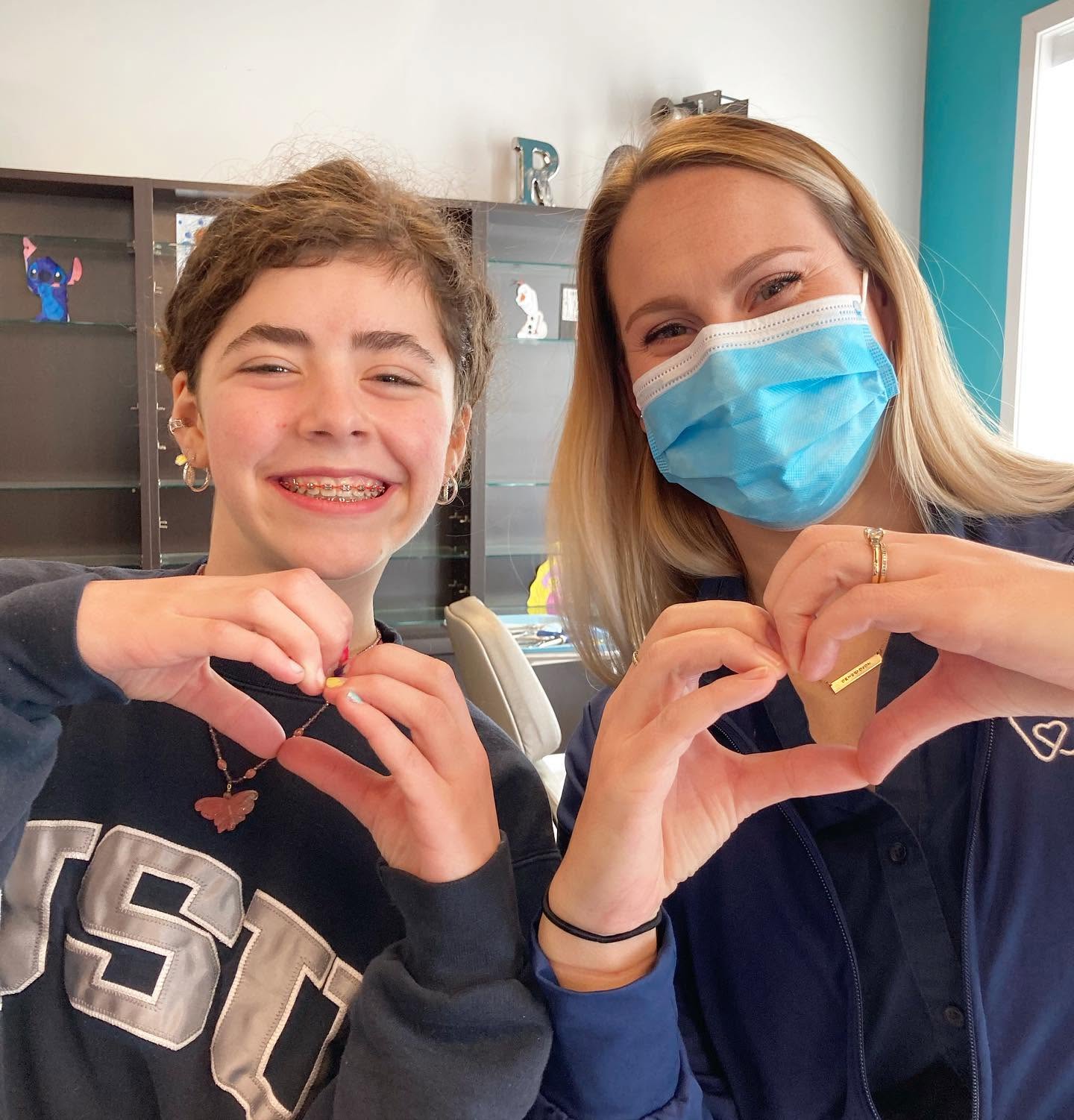
Real smiles, real Richmond families. From a first set of braces to a finished smile, our team is in it with you.
Crooked teeth treatment across Greater Richmond
Orthodontic treatment with Dr. Bibona and Dr. Cook is available at four convenient offices across the Richmond metro: our Short Pump office near Short Pump Town Center, our Mechanicsville office just off I-295 for Hanover County families, our Midlothian office at Coalfield Commons for Chesterfield County, and our Richmond office on Patterson Avenue.
Same doctors and the same care at every one, so you just pick whichever fits your week.
Find the office closest to you
Orthodontic care with Dr. Bibona and Dr. Cook is available at four offices across Greater Richmond. Pick the one that fits your week.
Short Pump
12270 W Broad St, Richmond, VA 23233
Near Short Pump Town CenterMechanicsville
7521 Right Flank Rd #110, Mechanicsville, VA 23116
Just off I-295, Hanover CountyMidlothian
13901 Coalfield Commons Pl, Suite 101, Midlothian, VA 23114
Coalfield Commons, Chesterfield CountyRichmond (Patterson Ave)
8503 Patterson Ave, Richmond, VA 23229
Convenient to Henrico and Bon AirCommon questions about crooked teeth
What is the difference between crooked teeth and crowded teeth?
People use the terms interchangeably, but they’re slightly different. Crowded teeth happen when there isn’t enough room in the jaw for all the teeth to fit, so they overlap and twist. Crooked teeth can result from crowding, but also from bite problems, jaw growth patterns, or teeth shifting over time. An orthodontic evaluation pins down the underlying cause, which is what determines the right treatment.
Can crowded teeth cause cavities?
They can raise the risk. Tight, overlapping teeth create spaces a toothbrush and floss struggle to reach, and when plaque collects there, cavities and gum inflammation follow more easily. It’s one of the most common non-cosmetic reasons we recommend treating crowding.
Can crooked teeth cause headaches?
In some cases, the bite problems that go along with crooked teeth can contribute to jaw strain and muscle tension. Not every headache traces back to dental alignment, but if you’re grinding, clenching, or waking up with a sore jaw, an orthodontic evaluation can help determine whether your bite is a contributing factor.
What age is best to fix crooked teeth?
There’s no single best age, because the right timing depends on the mouth in question. The American Association of Orthodontists recommends a first evaluation by age 7, when growth can still be guided, but treatment works well in childhood, the teen years, and adulthood. The evaluation tells you whether now is the right moment or whether waiting makes more sense.
My child’s permanent teeth are coming in crooked. Should I worry?
It depends on the age and the severity, but it’s always worth a look. Permanent teeth often look crowded at first because they’re bigger than the baby teeth they replace. Sometimes the jaw grows enough to ease things, and sometimes crowding only gets worse. The American Association of Orthodontists recommends an orthodontic evaluation by age 7, and at RPDO that evaluation is free.
Will crooked baby teeth mean crooked adult teeth?
Not necessarily. Slightly crooked baby teeth are common and may straighten as the jaw grows. That said, if baby teeth are severely crowded, the permanent teeth behind them usually face the same space problem, which is one reason regular pediatric dental checkups matter.
Does RPDO treat adults, or only children?
Both. Pediatric dentistry is for kids, but our orthodontic care has no age limit, and adult patients are part of every week’s schedule at our Short Pump, Mechanicsville, Midlothian, and Patterson Avenue offices. If you’re an adult considering treatment, your consultation is free just like everyone else’s.
Can crooked teeth be fixed as an adult?
Yes, and the results are just as good. Braces and clear aligners both move adult teeth reliably. The main difference in treating adults is that we look closely at gum health and the existing bite before mapping out the plan, since adult mouths come with more history.
Are crooked teeth only a cosmetic problem?
Sometimes they are, and that’s a perfectly valid reason to treat them. Often, though, there’s more underneath: tight spots that resist cleaning, uneven wear, a bite that strains the jaw. Straightening tends to improve how a smile works along with how it looks.
What happens if crooked teeth go untreated?
Often nothing urgent, and mild crowding isn’t an emergency. What won’t happen is improvement. The cleaning challenges and uneven bite stay put, teeth continue their slow lifelong drift, and cases generally get more involved the longer they wait. Even if you’re not ready to start, a free evaluation tells you whether waiting actually costs you anything.
Are crooked teeth genetic?
Largely, yes. Tooth size and jaw size are inherited separately, and a mismatch between them is the most common source of crowding. Habits and time contribute too, which is why two siblings with the same parents can end up with very different smiles.
Do crooked teeth get worse with age?
Usually slowly, yes. Teeth drift toward the front and center of the mouth throughout life, and the lower front teeth tend to show it first. It’s one of the most common reasons adults book a consultation for treatment they thought they’d finished with as teenagers.
How much does it cost to fix crooked teeth in Richmond, VA?
Braces in the Greater Richmond area typically range from $3,000 to $7,000 depending on the complexity of the case, and clear aligners land in a similar range. Your free consultation at RPDO includes the full cost picture for your specific case, and we offer flexible payment plans with most insurance accepted.
Should my child get braces or clear aligners for crooked teeth?
Both work well. Aligners are removable and discreet, which many teens prefer, while braces give the orthodontist more control over heavier crowding and never depend on a busy teenager remembering to wear them. The right call comes down to the teeth, the bite, and the kid, which is exactly what the consultation sorts out.
Can Invisalign or Spark fix severely crooked teeth?
Often, yes. Aligner treatment has advanced enormously, and our orthodontists take on complex cases with both Spark and Invisalign. Some severe cases still do better in braces, particularly when teeth need major rotation or the bite needs heavy correction, and you’ll get a straight answer about which route is more reliable for yours.
Will teeth need to be pulled to fix crowding?
Sometimes, though less often than people fear. Straightening requires room for teeth to move into, and in many cases that room can be created without removing anything. In growing kids, early treatment with an expander can prevent the need entirely. When extraction is part of the safest, most stable plan, you’ll know exactly why before anything begins.
What if my child is nervous or scared about treatment?
That’s normal, and it’s something we handle every single day as a pediatric practice. Our team explains everything directly to your child in words they understand, visits are designed to feel friendly rather than clinical, and nothing happens before they know what to expect. Most kids who arrive nervous leave proud of themselves.
What if the orthodontist says my child should wait?
Then you’ll hear exactly that, along with what we’re watching for and when to check back. Monitoring growth is a real and common recommendation, especially for younger kids, and the evaluation is free either way. You lose nothing by finding out early, and early answers often make future treatment shorter and simpler.
I had braces as a kid and my teeth shifted. Is that normal?
Normal to the point of being routine. Teeth move throughout life, and a retainer is the only thing that holds a finished result in place, so once retainers fall out of the routine, some drift follows. The encouraging news is that round two is usually shorter and simpler than round one, and adults in this exact situation make up a meaningful share of our orthodontic patients.
Will I really have to wear a retainer forever?
At night, yes, if you want the result to last. Teeth never fully give up on returning to their old positions, and a nightly retainer is what stops them. We go over your retention plan before treatment starts, so the finish line never comes with fine print.
Still have questions? Our orthodontic FAQs page covers even more.
The next step is the easy part
You’ve already done the hard part, which is deciding to look into it. Book a free consultation, bring every question you have, and leave with an honest answer about what’s going on and what fixing it would involve. If the right answer is to wait and watch, you’ll hear that too. Either way, you’ll stop wondering.
Stop wondering. Get a real answer.
Book a free consultation, bring your questions, and leave knowing what is going on and what fixing it would take. Even if the answer is to wait and watch, you will hear it straight.
Book a free orthodontic consultation