Medically reviewed by Dr. Kevin Bibona, DDS — Orthodontist, VCU School of Dentistry, AAO Member, 2025 Virginia Living Top Dentist
If your child’s dentist flagged overjet at a recent visit or you’ve noticed upper front teeth that stick out farther than they should, it’s okay! It’s very treatable. Overjet correction can protect front teeth from injury, improve how the bite functions, and make chewing and even speech noticeably easier. The good news is we were voted one of the top practices to get overjet treatment in Richmond!
At Richmond Pediatric Dentistry & Orthodontics, our specialty-trained orthodontists treat overjet in children, teens, and adults across Short Pump, Mechanicsville, Midlothian, and Richmond. Depending on the severity and cause, treatment may involve braces, Spark Clear Aligners, early interceptive orthodontics, or a combination. As a bi-specialty practice, we also provide comprehensive pediatric dentistry, so whether your child needs a cleaning, a filling, or orthodontic treatment, it all happens under one roof. Not sure what to look for in a kids’ dentist? Our guide to finding the best dentist for kids in Richmond is a good starting point. We’ve been caring for Richmond families for over 100 years and we’re accepting new patients at all four orthodontic locations.
No referral is needed. Free consultations, flexible financing, and most major insurance accepted.
Who Needs Overjet Treatment?
Could your child have overjet?
Check any signs that apply — then see what they may mean.
0 of 7 selected
Good news — a quick evaluation will tell you exactly where things stand.
Even mild overjet is worth confirming with a specialist. A free consultation at RPDO costs nothing and gives you a clear answer — whether that’s “start treatment now,” “let’s monitor,” or “nothing to worry about.”
Book a Free ConsultationSeveral signs point to overjet — an evaluation soon is a good idea.
Multiple signs together — especially in a growing child — mean timing matters. The earlier an orthodontist evaluates the bite, the more treatment options are available. RPDO offers free consultations at four locations across Richmond.
Schedule Your Free EvaluationNot every patient with overjet needs treatment right away. A free consultation helps you understand whether treatment should start now, whether monitoring makes more sense, and what the options are either way.
What Is Overjet?
Most people know it by a more familiar name: buck teeth. It's when the upper front teeth sit noticeably forward of the lower front teeth — enough to be visible and, in some cases, enough to affect bite function and daily life.
A small horizontal gap between the upper and lower front teeth is actually normal (around 2mm). Overjet is when that measurement is meaningfully larger. The greater the gap, the more likely it is to affect things beyond appearance like how the bite works, certain speech sounds, and the risk of chipping or injuring the front teeth during everyday activities.
Families from Richmond, Short Pump, Midlothian, Mechanicsville, Glen Allen, Bon Air, and Tuckahoe come to RPDO for overjet correction and early orthodontic evaluations. With four orthodontic locations across the metro, specialized care is close to home wherever you are in the Greater Richmond area.
Signs that might look familiar
- The upper front teeth appear noticeably farther forward than the lower teeth
- The lips don't close comfortably at rest — there's a gap between them
- The front teeth are partially visible even when the mouth is relaxed
- Biting into foods like apples or crusty bread is harder than expected
- The lower lip naturally tucks behind the upper front teeth
If a couple of those ring true, it's worth getting an evaluation. Our team measures it precisely and gives you a straight answer about whether treatment makes sense, what it would involve, and when the right time to start would be.
Yes, braces can correct buck teeth, especially when the problem is primarily dental rather than skeletal. Clear aligners work well too in many cases. The right approach depends on what's driving the issue, which is what a consultation determines.
Overjet vs. Overbite: Not the Same Thing
This mix-up is extremely common. A lot of parents come in having been told their child has an "overbite" when what's actually going on is an overjet or a combination of both. It matters, because they're diagnosed and treated differently.
The simplest way to keep them straight: overjet is horizontal (how far the teeth stick out), and overbite is vertical (how much the upper teeth overlap the lower teeth when biting down).
Horizontal gap — teeth stick forward
Vertical overlap — upper covers lower
Both fall under what orthodontists call a Class II malocclusion, and plenty of patients have some degree of both at the same time. When you come in, we assess both measurements separately — because addressing one without accounting for the other doesn't produce a complete result.
What Causes Overjet?
The short answer: usually genetics, sometimes habits, sometimes both. It's rarely the result of anything a parent or child did wrong.
Genetics is the most common factor. Jaw size and position are largely inherited. If a parent has a prominent upper jaw or a lower jaw that didn't develop as far forward, there's a good chance their children will show something similar.
Prolonged childhood habits can push things in the wrong direction during the years when jaws and teeth are still developing. Thumb sucking past age four or five, extended pacifier use, and tongue thrusting all apply consistent forward pressure that can shift teeth and affect jaw growth over time.
Mouth breathing disrupts the natural pressure balance that keeps teeth in position. Teeth are held in place partly by soft-tissue pressure, from the lips on the outside and tongue on the inside. Chronic mouth breathing throws that balance off, and teeth can gradually drift forward.
Early tooth loss — losing a baby tooth before it's ready can allow nearby teeth to shift in ways that contribute to or worsen an overjet.
Understanding the underlying cause matters for treatment planning. At your consultation, our team looks at whether the issue is primarily tooth position, jaw development, or a mix of both — because that shapes the approach that will work best for your situation.
How Orthodontists Measure Overjet
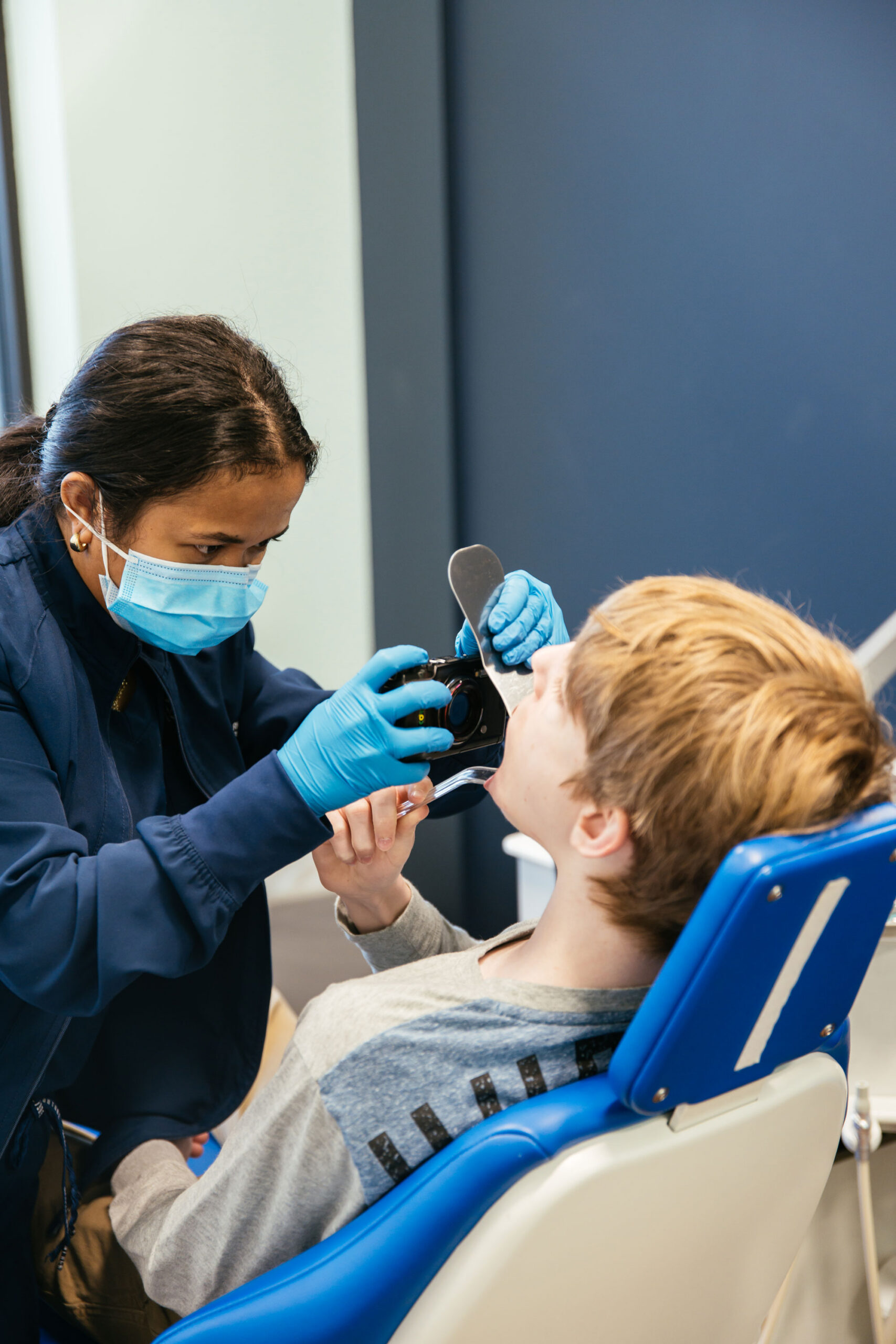
Overjet is measured as the horizontal distance between the upper and lower front teeth when biting down. At your consultation, our orthodontists evaluate the amount of protrusion, how the upper and lower teeth relate to each other, whether the issue is primarily dental or skeletal, and whether the patient's growth stage opens or closes certain treatment options. That measurement combined with X-rays and a full bite assessment is what drives the treatment recommendation you walk away with.
Dental Overjet vs. Skeletal Overjet
This is one of the most clinically important things we assess, because it determines which treatments are actually going to work.
A dental overjet means the jaws themselves are reasonably well aligned. The upper front teeth are simply tipped or positioned too far forward. Braces or clear aligners can move those teeth into the correct position effectively.
A skeletal overjet means the upper jaw is genuinely positioned farther forward than the lower jaw, or the lower jaw didn't develop quite far enough. The teeth are reflecting a bone-level issue. In growing patients, this is where timing becomes especially important there's a window during development when we can work with the jaw's natural growth to encourage a better relationship between the upper and lower jaws. Once that growth is complete, the window closes.
Most patients are somewhere in between. The ratio is something we establish at your consultation, and it drives the treatment recommendation you receive. This is exactly why it's worth seeing a specialty-trained orthodontist rather than relying on a general dental opinion or a quick online search.
Does Overjet Actually Need to Be Treated?
When there's no pain, it's natural to wonder if treatment is really necessary. The reasons to address overjet go beyond cosmetics, though.
Injury risk. Upper front teeth that protrude are simply more exposed. For active kids playing youth sports or just being kids around Richmond, protruding front teeth face a much higher risk of chipping or injury than teeth in normal position.
Bite and chewing function. When the front teeth don't meet properly, biting into firm foods is genuinely harder. Most people adapt so gradually they don't notice — and then are surprised after treatment by how much easier it is to eat something as simple as a sandwich or an apple.
Speech. Overjet commonly interferes with sounds like F, V, S, and SH. This tends to be more noticeable in children whose speech is still developing, but adults notice it too, particularly in professional settings.
Confidence. Kids with visibly protruding front teeth are often self-conscious, and in some cases face teasing. That's worth taking seriously. Treating overjet at the right time can make a real difference during some of the most socially formative years.
Long-term wear. A bite that doesn't fit together correctly distributes chewing forces unevenly. Over years, that adds up. Extra wear on certain teeth and unnecessary stress on the jaw joints.
My daughter recently got braces and Dr. Bibona and staff have been AMAZING! My daughter is so relaxed when she goes for her adjustments and I could not recommend them enough!
Christy
RPDO Short Pump
Our experience has been phenomenal! The front desk ladies are so friendly and welcoming, and all of the orthodontists have been warm and kind. My daughter hasn't complained at all about having braces.
Christina
RPDO Richmond
Join hundreds of Richmond families who trust RPDO. Consultations are always free.
Book Your Free ConsultationWhen Should a Child Be Evaluated?
The American Association of Orthodontists recommends every child have a first orthodontic evaluation by age 7. Not because most seven-year-olds need treatment — most don't — but because there's enough jaw and tooth development happening by that age to assess how things are shaping up and whether any issues are forming.
For overjet specifically, earlier evaluation is more important when there's a jaw component involved. The growth window for addressing skeletal overjet, the kind tied to how the jaws themselves are positioned, closes as kids move through their early-to-mid teens. A problem caught at age 8 or 9 can sometimes be treated with growth-based approaches that simply aren't available once development is complete.
If your child's dentist has mentioned protruding teeth or an overjet, or if it's clearly visible at home, schedule a consultation. There's no cost, no referral needed, and you'll leave with a clear picture of where things stand and whether timing matters for your specific child. Kids don't need all their permanent teeth before coming in.
You can learn more on our early orthodontic treatment page and our orthodontic FAQs. If you're also wondering whether your child has an open bite — a related but distinct bite issue — our open bite treatment page covers that in detail.
Can Overjet Get Worse Over Time?
For children with a skeletal component to their overjet, yes, waiting can have a real cost. The growth window is finite, and once it closes, the jaw relationship can no longer be influenced through orthodontics alone. A skeletal overjet that could be largely addressed at age 9 or 10 with growth-based treatment may require surgical orthodontics in adulthood for full correction.
Early treatment, when it's genuinely warranted, also tends to make the second phase of treatment (braces or aligners) shorter and simpler. Less total movement needed usually means a shorter timeline and lower overall cost.
For overjet that's primarily dental, the timing pressure is less urgent. Braces and clear aligners work well at any age. But if self-consciousness is already affecting a child's daily life, or if the teeth are at clear injury risk, there's no reason to put it off.
A free consultation tells you whether timing matters for your specific child.
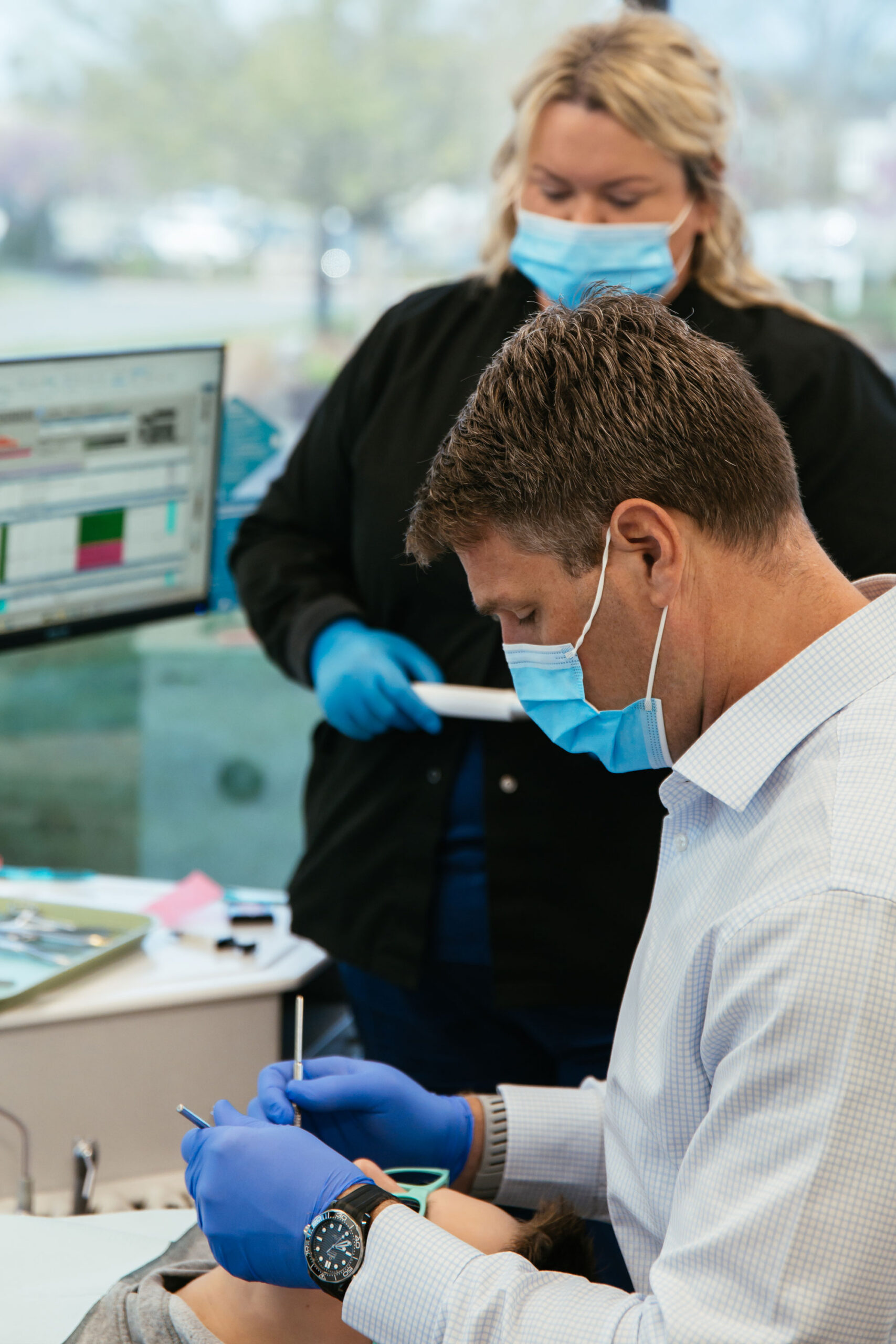
Overjet Treatment Options in Richmond, VA
There's no single right answer for every patient. The best approach depends on age, severity, and whether the overjet is primarily dental, skeletal, or a combination. Here's how we approach each scenario.
Traditional Braces
All agesThe most precise option for moderate to severe overjet. Brackets, wires, and elastics work together to move teeth and correct the jaw relationship.
- Metal or clear ceramic options
- Best for complex bite correction
- Elastics help correct jaw relationship
- Works at any age
Spark Clear Aligners
Teens & AdultsA discreet option for mild to moderate overjet, particularly when the issue is dental rather than skeletal. Nearly invisible during wear.
- Removable — eat and brush normally
- Highly transparent material
- Check-ins every 8–12 weeks
- 22 hrs/day wear required
Phase 1 Early Treatment
Children ages 7–10For younger children with a skeletal overjet, functional appliances used during the growth window can guide jaw development before it's too late.
- Only recommended when genuinely needed
- Uses the body's natural growth
- Can simplify Phase 2 treatment later
- Growth window closes in early teens
Surgical Orthodontics
Severe skeletal casesReserved for adults with a significant skeletal discrepancy where the jaw bones themselves need repositioning. The exception, not the rule.
- Coordinated with oral surgeon
- Only for fully grown adults
- Rarely needed — most cases don't qualify
- We'll tell you honestly if this applies
What to Expect During Treatment
Treatment length depends on the severity of the overjet and whether correction is primarily dental or skeletal. Beyond the timeline, here's what the day-to-day experience actually looks like.
The first few days after braces are placed usually involve some tenderness as the mouth adjusts, more pressure than pain, and it settles quickly. After that, appointments are typically every six to eight weeks for adjustments and progress checks.
For overjet correction specifically, elastics play a central role. They connect the upper and lower braces to apply the force that shifts the jaw relationship. Consistent wear is what moves this part of treatment forward efficiently. We'll always be upfront about what that looks like and what inconsistent wear means for your timeline.
Spark aligner patients check in every 8 to 12 weeks, progressing through trays on a schedule. Wearing them the full 20 to 22 hours a day is what drives outcomes.
One thing that's consistent across all treatment types: early on, the most important movement is happening at the bone level, before it's visible in the mirror. Most patients start seeing visible overjet improvement around the midpoint of treatment. By the time braces come off or the aligner series is complete, the change in how the bite fits together tends to catch people off guard. They didn't realize how much they'd been working around it until it was fixed.
Our specialty-trained doctors stay involved throughout your entire treatment at RPDO. You're not passed off to a different person at every visit. Before your first appointment, our what to expect at your consultation page walks you through exactly how the process works.
A Note for Adults Who've Been Living With This
If you're reading this for yourself, not researching for a child, this part is for you.
A lot of adults with overjet were told as teenagers that it wasn't severe enough to treat, or the timing never aligned, or it just fell to the back of the list. Years later, the question is whether it's still worth doing anything about.
It is. Adult orthodontic treatment in Richmond is more common than most people realize, and tooth movement doesn't have an age limit. With Spark Clear Aligners or ceramic braces, treatment is far less visible than most adults expect. About half our orthodontic patients at RPDO are adults. This is not a practice where grown-up patients are an afterthought.
The honest caveat: if your overjet is significant and has a strong skeletal component, orthodontics alone won't change the underlying jaw relationship in adulthood. Surgical orthodontics would be needed for a full skeletal correction. But many adults find that braces or aligners alone produce enough improvement to be genuinely worth it. We'll tell you clearly at the consultation which situation you're in, so there are no surprises going in.
Our adult orthodontics in Richmond page has more on what treatment looks like for grown-ups.
Why Choose a Specialty-Trained Team for Overjet Correction?
Overjet isn't just a cosmetic concern, it's a bite problem that often involves the relationship between the upper and lower jaws. Evaluating it correctly, timing treatment appropriately, and executing it well requires the specialized training that comes from a full orthodontic residency.
RPDO's orthodontists are specialty-trained, meaning they completed a dedicated orthodontic residency after dental school. That level of expertise matters for complex cases, and overjet cases with a skeletal component are complex.
Dr. Kevin Bibona holds a VCU Certificate in Orthodontics, is an AAO member, and was named a 2025 Virginia Living Top Dentist. Dr. Payton Cook brings the same specialty training and a patient-first approach that families across Richmond consistently call out in their reviews.
We've been serving Richmond families since 1919. Our orthodontic team has earned recognition from Virginia Living Magazine and the Richmond Times-Dispatch, and we have hundreds of five-star reviews from patients and families across Henrico, Chesterfield, and Hanover counties. That kind of track record is built through consistent, careful work, not shortcuts.
RPDO is also a privately owned bi-specialty practice — pediatric dentistry and orthodontics under one roof. If your child needs dental care alongside orthodontic treatment, it all happens within the same trusted practice. No shuffling between offices or coordinating between providers who've never met each other. If you're new to RPDO and want to establish pediatric dental care at the same time, our new patients page has everything you need to get started or read our guide to finding the best dentist for kids in Richmond to understand what sets a great pediatric practice apart.
How Much Does Overjet Treatment Cost in Richmond, VA?
The cost of overjet treatment depends on case complexity, the type of correction needed, and whether treatment happens in one phase or two.
What we can tell you is that RPDO works with most major insurance plans and offers flexible financing to make treatment accessible for Richmond-area families. Nobody leaves a consultation without understanding the complete picture, what treatment involves, what insurance is likely to cover, and what the payment options look like.
Our flexible financing page and insurance information page are good starting points. And since consultations are free, there's no cost to come in and find out exactly where things stand.
Our Four Orthodontic Locations Serving Richmond
RPDO has four orthodontic locations across the Greater Richmond metro. Families come to us from Short Pump, Mechanicsville, Midlothian, the Patterson Avenue corridor, Glen Allen, Bon Air, Tuckahoe, and communities throughout Henrico, Chesterfield, and Hanover counties.
Already a patient at our West End pediatric dentistry office on Gaskins Road? Orthodontic treatment is available in-house at our four other locations — no need to find a separate practice. Your child stays within the same team they already know and trust.
No referral is needed to get started.
Short Pump
Pediatric Dentistry & Orthodontics
12270 W Broad St, Richmond, VA 23233
Mon, Wed: 7:30 AM – 5:00 PM
Tue, Thu: 8:00 AM – 5:00 PM
Fri: 7:30 AM – 1:00 PM
Mechanicsville
Pediatric Dentistry & Orthodontics
7521 Right Flank Rd #110, Mechanicsville, VA 23116
Mon–Thu: 8:00 AM – 5:00 PM
Fri: 8:00 AM – 1:00 PM
Midlothian
Pediatric Dentistry & Orthodontics
13901 Coalfield Commons Pl, Suite 101, Midlothian, VA 23114
Tue, Thu: 7:30 AM – 4:30 PM
Wed: 8:00 AM – 5:00 PM
Richmond (Patterson Ave)
Orthodontics
8503 Patterson Ave, Richmond, VA 23229
Mon, Wed: 7:30 AM – 4:30 PM
Tue, Thu, Fri: Closed
No referral needed — request an appointment online at any location.
Frequently Asked Questions About Overjet
What's the difference between overjet and an overbite?
Overjet is a horizontal measurement, how far the upper front teeth protrude forward past the lower teeth. Overbite is a vertical measurement, how much the upper teeth overlap the lower teeth when biting down. They're different issues, measured and treated differently, though many patients have some degree of both. A specialty-trained orthodontist at RPDO evaluates both at your free consultation.
At what age should overjet be treated?
It depends on the type and severity of overjet. The AAO recommends a first orthodontic evaluation by age 7, and for overjet with a skeletal component, evaluating early is especially important. The window for growth-based treatment to influence jaw position closes in the early-to-mid teen years. Overjet caused primarily by tooth position can be treated effectively at any age with braces or clear aligners.
Can Spark Clear Aligners fix overjet?
Yes, in many cases. Clear aligners work well for mild to moderate overjet, particularly when the cause is primarily dental rather than skeletal. For more significant overjet or cases where the jaw relationship is meaningfully off, traditional braces typically give our orthodontists more precise control. We'll assess your specific situation and recommend whichever approach is most likely to give you the best result.
What happens if overjet goes untreated?
Overjet doesn't resolve on its own. In children, the main cost of waiting is losing the window for growth-based treatment — a skeletal overjet that could be largely corrected at age 9 or 10 may require surgical orthodontics in adulthood to fully address. For all ages, untreated overjet increases front tooth injury risk, can affect chewing and speech, and puts uneven forces on the bite over time. Early evaluation expands options; waiting tends to narrow them.
Is overjet the same as buck teeth?
Yes. Buck teeth is the everyday term for what orthodontists call overjet — when the upper front teeth protrude significantly forward of the lower front teeth. Same condition, different terminology.
Can overjet be corrected without surgery?
In the large majority of cases, yes. Most overjet is primarily dental and responds well to braces or clear aligners. Surgical orthodontics is really only for adults with a significant skeletal discrepancy where the jaw bones themselves are substantially mismatched. We identify this clearly at the free consultation so you know exactly what you're working with before any decisions are made.
Does overjet affect speech?
It can. Protruding front teeth commonly interfere with sounds like F, V, S, and SH. How much it affects speech depends on severity and the individual. In children whose speech patterns are still developing, correcting the bite can lead to noticeable improvement. Adults often notice it too, particularly with sounds that require the upper teeth and lower lip to interact.
How long does overjet treatment take?
Treatment time depends on the severity of the overjet, the patient's age, and whether braces, Spark Clear Aligners, or early interceptive treatment is the right approach. Mild cases may move faster; more significant bite correction takes longer. A free consultation gives you a more accurate timeline based on your specific situation.
Do I need a referral to be seen at RPDO?
No referral needed. You can request an appointment directly online or call any of our four orthodontic locations. We see patients from across the Greater Richmond area — Short Pump, Mechanicsville, Midlothian, Patterson Avenue, Glen Allen, Bon Air, Tuckahoe, and beyond.