If you’re searching for Invisalign in Richmond, VA — for yourself, your teen, or both — you already know the basics: clear trays, no metal, removable. What most families still want to know is whether Invisalign is right for their specific case, what it realistically costs, and whether it matters which provider they choose. It does.
At Richmond Pediatric Dentistry & Orthodontics, our specialty-trained orthodontists treat kids, teens, and adults across four convenient locations in Short Pump, Mechanicsville, Midlothian, and Richmond. As a bi-specialty practice, your child’s pediatric dentist and orthodontist work together under one roof.
How Invisalign Works: From Your First Scan to Your Final Smile
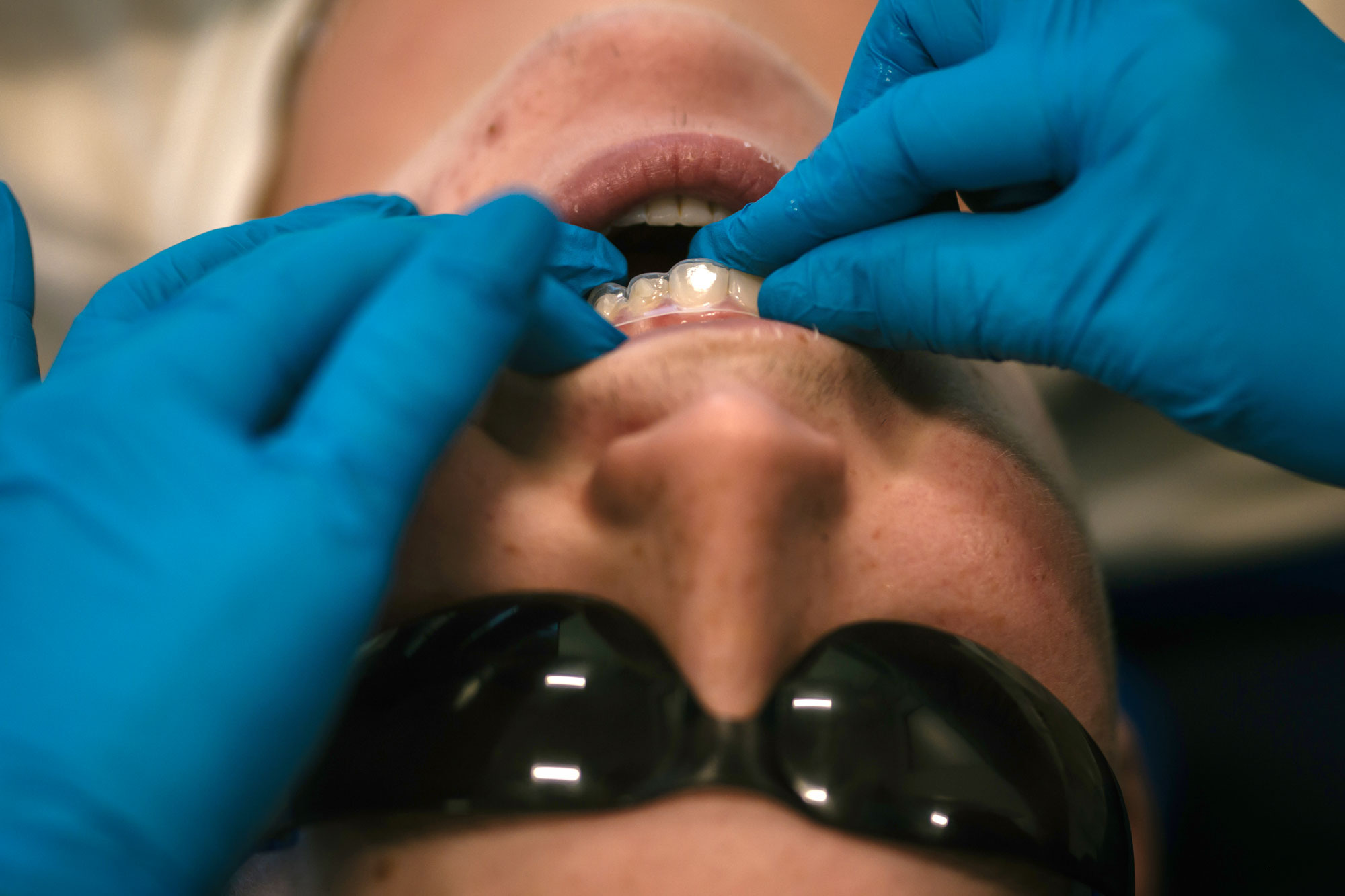
Invisalign straightens teeth using a series of custom-made, clear plastic aligners — each set worn for about one to two weeks before advancing to the next. Before treatment begins, your orthodontist takes a digital scan of your teeth and maps out every movement from start to finish using 3D imaging software. You can actually see a preview of your projected outcome before a single aligner is made.
Each aligner applies gentle, controlled pressure to gradually shift teeth into alignment. Most patients wear aligners 20–22 hours per day, removing them only to eat, drink anything besides water, and brush. Small tooth-colored attachments — little dots of composite bonded to specific teeth — may be added to help guide more complex movements.
Because the aligners are removable and nearly invisible, most people in your life will never know you’re in treatment.
Is Invisalign Right for You — or Your Teen?
Invisalign works well for a wide range of orthodontic concerns, including:
- Crowded or overlapping teeth
- Gaps between teeth
- Overbites and underbites
- Crossbites and open bites
- Mild to moderate bite correction
It works best when treatment is planned and monitored by a specialty-trained orthodontist — not a general dentist who offers it as an add-on service. The case planning, attachment placement, and mid-course corrections that keep treatment on track require orthodontic training and clinical experience.
The most important eligibility factor for teens is having most or all of their permanent teeth in. For adults, good baseline gum and bone health matters. Patients with significant jaw discrepancies or very complex bite problems may be better served by traditional braces, or a combination approach — something your orthodontist will assess at your consultation. If jaw development or breathing concerns are part of the picture, learn more about our airway orthodontics program in Richmond.
Invisalign for Teens: What Parents Need to Know
This is where most Richmond families have the most questions — and where getting honest answers matters most.
Invisalign Teen is a version of the standard Invisalign system built specifically for younger patients. It includes a few important features that the adult version doesn’t:
Compliance indicators. Small blue dots on each aligner fade with wear. This gives parents and orthodontists a visual check on whether aligners are actually being worn the recommended 20–22 hours per day.
Eruption tabs. Spaces built into the aligner accommodate molars that haven’t fully come in yet — important for teens whose jaws are still developing.
Replacement aligners. Invisalign Teen typically includes a set of replacement trays because, well, teenagers lose things.
The question parents ask most: Invisalign or braces for my teen?
There’s no one-size-fits-all answer, but here’s a practical framework:
Invisalign Teen tends to be a better fit when your teen:
- Is self-conscious about appearance and motivated by the discreet look
- Plays sports or a musical instrument (removable beats brackets every time)
- Has strong hygiene habits and the maturity to keep aligners in consistently
- Has mild to moderate crowding or spacing issues
Traditional braces tend to work better when your teen:
- Has more complex bite problems or significant crowding
- Struggles with consistency or forgetfulness — braces work whether or not your teen cooperates
- Would benefit from the structure of a fixed appliance
Our orthodontists discuss this honestly at every consultation. If braces are the better clinical choice for your child, we’ll say so — and we offer both. See our braces page for a full comparison, or read more about early orthodontic treatment if your child is younger.
“From the moment we walked in, we felt welcomed and comfortable. The entire team was incredibly nice, caring, and professional. They took the time to explain everything about trying Invisalign, making the process smooth and stress-free.” — Sheri W., RPDO patient (Google review)
Invisalign for Adults in Richmond: It’s More Common Than You Think
Adult orthodontic treatment is more common than many families realize. Many grew up without access to orthodontic care, had braces as teens but didn’t wear their retainers, or are simply noticing that their teeth have shifted over time. Others are pursuing treatment for the first time because the visibility of metal braces held them back for years.
Invisalign is often the preferred choice for working adults across Richmond — professionals in Short Pump and the West End, healthcare workers in Henrico County, teachers in Chesterfield and Hanover, and young professionals in Glen Allen and the broader RVA metro — who want to improve their smile without the look of braces at work or in meetings. The nearly invisible aligners fit into everyday life in a way metal brackets don’t.
Adult treatment through RPDO’s adult orthodontics program typically takes 12–24 months depending on case complexity. Adults have fully developed jaws, so tooth movement alone is the focus — which means your orthodontist can give you a more precise timeline at your consultation than they can for a teen whose jaw is still growing.
How Much Does Invisalign Cost in Richmond, VA?
Most moderate cases fall in the middle of that range. For context on how that compares, see our breakdown of how much braces cost in Richmond, VA. Your specific Invisalign cost depends on case complexity, number of arches, and whether refinements are needed.
For most Richmond families, the most important number isn’t the full fee — it’s the monthly payment after insurance.
At your consultation, we’ll review your benefits, confirm whether Invisalign is covered the same way as braces, and walk you through financing in plain English.
- Complexity — more crowding or bite correction = more aligners
- Arches treated — single vs. upper & lower
- Refinements — additional trays to fine-tune results
- Provider expertise — orthodontist vs. general dentist
What to Expect: The Invisalign Process at RPDO
From your first call to your final aligner — here’s exactly how treatment works.
Learn what to expect at your consultation →
Guide to cleaning your aligners →
Does Invisalign Hurt?
Most patients describe the first day or two with a new set of aligners as a noticeable pressure — not sharp pain, but a definite awareness that something is moving. This is actually a sign the aligners are doing their job.
The discomfort typically fades within 48 hours of each tray change and is consistently reported as milder than the soreness after braces adjustments. There are no wires to poke, no brackets to irritate the inside of your cheeks.
A common tip from Invisalign patients: switch to your new tray right before bed. You’ll sleep through the adjustment period and wake up most of the way through it.
Invisalign vs. Braces: A Straightforward Comparison
Both are effective — the right choice depends on your case, your lifestyle, and honest self-assessment of compliance habits. Our orthodontists discuss both options at every free consultation.
What RPDO Patients Say About Invisalign
Real Google reviews from families who chose RPDO for orthodontic care.
Why Choose RPDO for Invisalign in Richmond?
Richmond has no shortage of Invisalign providers. Here’s what’s different about choosing a specialty orthodontic practice with a 100+ year history in this community:
Specialty-trained orthodontists. Every Invisalign case at RPDO is planned and monitored by an orthodontist who completed residency training specifically in orthodontics — not a general dentist who offers aligners as an additional service. Case selection, attachment placement, tracking, and refinements are all part of orthodontic training. Browse our smile gallery to see real patient results.
Orthodontics and pediatric dentistry under one roof. For families with kids who need both, RPDO’s bi-specialty model means your child’s orthodontist and pediatric dentist communicate directly. No referrals between separate offices, no care gaps. Explore our pediatric dentistry services to learn more about how we care for your child’s dental health before, during, and after orthodontic treatment, or read more about what parents look for in the best kids dentist in Richmond, VA.
Four orthodontic locations across the Richmond metro. Short Pump. Mechanicsville. Midlothian. Richmond/Patterson Avenue. Whether you’re coming from Henrico County, Chesterfield County, Hanover County, or anywhere in between, there’s an RPDO location near you.
Treating all ages. Kids, teens, adults — we see them all. If your teen is getting Invisalign and you’ve been thinking about your own smile, you can be evaluated at the same practice.
Privately owned and community-rooted. RPDO has served Greater Richmond since 1919. We’re not a corporate chain. The doctors here know the families they treat — and that matters in orthodontic care, where you’re coming in multiple times over 12–24 months. Our practice has been recognized by Richmond Magazine, Virginia Living, Style Weekly, and the Richmond Times-Dispatch, reflecting the trust Richmond families have placed in us for generations.
Our Orthodontic Locations
Four locations across Greater Richmond — Short Pump, Mechanicsville, Midlothian, and Patterson Avenue. Free consultations available at all four.
Frequently Asked Questions About Invisalign in Richmond, VA
How much does Invisalign cost in Richmond, VA?
Most Invisalign cases in the Richmond area fall between $4,000 and $7,500. The final cost depends on the complexity of your case, the number of aligners needed, and whether refinements are required.
Many insurance plans with orthodontic benefits apply the same coverage to Invisalign as to braces — typically $1,000 to $3,000 toward your treatment. We verify your insurance at your free consultation and provide a complete cost breakdown before you commit to anything.
Is Invisalign as effective as braces?
For mild to moderate crowding, spacing, and many bite issues, yes — Invisalign achieves comparable results to braces when treatment is properly planned and the patient wears aligners consistently.
More complex bite corrections and severe crowding may still be better served by traditional braces, and some cases call for a combination approach. Your orthodontist will give you an honest assessment at your consultation.
How long does Invisalign take?
Most cases are completed in 12–18 months, though simpler corrections can finish in as few as 6 months and more complex cases may take closer to 24 months. The single biggest factor in staying on schedule is wearing your aligners for at least 20–22 hours every day. Patients who take aligners out too often — or “forget” them for days at a time — extend their own treatment.
Does Invisalign hurt?
Most patients experience mild pressure for the first day or two after switching to a new tray. This fades quickly and is consistently described as more comfortable than the soreness after braces adjustments. There are no wires or brackets to irritate soft tissue. Switching to a new tray at night rather than in the morning is a popular strategy for sleeping through the adjustment period.
What’s the difference between Invisalign and Invisalign Teen?
Invisalign Teen includes three features not found in the standard adult version: compliance indicator dots that fade with wear (so parents and orthodontists can track usage), eruption tabs to accommodate teeth still coming in, and replacement aligners in case one is lost or damaged. Otherwise, the treatment process is essentially the same.
Do I need an orthodontist for Invisalign, or can any dentist do it?
Invisalign can legally be offered by any licensed dentist, but orthodontists complete two to three additional years of residency training specifically in tooth movement, bite correction, and facial development. For teens, growing patients, complex cases, or anyone with a meaningful bite component, that specialty training matters. The planning behind the case — not just the trays — determines your outcome.
Can adults get Invisalign at RPDO?
Absolutely. RPDO’s adult orthodontics program serves patients of all ages across our four orthodontic locations. Many of our adult patients are parents who schedule their own consultations while bringing their kids in for treatment.
What if my child’s teeth are still coming in? Is it too early for Invisalign?
It depends. For younger children with developing jaws, early orthodontic treatment (Phase 1) using different appliances is often more appropriate than clear aligners. For teens who have most of their permanent teeth, Invisalign Teen is often an excellent option. Our orthodontists evaluate each child individually and recommend timing based on jaw development, not a fixed age rule. Read more about early orthodontic treatment at RPDO.
What do I do if my teen loses an Invisalign tray?
Call the office right away. Depending on where your teen is in treatment, the orthodontist will advise wearing the previous tray, moving ahead to the next one, or coming in for a replacement. Invisalign Teen plans typically include replacement aligners for exactly this reason — losing a tray doesn’t have to derail treatment, but it does need to be addressed quickly.
Is Invisalign a good option for kids who play sports?
Often yes. Because the trays are removable, athletes can take them out for contact sports and wear a standard mouthguard without the complications that come with fixed brackets and wires. There are no sharp edges to cut the lips or cheeks during impact.
Your orthodontist will advise when to wear aligners during practice and games and when removal makes sense — the goal is always to protect both the teeth and the treatment progress.
Have more questions? Our orthodontic FAQs page covers additional topics in depth.
The Bottom Line
You don’t need to walk in knowing whether Invisalign is right for you. That’s what the consultation is for. What you do need is an orthodontist you trust to give you an honest answer — not one who fits every patient into the same treatment.
At Richmond Pediatric Dentistry & Orthodontics, our specialty-trained orthodontists have been doing exactly that for Richmond families for a long time! If Invisalign is the right fit, we’ll show you what your treatment would look like and what it would cost. If braces or a different approach would get you a better result, we’ll tell you that too.
Four locations. All ages. No pressure.