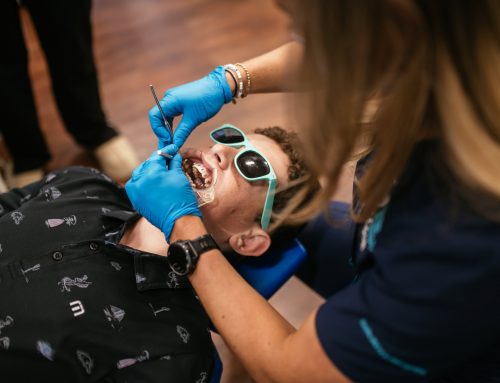
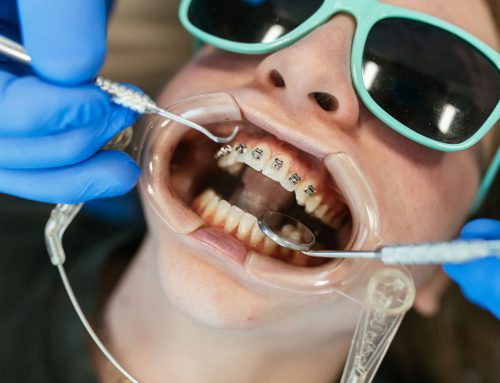
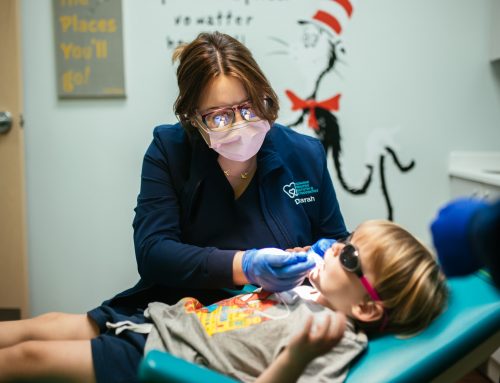
If your teen is ready for braces, or you’re just starting to look into it, finding the right orthodontist for teens in Richmond, VA matters more than most parents expect. The office your teenager spends the next 12 to 24 months visiting should feel comfortable, communicate clearly with both of you, and have real experience guiding teens through treatment.
At Richmond Pediatric Dentistry & Orthodontics, we provide teen orthodontic care across Short Pump, Mechanicsville, Midlothian, and Richmond (Patterson Ave). Treatment options include metal braces, ceramic braces, and Spark Clear Aligners, backed by more than 100 years of caring for Richmond-area families.
We help teens from across the Richmond metro, including Richmond, Short Pump, Glen Allen, Mechanicsville, Midlothian, Henrico County, Chesterfield County, and Hanover County.
Why the Teen Years Are the Best Time for Braces
Most teens start comprehensive orthodontic treatment between ages 11 and 15, and that timing is not coincidental. By early adolescence, most permanent teeth have erupted, which gives your orthodontist a complete picture of alignment, crowding, and bite. At the same time, the jaw is still growing, which means teeth respond more predictably to orthodontic forces than they do in adulthood.
The American Association of Orthodontists recommends a first orthodontic evaluation by age 7, not because most 7-year-olds need treatment, but so an orthodontist can monitor development and identify the right window for comprehensive care. For most kids, that window opens somewhere between 6th and 9th grade.
Treating bite issues and alignment problems during adolescence also tends to reduce overall treatment time and, in some cases, prevents problems that would be significantly more complex to address once jaw growth is complete.
At RPDO, many of our teen orthodontic patients have been coming to our pediatric dentists since they were toddlers. When it’s time for braces, their records are already with us. Their pediatric dentist, whether that’s Dr. Eddleton, Dr. Dahlke, Dr. Chopra, Dr. Yi, or Dr. Thornton, has been tracking their bite and tooth development at every checkup. When the timing is right, our orthodontic team already has years of X-rays and growth records in hand. There’s no starting from scratch, no transferring files across town, and no repeating the same intake process at a new office. The transition is a natural next step in care your family already trusts.
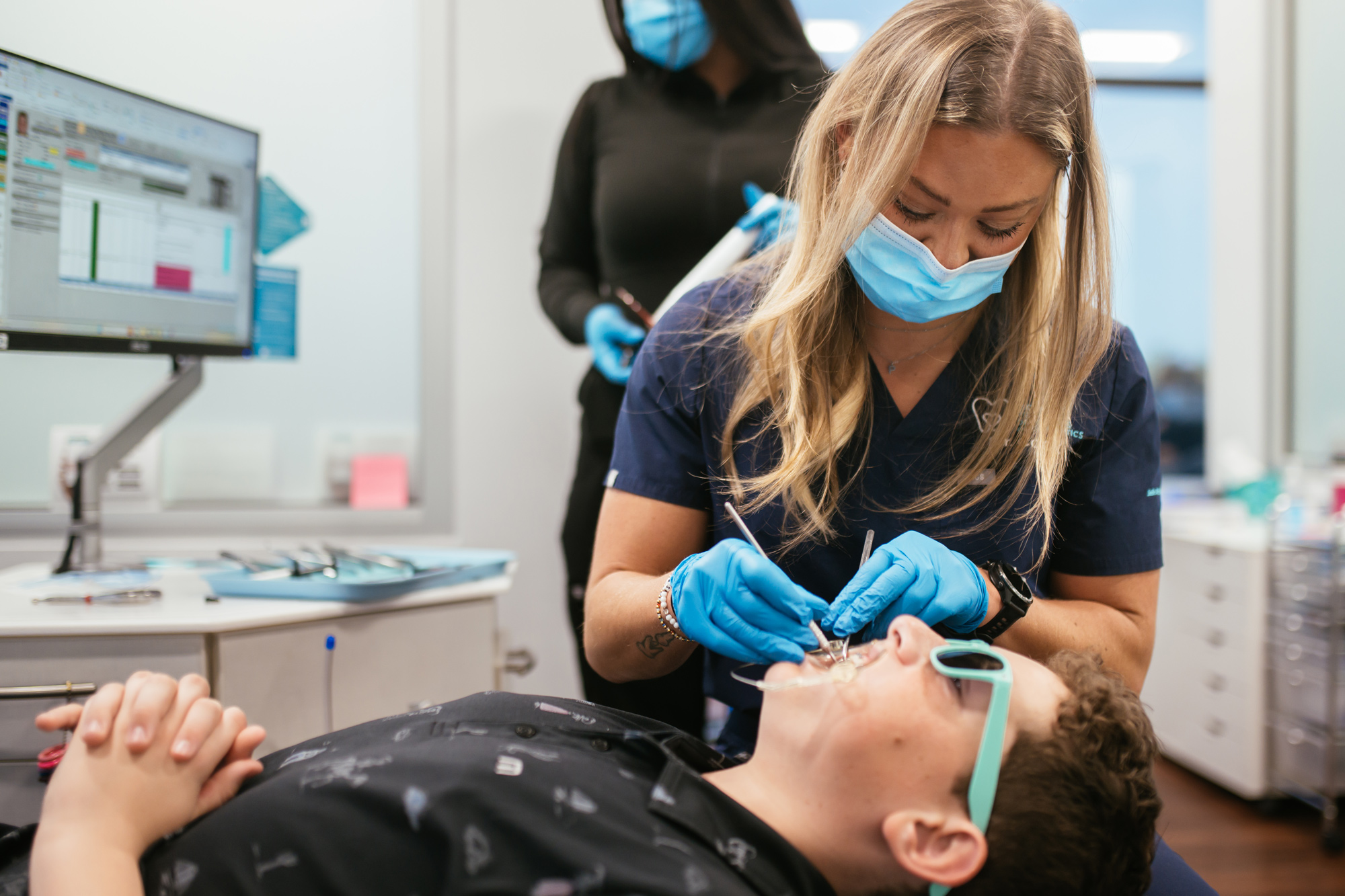
Signs It May Be Time for an Orthodontic Evaluation
Many parents come to us not because they’re certain their teen needs braces, but because something looks a little off and they’re not sure whether it’s worth doing something about. That uncertainty is exactly what a free consultation is designed to resolve.
Some indicators are visible and obvious. Others are things your teen mentions in passing that are easy to dismiss. Here’s what to look for:
Crowding or overlapping teeth. When permanent teeth come in without enough room, they stack or rotate rather than coming in straight. Crowding often does not improve on its own and may become more noticeable as more permanent teeth erupt. It also becomes harder to clean around overlapping teeth, raising cavity risk over time.
Noticeable gaps between teeth. Spacing that persists after permanent teeth have fully erupted is worth evaluating, particularly if the gaps are uneven or seem to be widening.
Teeth that don’t meet evenly when biting. If your teen’s upper and lower teeth visibly shift to one side when they close, or if the front teeth don’t touch when the back teeth are together, that’s a bite issue an orthodontist should assess.
Mouth breathing or difficulty breathing through the nose. Chronic mouth breathing can sometimes be associated with dental or jaw development concerns. If your teen has persistent mouth breathing, it is worth discussing with your dentist, orthodontist, and pediatrician to determine the cause. In some cases it connects to airway and jaw development issues that orthodontic care can address. Our post on airway orthodontics in Richmond, VA covers this in more depth.
Jaw clicking, popping, or soreness. These are easy to write off as growing pains, but they can signal bite misalignment. If your teen mentions jaw discomfort or you notice clicking when they eat, bring it up at their next appointment.
Difficulty chewing certain foods. If your teen avoids hard or chewy foods, or chews only on one side, it may reflect a bite problem rather than just food preference.
Asymmetry in the smile or face. If one side of the jaw appears shifted, or the smile looks noticeably uneven, that’s worth an orthodontist’s eye.
You don’t need to see all of these to make an appointment worthwhile. If one or two sound familiar, a free consultation will tell you quickly whether treatment is needed now, whether it makes sense to monitor for a few months, or whether everything is developing normally and no action is required.
Does any of this sound familiar?
Check anything that applies to your teen. You don’t need all of them, one or two is enough to make a free consultation worthwhile.
- Crowded, overlapping, or rotated teeth
- Gaps between teeth that haven’t closed on their own
- Teeth that don’t meet evenly when biting down
- Jaw clicking, popping, or occasional soreness
- Chronic mouth breathing or difficulty breathing through the nose
- Avoids certain foods or tends to chew on one side
- Smile or jaw looks noticeably asymmetrical in photos
Teen Braces vs. Clear Aligners in Richmond, VA
For teens in Richmond, both braces and clear aligners can be effective. The best choice depends on bite complexity, appearance preferences, and whether your teen will reliably wear aligners 20 to 22 hours a day.
Traditional Metal Braces
Metal braces remain one of the most effective options for treating a wide range of orthodontic issues including crowded teeth, spacing, overbites, underbites, crossbites, open bites, overjets, and more. Because they’re fixed to the teeth, they work continuously without relying on your teen to remember to wear anything. That built-in compliance factor makes them a strong fit for teens who are busy, active, or simply not the type to keep track of a removable appliance. For a deeper look at how braces work, types, and what to expect, see our full guide to braces in Richmond, VA.
Today’s metal braces are smaller and more comfortable than the ones you remember from your own school years. And for many teens, the ability to choose colored elastic bands at each adjustment visit is genuinely fun. It lets them put a little personality into the process, and it’s one of those small details that makes the whole experience feel less clinical and more like something they’re actually part of.
Ceramic Braces
Ceramic braces work exactly like metal braces but use clear or tooth-colored brackets that blend with the teeth. For teens who are self-conscious about the appearance of metal hardware, ceramic braces offer a more discreet option without sacrificing effectiveness. They’re especially popular with older teens heading into high school.
Spark Clear Aligners
At RPDO, we offer Spark Clear Aligners for teens who are good candidates for removable treatment. Spark aligners are a strong option for teens with mild to moderate alignment concerns who want a nearly invisible treatment experience. They can be removed for eating, sports, band practice, and photos, and brushing and flossing remain completely normal throughout treatment. We also offer Invisalign. For a full comparison of clear aligner options available in Richmond, see our post on Invisalign in Richmond, VA for teens and adults.
The honest trade-off: clear aligners require discipline. To work on schedule, they need to be worn 20 to 22 hours per day. Our orthodontists evaluate each patient’s case and maturity level carefully before recommending aligners for a teenager, and we’ll give you a direct, honest assessment during the consultation.
Good to know
What actually happens if aligners aren’t worn consistently
Treatment stalls. Each set of trays is designed to move teeth a specific amount before advancing to the next. If they’re not worn enough, the trays stop fitting correctly and future trays can’t seat properly. In mild cases, we reorder trays and extend the timeline. In more significant cases, switching to braces may be the most predictable path forward. Our orthodontists monitor fit at every visit and flag problems early, so a small issue never quietly adds months to your teen’s treatment.
Teen Orthodontic Options at a Glance
Not sure which treatment fits your teen? Here’s how the three options compare.
| Metal Braces | Ceramic Braces | Spark Clear Aligners | |
|---|---|---|---|
| Appearance | Stainless steel brackets with colorful band options | Clear or tooth-colored brackets, much less noticeable | Nearly invisible removable trays |
| Compliance Required | Low, fixed to teeth, works 24/7 | Low, fixed to teeth, works 24/7 | High, must be worn 20–22 hrs/day |
| Best For | All case types; great for busy or active teens | Teens who want effective treatment with a subtle look | Motivated teens with mild to moderate alignment issues |
| Food Restrictions | Avoid hard, sticky, crunchy foods | Same as metal braces; slightly more care with brackets | None, remove to eat and drink |
| Oral Hygiene | Brush after meals; use floss threader or water flosser | Same as metal braces | Remove aligners; brush and floss normally |
| Sports & Activities | Mouthguard recommended for contact sports | Mouthguard recommended for contact sports | Remove for contact sports; flexible for musicians |
| Fun Factor | Colored bands, a crowd favorite with teens | Subtle and clean-looking | Invisible during treatment |
| Typical Cost Range | $3,000–$7,000 | Slightly higher than metal due to materials | Comparable to braces; varies by case |
In general, braces are often the best fit for teens with more complex bite issues or those who may not wear a removable appliance consistently. Spark Clear Aligners can be an excellent option for motivated teens who want a more discreet treatment experience and have mild to moderate alignment concerns. Our orthodontists will give you a direct recommendation at the consultation based on your teen’s specific case.
Parents don’t think in ages, they think in school years. Here’s a practical framework based on where your teen is right now.
Middle school (6th through 8th grade). This is the prime window for most teens. Most permanent teeth are in, the jaw is still actively growing, and starting treatment now often means finishing well before high school photos, tryouts, and the social pressures that come with 9th grade. Families who want treatment complete before high school should aim to have a consultation by late 6th or early 7th grade at the latest. Treatment that begins in 7th grade typically finishes by the end of 8th or early 9th, depending on complexity. If your child is younger and you’re wondering about early orthodontic treatment, we handle Phase 1 treatment as well. Our post on what you need to know about Phase 1 orthodontic treatment covers how that process works in detail.
Entering high school (9th grade). Still a strong time to start. Most cases initiated in 9th grade can be completed by 11th grade, leaving senior year free. If your teen is entering 9th grade and hasn’t had an orthodontic evaluation, schedule one now.
10th grade. Absolutely still viable for comprehensive treatment, though the math gets tighter if finishing before senior year matters to your family. A 10th grader starting in September has roughly two years before senior portraits and graduation. For straightforward cases, that’s enough. For more complex ones, your orthodontist will give you a realistic timeline at the consultation so you can make an informed decision.
11th grade and later. Treatment is still effective and worthwhile at any age with healthy gum and bone tissue. The practical consideration is that treatment initiated in 11th grade may extend into or through the senior year. Some families are comfortable with that. Others prefer to start in the summer before 11th grade to maximize the available window. If your teen is a junior and you haven’t started yet, come in for a consultation. You may have more runway than you think.
A note on timing and senior photos and graduation. We hear this concern constantly from Richmond-area families, and we take it seriously. If a specific milestone matters to your family, tell us at the consultation. We factor these goals into treatment planning, and where it’s clinically workable, we do our best to structure treatment around them.
We see teens from high schools across the Richmond metro, including Deep Run, Godwin, Glen Allen, Freeman, Atlee, Midlothian, Monacan, Cosby, Mechanicsville, and Hanover. If your teen is heading into any of these schools and hasn’t started treatment, now is a good time to come in.
Not sure when to start?
Answer two quick questions and get a timing recommendation tailored to your teen.
Question 1 of 2
What grade is your teen currently in (or entering this fall)?
Question 2 of 2
Does finishing treatment before senior year (or a specific milestone) matter to your family?
Middle school is the ideal window, and you have time to plan.
Starting treatment in 6th, 7th, or 8th grade typically means finishing well before high school begins. Most families who start now can time treatment to finish before 9th-grade photos, tryouts, and the social transition. A free consultation this month will give you a clear timeline.
Book a free consultationMiddle school is the best clinical timing. No rush, but sooner is better.
The jaw is still growing during these years, which means teeth respond faster. Even without a graduation deadline, starting in middle school typically means shorter treatment time and fewer complications. Come in for a free evaluation whenever you’re ready.
Book a free consultation9th grade is still a strong start, but book your consultation soon.
Most cases started in 9th grade finish by 11th, leaving senior year clear. To make that work, the consultation should happen this fall, not next spring. Call or book online and we’ll map out a timeline at your first visit.
Book your consultation now9th grade works well. You have a comfortable window.
High school is a completely normal time to start orthodontic treatment. Without a hard deadline, there’s no urgency, but waiting another year narrows options. A free consultation will give you a realistic picture of what treatment looks like from here.
Book a free consultation10th grade is doable, but the window is getting tighter.
A 10th grader starting treatment in the fall has roughly two years before senior portraits. For most cases, that’s enough. For more complex ones, it may be tight. The only way to know is to come in and let our orthodontists assess the case. Consultations are free.
Book your free evaluation10th grade is a solid time to start, no deadline pressure.
Without a graduation goal in mind, 10th grade is a perfectly reasonable time to begin. Treatment is effective at any age with healthy teeth and gums, and starting now means finishing before college. A free consultation will tell you exactly what treatment looks like for your teen.
Book a free consultationYou may have more time than you think. But come in now to find out.
Treatment started in 11th grade may run into senior year, but not always. Case complexity matters, and we’ve helped many families hit graduation milestones they didn’t think were possible. A free consultation will give you an honest timeline. Don’t guess.
Get an honest timeline nowTreatment is effective at any age. There’s no bad time to start.
Without a hard deadline, 11th grade or later is still a great time to pursue orthodontic treatment. Teeth move predictably at any age with healthy gum and bone tissue. Many of our patients start in their junior or senior year. Come in and let’s build a plan.
Book a free consultationHow to Choose a Teen Orthodontist in Richmond, VA
Not all orthodontic practices are the same, and the experience your teen has during treatment matters. Here’s what separates a good orthodontic office from a great one. If you’re just getting started researching, our post on the essentials of orthodontics for parents covers the fundamentals worth knowing before a first consultation.
Specialty training. Orthodontics is a dental specialty that requires two to three years of post-graduate training beyond dental school. Dr. Kevin Bibona and Dr. Payton Cook are specialty-trained orthodontists with deep experience treating teenagers across the Richmond metro. Dr. Bibona is on the 2025 and 2026 Top Dentists lists in orthodontics from both Richmond Magazine and Virginia Living, and Richmond Magazine named him a Super Star Dentist both years, a title for dentists their peers have voted Top Dentist again and again over the past decade. You can meet our full orthodontic team before your first visit.
A team your teen actually likes. Teenagers notice when an office feels welcoming and when it doesn’t. At RPDO, we’ve been building relationships with Richmond-area kids and teens for over a century. The warmth in our offices is genuine, and our patients notice it every visit.
Honest timelines and clear communication. Your teen should leave their first consultation knowing their options, a realistic treatment timeline, and a clear cost breakdown. We provide all of that at no charge during a complimentary orthodontic consultation.
Convenient locations. Braces mean regular adjustment visits, typically every 4 to 8 weeks. Easy access from Henrico County, Chesterfield County, and Hanover County reduces friction for the whole family. RPDO has orthodontic locations in Short Pump, Mechanicsville, Midlothian, and on Patterson Avenue in Richmond.
The bi-specialty advantage. This one matters more than most parents realize until they’ve experienced it. Consider what it looks like in practice: your teen has been seeing one of our pediatric dentists since their first visit. At their 7th-grade checkup, their dentist notices the upper jaw is narrowing and flags it for our orthodontic team. By the time you sit down for an orthodontic consultation, we already have years of X-rays and growth records. There’s no intake paperwork to duplicate, no miscommunication between offices, and no re-explaining your child’s history to a provider who has never met them. The teams work in the same building, share the same records system, and talk to each other. For families, that coordination is genuinely different from bouncing between a pediatric dental office and a separate orthodontic practice across town.
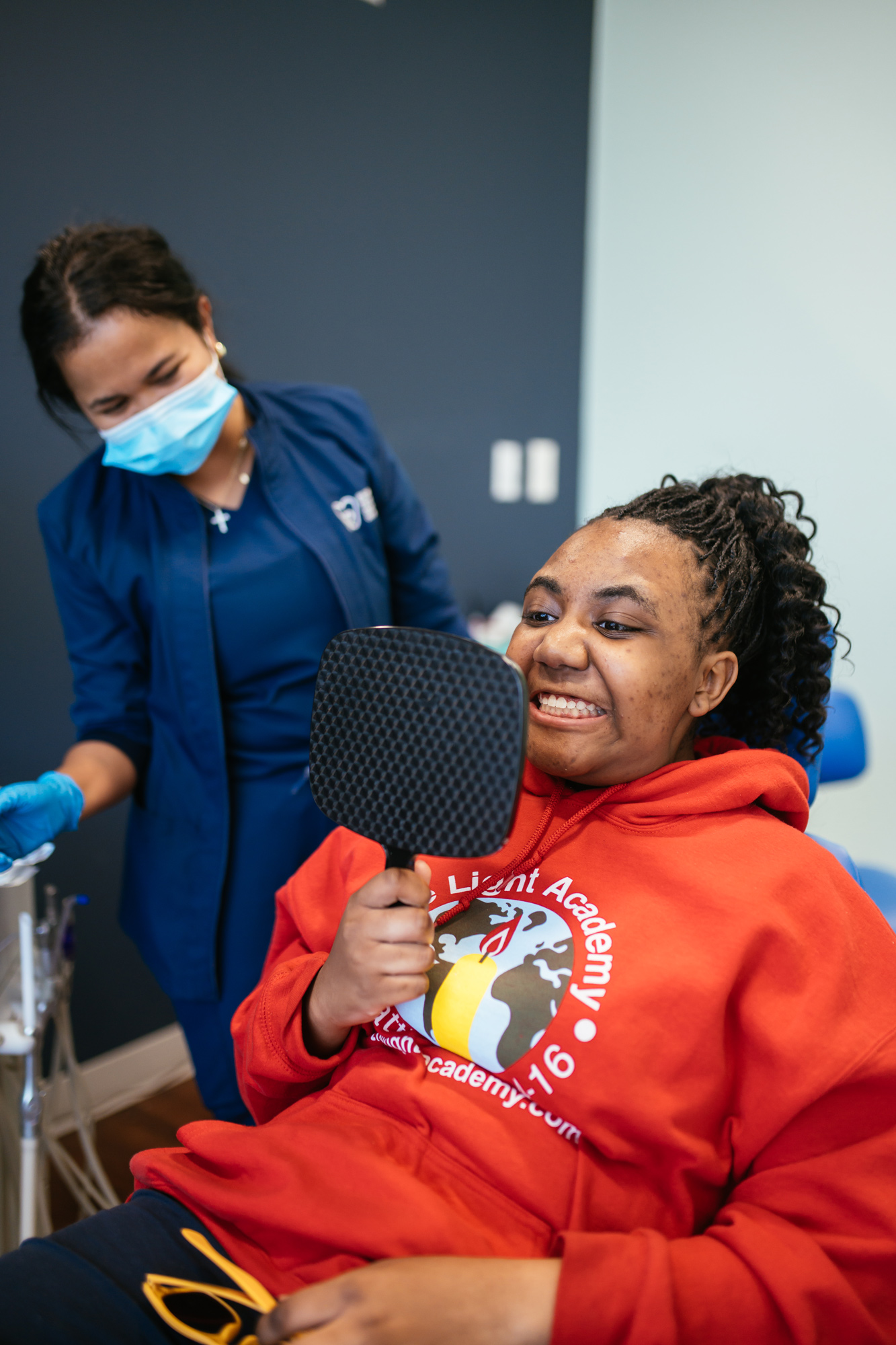
The Teen Orthodontic Experience at RPDO
What to Expect at Your First Visit
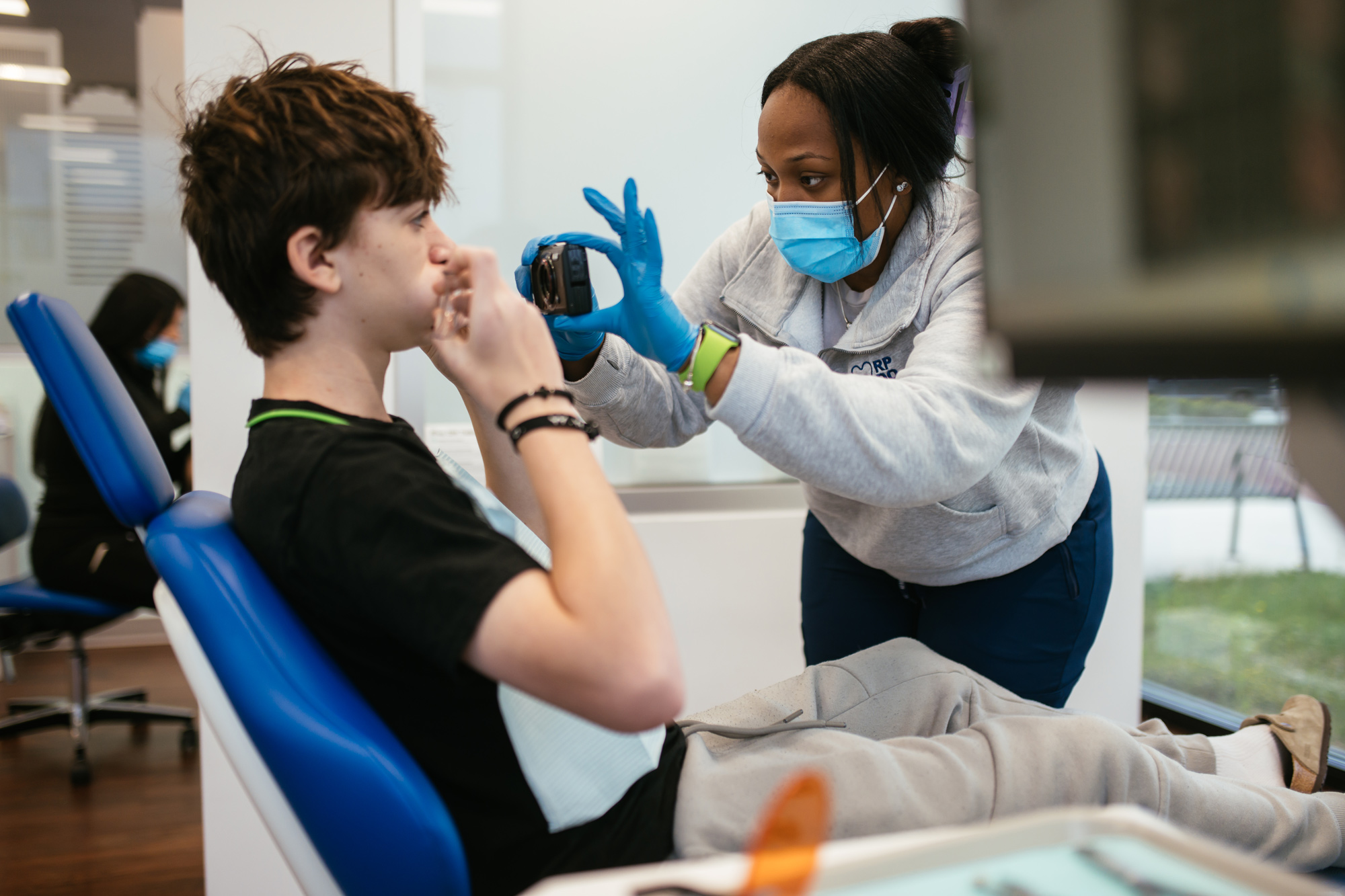
Your complimentary consultation starts with a full orthodontic evaluation. One of our specialty-trained orthodontists will examine your teen’s teeth, bite, and jaw using digital X-rays and 3D imaging, no goopy impressions. You’ll get a clear explanation of what’s happening with your teen’s bite and alignment, the treatment options that fit their case, an estimated timeline, and a breakdown of costs and insurance coverage. No pressure, no surprises.
A few practical things to know before you come in: your teen should be there for the appointment, since the orthodontist will be talking directly with them about their options. X-rays are typically taken at the first visit, so there’s nothing you need to prepare or bring in advance. Plan for about 60 minutes. Most families leave with answers to every question they walked in with. You can also read a full overview of what to expect at your orthodontic consultation before you come in.
Not ready to come in? Your teen can start with a virtual orthodontic smile assessment from home.
Starting Treatment
If your teen is ready to move forward, braces placement typically takes about an hour. Our team walks both of you through everything: how the braces work, which foods to avoid, how to brush and floss around brackets and wires, and what to do if a bracket comes loose before the next appointment. Most teens find the first week to be the biggest adjustment, and it gets noticeably easier from there.
Adjustment Visits Throughout Treatment
Regular adjustment appointments happen every 4 to 8 weeks. These visits are typically quick, and over time, teens often tell us they actually look forward to coming in. We keep the energy in our offices genuinely positive, and our orthodontic team invests real time in educating teens, not just their parents, about how their treatment is progressing. For a detailed look at each phase, see our post on the stages of orthodontic treatment for children and teens.
Braces Off and What Comes Next
When teeth have reached their ideal positions, the braces come off. That moment tends to be one of the best we see in our offices. But treatment doesn’t fully end there, and this part of the process deserves more attention than it typically gets.
After braces are removed, your teen will receive a retainer. For most patients, this means wearing it full-time initially and transitioning to nights only over time. Wearing the retainer consistently is what protects the result long-term. Teeth are living structures held in place by periodontal ligament, and without a retainer, they will shift over time.
At RPDO, we build retention into the treatment plan from the start. We explain it clearly to both parents and teens, reinforce it at the final few adjustment visits, and go over it in detail the day braces are removed. If a retainer is lost or broken, contact us quickly. A short gap in retainer wear is usually recoverable. A long one often isn’t, and the most common reason teens end up seeking retreatment in their 20s isn’t that their braces failed. It’s that retainers weren’t worn after treatment ended.
Your Teen’s Orthodontic Journey at RPDO
-
1Free, No Obligation
Complimentary Consultation
Your orthodontist evaluates your teen’s teeth, bite, and jaw using digital X-rays and 3D imaging, no impressions. You’ll leave with a clear picture of their options, a realistic timeline, and a personalized cost breakdown.
-
2Personalized
Custom Treatment Plan
No cookie-cutter plans. Your teen’s orthodontist, Dr. Bibona, Dr. Cook, or another member of our team, designs a treatment approach built around your teen’s specific bite, alignment needs, and lifestyle.
-
3About 1 Hour
Braces Placement Day
Getting braces on takes roughly an hour. Our team walks your teen through everything, how to care for braces, which foods to avoid, and how to handle a loose bracket. Most teens feel ready and confident walking out.
-
4Every 4–8 Weeks
Regular Adjustment Visits
Progress check-ins keep treatment on track. These visits are quick, and our team invests real time in keeping your teen informed about how things are going. Many of our patients say they look forward to coming in.
-
5The Big Day
Braces Off
When teeth have reached their ideal positions, the braces come off. The reaction is almost always the same, pure excitement. Your teen will leave with a retainer to protect their results and instructions for the retention phase ahead.
Helping Your Teen Get the Most Out of Treatment
A few things make a big difference in how smoothly treatment goes:
Hygiene matters more during treatment. Braces create extra places for food and plaque to collect. Brushing after meals and flossing with braces daily, using a floss threader or water flosser, keeps teeth healthy throughout treatment and protects against white spot lesions that can appear around brackets when hygiene is inconsistent. Our team checks in on this at every visit. If we see early signs of buildup, we address it directly with your teen. For a full guide, see our posts on tips for cleaning teeth with braces or aligners and how to prevent tooth decay while wearing braces.
Diet adjustments are temporary. Sticky, hard, and chewy foods can break brackets or bend wires, which adds unplanned visits and can extend treatment. Helping your teen build new habits in the first few weeks pays off down the road. The list of foods to avoid is shorter than most teens expect once they get used to it. See our post on what candy and foods to avoid with braces for a practical reference.
Wearing rubber bands matters. Not every teen will need them, but if rubber bands (elastics) are part of the treatment plan, they need to be worn as directed. Rubber bands help correct bite relationships and skipping them is one of the most common reasons treatment runs longer than expected.
Let your teen have some ownership. Teens who understand why treatment is happening, and feel some agency over it, tend to take better care of their braces. Involving them in decisions like choosing colored bands, picking an appointment time that works with their schedule, or selecting between treatment options goes a long way.
Watch
Real teens, real results
A teen transformation from our Richmond offices, and the one habit that gets teens to braces-off day fastest.
Common Concerns from Richmond-Area Parents (and Teens)
Will braces interfere with sports or playing an instrument?
Not significantly. Athletes wear mouthguards over braces at contact sports, and we’ll help you find the right type. Musicians, particularly wind instrument players, may need a short adjustment period, but most adapt quickly. Spark Clear Aligners can be removed for practices or performances if that’s a consideration for your teen.
My teen is embarrassed about getting braces. How do I handle it?
This is one of the most common conversations parents bring to their first consultation. Braces are extremely common during the teen years, and most teens who felt self-conscious before treatment describe feeling proud and confident once they see the results. Many teenagers actually enjoy the personalization that comes with colored bands. If appearance is a significant concern, ceramic braces or Spark Clear Aligners may be a better fit than metal braces. Our orthodontists can help your teen think through the options in a way that feels like their decision, not something being done to them.
How do I know if my teen needs braces?
Some signs are visible: crowded or overlapping teeth, obvious gaps, teeth that don’t come together evenly when biting, or a noticeably shifted jaw. Others are subtler. Your teen may mention difficulty chewing, jaw clicking, or occasional jaw soreness. See the Signs It May Be Time section above for a full list. The most reliable step is simply coming in for a free evaluation.
Can we time treatment so it ends before graduation?
Many families in Henrico, Chesterfield, and Hanover counties ask this, and it’s a completely reasonable goal. See the grade-by-grade guide above for a realistic picture. The best thing to do is come in for a consultation now rather than waiting. The earlier you know what you’re working with, the more options you have.
Frequently Asked Questions: Teen Orthodontics in Richmond, VA
When is the best time for a teenager to get braces?
Most teens begin comprehensive orthodontic treatment between ages 11 and 15. By this stage, most permanent teeth have erupted and the jaw is still growing, which makes it the most efficient window for treatment. Some teens may begin earlier if an evaluation reveals a bite problem that benefits from early intervention. The American Association of Orthodontists recommends a first orthodontic evaluation by age 7, though most teens don’t begin full treatment until several years later.
How long does orthodontic treatment take for teens?
Most teen orthodontic cases take between 12 and 24 months, though simpler cases can be completed in under a year and more complex ones may take longer. Your teen’s orthodontist will give you a realistic timeline at the consultation based on their specific case, not a generic range.
Do braces hurt?
Getting braces placed doesn’t hurt. Your teen will likely feel soreness and pressure for a few days afterward as teeth begin to move, and similar discomfort can follow each adjustment visit. Over-the-counter pain relief and soft foods help during those first few days. Most teens find the adjustment periods get shorter and easier as treatment progresses.
Are clear aligners a good option for teenagers?
Clear aligners work well for many teens, particularly those with mild to moderate alignment concerns and the discipline to wear them consistently. The key factor is compliance: aligners need to be worn 20 to 22 hours per day to stay on schedule. Our orthodontists assess each teen individually and will give you an honest recommendation about whether aligners are a good fit for your teen’s case and habits.
How much do teen braces cost in the Richmond area?
Braces in the Greater Richmond area typically range from $3,000 to $7,000, depending on treatment type and complexity. At RPDO, we offer complimentary consultations, accept most major dental insurance plans, and provide flexible monthly payment plans to make treatment accessible for every family. For a full breakdown of what goes into braces pricing in this market, see our posts on how much braces cost in Richmond, VA and how much Invisalign costs in Richmond, VA.
Most dental insurance plans that include orthodontic benefits carry a lifetime orthodontic maximum, typically between $1,000 and $2,500, and cover a percentage of treatment rather than the full cost. That benefit applies to braces or clear aligners and is available regardless of when during the policy year treatment begins. FSA and HSA accounts can also be applied toward orthodontic treatment, which many families use to reduce out-of-pocket costs. Our team will review your specific coverage at the consultation and give you a clear picture of what to expect before you commit to anything. You can also review our insurance and flexible financing information online.
Does RPDO offer Spark Clear Aligners for teens?
Yes. At our orthodontic locations in Short Pump, Mechanicsville, Midlothian, and Richmond, we offer Spark Clear Aligners as an alternative to traditional braces for qualifying teen patients. Learn more on our Spark Clear Aligners for teens page.
Can my teen see a pediatric dentist and orthodontist at the same practice?
Yes, and that’s one of the things that makes RPDO genuinely different. As a bi-specialty practice offering both pediatric dentistry in Richmond, VA and orthodontic treatment in Richmond, VA under one roof, our teams communicate directly. Your teen’s pediatric dentist and orthodontist already know each other, share records, and coordinate care. There’s no sending X-rays across town or starting from scratch with a new provider.
Do teeth shift after braces are removed?
Yes, they can, which is why retainer wear after treatment is not optional. Teeth are held in position by periodontal ligament, which gradually adapts during orthodontic treatment but will allow movement again if retainer wear lapses. Most of the shifting we see in young adults who had braces as teens is directly traceable to inconsistent retainer use after treatment ended. At RPDO, we take retention seriously and make sure your teen understands why it matters before braces ever come off.
What is the best age for braces for teens?
From a clinical standpoint, most orthodontists consider the window between ages 11 and 14 to be ideal for comprehensive treatment. Most permanent teeth have erupted, and the jaw is still growing, which allows orthodontists to guide alignment more efficiently than in adulthood. That said, treatment is effective at any age with healthy teeth and gums. The right age for your teen depends on their specific development, and an orthodontic evaluation is the only way to know for certain.
Are braces or clear aligners better for high school students?
It depends on the individual. Braces are often the stronger choice for teens with more complex bite issues or those who may not consistently wear a removable appliance. Ceramic braces offer the effectiveness of traditional braces with a subtler appearance, which many high schoolers prefer. Spark Clear Aligners work well for motivated teens with mild to moderate alignment concerns who value discretion during school, sports, and social activities. Our orthodontists will give you a direct recommendation based on your teen’s case at the consultation.
How often do teens need orthodontic appointments?
Most teens need orthodontic appointments every four to eight weeks during active treatment. These visits are typically brief, usually 20 to 30 minutes, and are used to check progress, make adjustments, and address any questions. Consistent attendance keeps treatment on track and helps avoid extending the overall timeline.
Teen Orthodontic Offices in Richmond, Short Pump, Mechanicsville, and Midlothian
We offer teen orthodontic care at four locations across the Greater Richmond area, making it easier for families in Henrico, Hanover, Chesterfield, and Richmond to stay on schedule with adjustment visits. Whether your family lives near Short Pump Town Center, off I-295 in Hanover County, or in Chesterfield near the Midlothian YMCA, there’s an RPDO orthodontic office close to home.
Short Pump
12270 W Broad StRichmond, VA 23233
Office Hours
- Monday7:30 AM – 5:00 PM
- Tuesday8:00 AM – 5:00 PM
- Wednesday7:30 AM – 5:00 PM
- Thursday8:00 AM – 5:00 PM
- Friday7:30 AM – 1:00 PM
- Sat – SunClosed
Mechanicsville
7521 Right Flank Rd #110Mechanicsville, VA 23116
Office Hours
- Monday8:00 AM – 5:00 PM
- Tuesday8:00 AM – 5:00 PM
- Wednesday8:00 AM – 5:00 PM
- Thursday8:00 AM – 5:00 PM
- Friday8:00 AM – 1:00 PM
- Sat – SunClosed
Midlothian
13901 Coalfield Commons Pl, Suite 101Midlothian, VA 23114
Office Hours
- MondayClosed
- Tuesday7:30 AM – 4:30 PM
- Wednesday8:00 AM – 5:00 PM
- Thursday7:30 AM – 4:30 PM
- Fri – SunClosed
Richmond (Patterson Ave)
8503 Patterson AveRichmond, VA 23229
Office Hours
- Monday7:30 AM – 4:30 PM
- Tuesday7:30 AM – 4:30 PM
- Wednesday7:30 AM – 4:30 PM
- Thursday7:30 AM – 4:30 PM
- Friday7:30 AM – 4:30 PM
- Sat – SunClosed
Why Richmond Families Choose RPDO for Teen Orthodontics
Richmond Pediatric Dentistry & Orthodontics has been a fixture in the Richmond community for generations. We’re not a corporate chain. We’re a locally owned, bi-specialty practice with deep roots in Henrico, Chesterfield, and Hanover counties, and a team that genuinely invests in the families we treat.
Our practice has been recognized by Virginia Living, the Richmond Times-Dispatch, Richmond Magazine, and Style Weekly, and our 4.8-star rating from more than 1,700 Google reviews reflects what families experience when they come through our doors. You can browse before-and-after results in our smile gallery or read additional orthodontic FAQs on our site.
Here’s what families tell us again and again:
“My daughter recently got braces and Dr. Bibona and staff have been AMAZING! My daughter is so relaxed when she goes for her adjustments and I could not recommend them enough!” — Christy, Google Review
“Our recent visit to RPDO Short Pump was truly exceptional. My daughter was feeling nervous about getting her braces removed, but Kaitlyn immediately put her at ease with her warm, calming presence. By the end of the visit, my daughter’s nervousness had completely turned into joy when she saw her beautiful new smile.” — Chartell, Google Review
When you’re ready to take the next step, we’re here. Request a complimentary consultation online and our team will typically follow up within one business day to confirm your appointment at the location most convenient for you.
Ready to find out what treatment looks like for your teen?
Our specialty-trained orthodontists will walk you through every option, give you a realistic timeline, and review your insurance coverage, all at no charge. Most families leave with a clear plan after one visit.