Fix Your Crossbite. Protect Your Smile for Life.
Crossbite correction in Midlothian, VA helps protect your child’s bite, jaw development, and long-term oral health before problems that are difficult to reverse have a chance to develop. Our specialty-trained orthodontists treat crossbites in children, teens, and adults near Richmond with personalized plans, flexible payment options, and the coordinated care that parents in Chesterfield County have relied on since 1919. As a bi-specialty practice, we bring pediatric dentistry and orthodontics under one roof so families never need to go elsewhere.
Why Chesterfield County families choose RPDO
- Specialty-trained orthodontists with over 100 years serving Richmond families
- Pediatric dentistry and orthodontics coordinated in one practice
- Treatment available for children, teens, and adults
- Flexible financing and most insurance accepted
- Recognized by Virginia Living, Richmond Magazine, Style Weekly & the Richmond Times-Dispatch
Schedule a Crossbite Evaluation in Midlothian
Who We Treat for Crossbite Problems in Midlothian
Families come to us from across Chesterfield County, including Bon Air, Brandermill, Moseley, and Woodlake. We provide crossbite treatment in Midlothian for:
- Children with developing jaw or bite problems, including early intervention cases
- Teens who need braces or clear aligners to correct an existing crossbite
- Adults with mild to moderate crossbites — adult orthodontics is available at all four of our orthodontic locations, and orthodontic treatment is available at every age
- Patients referred by their general or pediatric dentist for an orthodontic evaluation
- Families seeking to fix a crossbite in a child before it affects jaw growth or facial development
Not sure if your child needs treatment now or can wait? That is exactly what a consultation is for. There is no obligation, and you will leave with a clear answer either way.
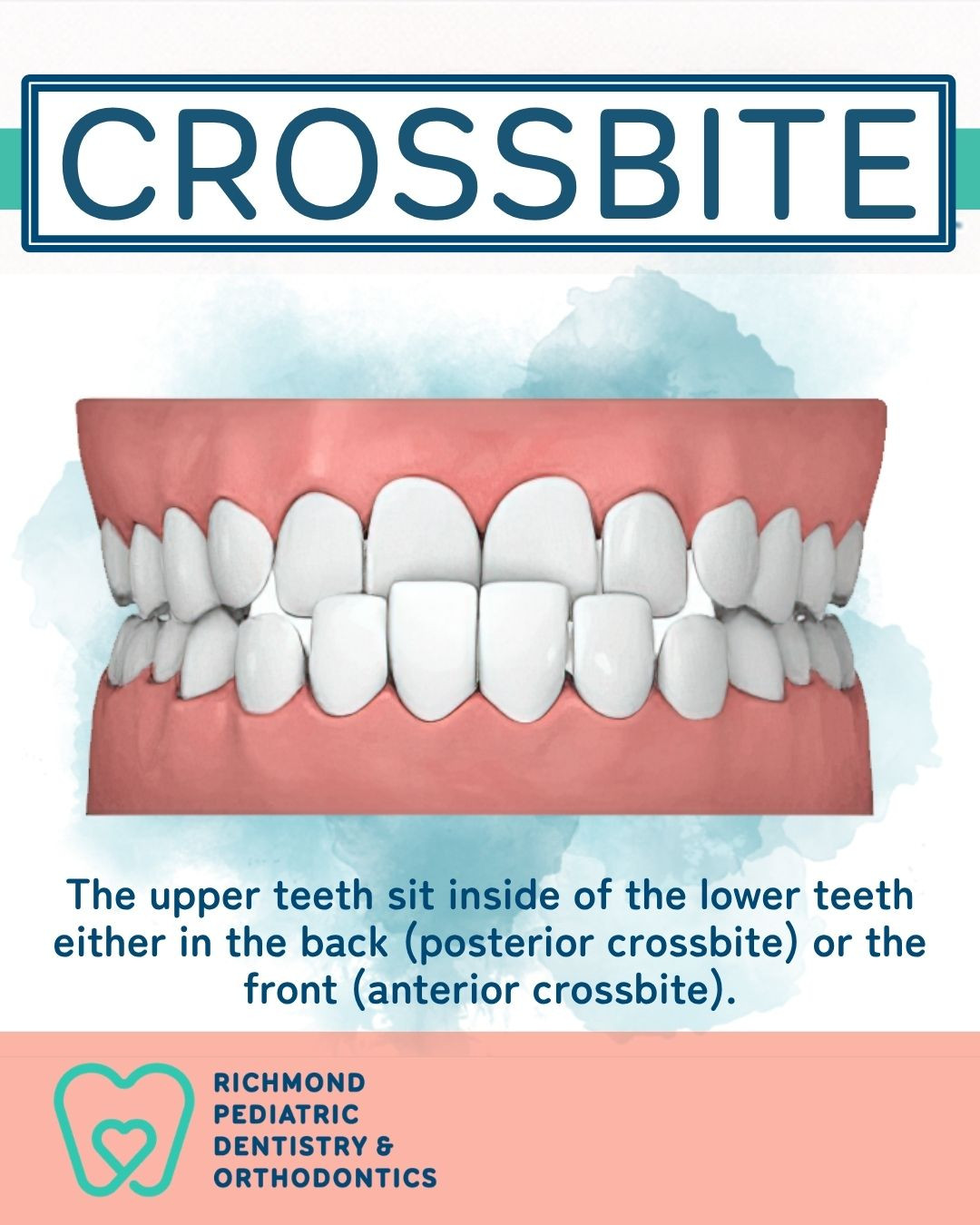
A normal bite works like a lid on a box. The upper teeth sit slightly outside the lower teeth all the way around. A crossbite happens when that relationship flips on one or both sides. Dentists call this a malocclusion or bite misalignment — sometimes a bad bite. Parents often describe it as crooked teeth that close the wrong way, teeth that do not line up right, a shifted bite, or a jaw that looks off to one side. If your dentist said your child’s upper arch is too narrow for the lower, or that teeth are out of alignment in a way that causes jaw shifting, that is the same problem.
Both types are treatable. And both become more complicated to address the longer they go without attention. A true crossbite typically does not correct on its own and often becomes more difficult to treat over time.
Most crossbites are inherited. Other contributing factors include prolonged thumb sucking or pacifier use, mouth breathing caused by enlarged tonsils or chronic allergies, baby teeth that did not fall out on schedule, and tongue thrust swallowing patterns. None of these are failures — they are developmental realities that respond to treatment.
Parents in Chesterfield County and families near Richmond come to us from Bon Air, Brandermill, Moseley, Woodlake, and surrounding communities.
- Children with developing jaw or bite problems, including early intervention cases
- Teens who need braces or clear aligners to correct an existing crossbite
- Adults with mild to moderate crossbites looking for a discreet or efficient solution
- Patients referred by their general or pediatric dentist for an orthodontic evaluation
- Families seeking to fix a crossbite in a child before it affects jaw growth or facial development
Why Crossbites Do Not Fix Themselves
This is one of the most common questions families ask: if my child’s teeth are still coming in, will the crossbite work itself out? True crossbites typically do not correct on their own and often become more difficult to treat over time. Left untreated, they tend to get worse as a child grows. Here is what can happen when a crossbite goes unaddressed.
Asymmetric Jaw Growth
When a child’s jaw shifts to one side to accommodate a crossbite, the bones begin growing unevenly. This jaw misalignment compounds over time. Once skeletal asymmetry sets in, correction becomes substantially more involved.
Uneven Tooth Wear
Teeth that do not meet properly absorb more force than they should. Over months and years, enamel wears down unevenly. Enamel does not grow back.
TMJ Problems and TMD
A misaligned bite forces the jaw muscles to compensate, causing clicking, soreness, headaches, and temporomandibular joint dysfunction (TMD) that can create chronic facial pain.
Gum Disease and Bone Loss
Teeth under abnormal stress can develop gum recession, increasing sensitivity and raising the risk of gum disease. Over time, uneven biting forces can also contribute to bone loss around affected teeth.
Speech Difficulty
Some children with anterior crossbites develop a lisp or difficulty with certain sounds. Tooth position plays a direct role in how sounds are formed.
Cheek Biting and Discomfort
Recurring cheek biting on the same side, jaw soreness, and an off-center smile are everyday signs that a crossbite is affecting how the bite functions. These issues do not resolve on their own.
Lower Confidence
As kids get older, a smile that looks off-center or a jaw that sits unevenly affects self-esteem in ways that are very real. Early treatment prevents this entirely.
The Real Advantage of Treating Early
A child’s upper jaw is actually two separate bones connected by soft tissue called a suture. That suture begins to harden and fuse around puberty. Before it fuses, an orthodontist can widen the palate and correct a crossbite with relatively simple appliances.
After the palate fuses, the same correction requires more time, more complex treatment, and in some cases surgery. Many Midlothian parents first hear about a crossbite from their family dentist and come to us for a more detailed evaluation.
Find Out If Your Child Needs Early Crossbite TreatmentSigns Your Child May Have a Crossbite
Parents often notice something is off before a formal diagnosis. Things to watch for include:
- The jaw shifts to one side when your child bites down or chews
- Teeth appear to close on the inside of other teeth rather than outside
- One side of the face looks slightly different from the other
- Your child complains of jaw soreness or headaches
- Recurring cheek biting on the same side
- The smile looks off-center even when your child is relaxed
In teens and adults, signs often include uneven tooth wear your dentist may have pointed out, jaw clicking or popping, grinding at night, or a bite that just does not feel right.
If any of these sound familiar, a consultation is the right next step.
What Causes a Crossbite?
Understanding the cause does not change the treatment very often, but it does answer a question most parents carry: did I do something wrong?
You did not. Most crossbites are inherited. If you or your partner had orthodontic treatment as a child, particularly a palate expander, there is a meaningful chance your child may need similar care.
Other contributing factors include:
- Prolonged thumb sucking or pacifier use past age two or three
- Mouth breathing caused by enlarged tonsils, adenoids, or chronic allergies
- Baby teeth that did not fall out on schedule, blocking adult teeth from erupting normally
- Jaw injuries during development
- Tongue thrust swallowing patterns
None of these are failures. They are developmental realities, and they all respond to treatment.
Crossbite Treatment in Midlothian, VA: Options for Children, Teens, and Adults
Our orthodontists in Midlothian treat crossbites using the approach that fits each patient. The most appropriate treatment depends on your child’s age, the type of crossbite, and whether other bite issues are present. See our full orthodontic services for context on everything we offer.
Palatal Expanders
Our Midlothian orthodontists often recommend a palate expander as the most effective first step for children with a narrow upper jaw and posterior crossbite. Parents turn a small screw once daily to gradually widen the upper jaw. Bone fills in behind the expansion.
Full Braces
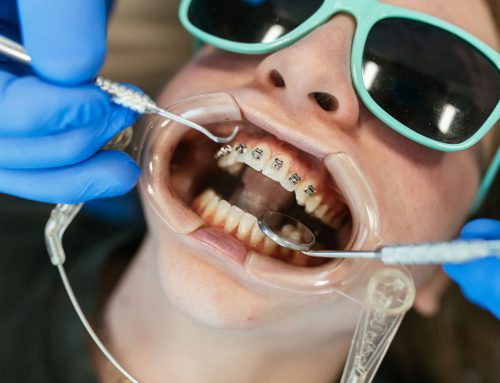
Metal and ceramic braces remain one of the most reliable tools for correcting crossbites, especially when multiple teeth are involved. You can read more about braces in Richmond to understand the full process before your consultation.
Spark Clear Aligners & Invisalign
For mild to moderate crossbites, clear aligners offer an effective and discreet path to correction. If you are searching for Invisalign for crossbite correction in Midlothian, our orthodontists can tell you whether aligners are the right fit or whether braces would produce a better result.
Elastics (Rubber Bands)
Small rubber bands attached to brackets or aligner hooks to apply additional force across the bite. Commonly used alongside braces or clear aligners to help shift jaw position and refine how upper and lower teeth come together.
Functional Appliances & Bite Pads
For certain anterior crossbites in younger children, a functional appliance or bite pad may unlock the bite and allow teeth to shift into proper alignment. Often a first step before expander therapy or braces begins.
| Treatment | Best for | Active time | Typical cost | Crossbite type |
|---|---|---|---|---|
| Palatal expander | Kids 7–12 | 4–8 wks active + 4–6 mo retention | $2,000–$3,500 | Posterior |
| Phase 1 braces | Kids 7–10 | 6–12 months | Included in full-treatment quote | Anterior & posterior |
| Full braces | All ages | 12–24 months | $3,500–$6,500 | Anterior & posterior |
| Spark Clear Aligners | Teens & adults | 6–18 months | $3,500–$6,000 | Mild–moderate |
| Invisalign | Teens & adults | 6–18 months | $3,500–$6,000 | Mild–moderate |
| Expander + braces | Kids & teens | 12–24 months total | $4,000–$7,000 | Posterior with crowding |
| Orthognathic surgery | Adults only | Surgery + 12–18 mo ortho | $20,000–$40,000+ | Severe skeletal |
Cost ranges are general estimates. Your out-of-pocket cost depends on case complexity, treatment length, and your specific insurance coverage. The only accurate way to price treatment is with an exam and a treatment plan.
Cost ranges are general estimates. Your out-of-pocket cost depends on case complexity, treatment length, and insurance coverage.
Cost of Crossbite Treatment in Midlothian, VA
Cost is the number one concern that keeps families from calling. We want to give you a straight answer. For broader context, our guide to braces costs in Richmond covers the full range.
Many dental plans with orthodontic benefits may help cover part of crossbite treatment. When a crossbite affects chewing, causes jaw pain, or contributes to abnormal wear, some plans may provide benefits addressing those functional concerns — but coverage varies by policy. We will review your benefits before treatment begins.
Why Families in Midlothian Choose RPDO
We are currently accepting new patients at our Midlothian location and at all five Richmond-area offices. As Richmond’s original bi-specialty pediatric dentistry and orthodontics practice, we have been serving families near Richmond, VA since 1919.
Families can complete both specialties at RPDO without referrals, separate records, or starting over. Our pediatric dentists in Midlothian and orthodontic team work together directly.
No rotating providers. Your family builds a real relationship with one specialist who knows your child’s case and tracks progress personally.
Over 100 years in one community. Grandparents who came to RPDO as children now bring their own grandchildren.
No production quotas, no pressure to upsell, no revolving door of staff. The people who work here have been here for years.
RPDO has been recognized by Virginia Living Magazine, Richmond Magazine, Style Weekly, and the Richmond Times-Dispatch. Dr. Kevin Bibona was named a 2025 Virginia Living Top Dentist.
The office is designed for children, not just tolerant of them. When a child is at ease, appointments go faster and treatment goes better.
What to Expect at Your First Crossbite Consultation
A crossbite consultation at our Midlothian office is straightforward and stress-free. For most patients, crossbite treatment follows four clear stages. We walk every family through each one before anything is placed, so there are no surprises.
Diagnosis & Records
One of our orthodontists examines your child’s teeth, bite, and jaw development. We take digital scans or images as needed. Nothing uncomfortable. We look at how the bite functions, not just how it looks.
Expansion (If Needed)
If a palatal expander is recommended, it is placed first to widen the upper arch before any tooth movement begins. Many posterior crossbites start here.
Active Tooth Movement
Braces or clear aligners are worn to move teeth into proper alignment over months. Your orthodontist monitors progress at every appointment.
Retention
A retainer holds the corrected position long-term after active treatment ends. This is how we protect the result you worked for.
Richmond Pediatric Dentistry and Orthodontics
Serving families throughout Chesterfield County, including Bon Air, Brandermill, Moseley, and Woodlake. Need more scheduling flexibility? We can also see you at our Short Pump, Mechanicsville, or Patterson Avenue locations.
Request Your AppointmentThe sooner you come in, the more options we have.
If your child’s dentist mentioned a crossbite, or you suspect something is off with how the bite comes together, a consultation with one of our specialty-trained orthodontists is the right first move. No pressure, no commitment required.
Free consultation · No commitment required · Same orthodontist every visit · Serving Richmond families since 1919
Orthodontic treatment for children, teens, and adults at four locations across Greater Richmond:
Frequently Asked Questions About Crossbite Treatment
At what age should a crossbite be treated?
The American Association of Orthodontists recommends a first orthodontic evaluation by age seven. For crossbites specifically, the earlier the better. Children between ages seven and twelve are often in the ideal window for palatal expansion because the jaw is still growing and the palatal suture has not yet fused. Teens can typically still be treated with braces or clear aligners. Adults can also be treated, though the process may take longer and, in severe cases, may require surgery.
Will my child need surgery to fix their crossbite?
Most children do not need surgery. Surgical correction is typically reserved for severe skeletal crossbites in adults whose jaw growth is complete and where non-surgical options cannot achieve a stable result. In growing children, palatal expanders and braces can almost always address the problem without surgical intervention.
How long does crossbite treatment take?
It depends on the type and severity of the crossbite, the patient’s age, and the treatment approach. Palatal expansion is active for about four to eight weeks, with the appliance staying in place for several additional months to stabilize results. Full orthodontic treatment with braces or clear aligners typically takes one to two years. Phase 1 treatment in younger children can often be completed in six to twelve months.
Does crossbite treatment hurt?
Most patients adjust quickly. The palatal expander may cause mild pressure or soreness for the first few days after each activation, similar to the tenderness that follows a braces adjustment. Over-the-counter pain relievers and soft foods handle most of that discomfort. Speech may sound temporarily different during expansion, but this resolves as the mouth adjusts.
Does insurance cover crossbite treatment?
It depends on your plan. Many dental plans with orthodontic benefits help cover part of the cost, especially for children. When a crossbite causes functional problems — jaw pain, chewing difficulty, abnormal tooth wear — some plans treat it differently than purely cosmetic work, but there is no universal rule. Bring your insurance card to your consultation and we will look it up with you before anything is scheduled.
Can Invisalign or Spark Clear Aligners fix a crossbite?
Yes, for mild to moderate crossbites, particularly in teens and adults. Clear aligners move teeth precisely over time and are an effective option when the crossbite does not require jaw expansion. For children who need a palatal expander first, clear aligners may follow as part of a phased treatment plan. Our orthodontists will tell you whether clear aligners are the right fit for your specific case.
What happens if we just wait?
A crossbite does not improve on its own. Without treatment, the bite continues to function unevenly, and the consequences compound over time: uneven enamel wear, jaw shifting, potential TMJ problems, gum recession around affected teeth, and in growing children, asymmetric facial development. Early treatment produces better outcomes and generally costs less than addressing the same problem after growth is complete.
Can a palate expander fix a crossbite?
In many children with a narrow upper jaw, a palate expander is one of the most effective ways to correct a posterior crossbite. It works by gradually widening the upper arch while the jaw is still growing, so the upper and lower teeth can fit together more normally. Once expansion is complete, braces or clear aligners are typically used to finalize alignment. Our Midlothian orthodontists will tell you whether an expander is the right starting point for your child’s specific case.
Is RPDO accepting new patients in Midlothian?
Yes. We are currently accepting new patients at our Midlothian location and at all five of our Richmond-area offices.
Take the Next Step
If your child’s dentist mentioned a crossbite, or you suspect something is off with how the bite comes together, a consultation with one of our specialty-trained orthodontists is the right first move. There is no pressure and no commitment required. We will give you a clear, honest picture of what is happening and what treatment would involve.
The sooner you come in, the more options we have.
Richmond Pediatric Dentistry and Orthodontics has been serving Chesterfield County and the Greater Richmond area since 1919. We offer orthodontic treatment for children, teens, and adults at four locations across the Richmond metro: Midlothian, Short Pump, Mechanicsville, and Patterson Avenue.