Reviewed by Kevin Bibona, DDS, Orthodontist, Richmond Pediatric Dentistry and Orthodontics
Parents are usually the first to notice when something about their child’s breathing or sleep seems off. Maybe your child snores most nights, sleeps with their mouth open, wakes up tired, or seems foggy in the morning. While these signs do not always point to a serious problem, they can sometimes be connected to jaw development and airway health.
At Richmond Pediatric Dentistry and Orthodontics, our specialty-trained orthodontists evaluate more than just crooked teeth. We look at how the jaws, bite, and oral posture may affect breathing, especially during sleep. If you are searching for airway orthodontics in Richmond, VA, our team helps families from Short Pump, Mechanicsville, Midlothian, and surrounding areas understand whether a structural issue may be part of the picture.
This page explains what airway orthodontics is, what signs may point to an airway concern, and when an airway-focused orthodontic evaluation may be worth scheduling.
Why Richmond Families Choose RPDO for Airway-Focused Orthodontics
- Specialty-trained orthodontists with experience in airway-focused evaluation and treatment
- Pediatric dentistry and orthodontics under one roof — development tracked from first tooth through final retainer
- Four orthodontic locations across Greater Richmond: Short Pump, Mechanicsville, Midlothian, and Patterson Ave
- Over 100 combined years serving families across Henrico, Chesterfield, and Hanover counties
- Collaborative care with pediatricians, ENTs, and sleep specialists when appropriate
- Privately owned, not a corporate chain
Airway orthodontics is not a diagnosis for sleep apnea or other medical sleep disorders. When a medical condition is suspected, our orthodontists coordinate with your child’s physician, ENT, or sleep specialist.
What You’ll Learn on This Page
- What airway orthodontics means and how it differs from standard orthodontic treatment
- The signs that may indicate an airway concern in children, teens, or adults
- When to schedule an airway orthodontic evaluation
- The types of expanders and appliances used in airway-focused treatment
- Who benefits, from young children to adults
- What to expect from an evaluation at RPDO
- Answers to the questions we hear most often from Richmond families
What Is Airway Orthodontics?
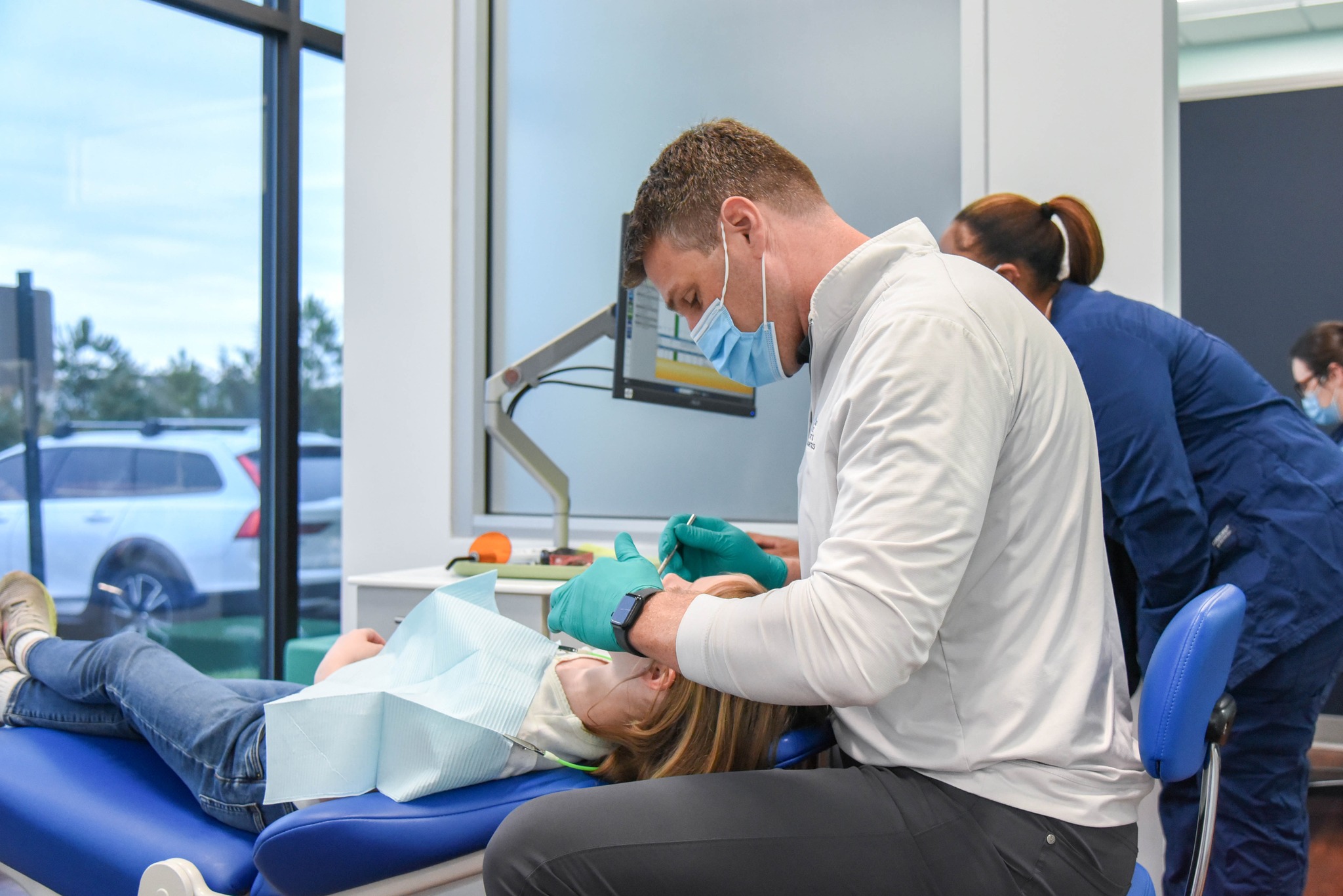
Airway orthodontics is an orthodontic approach that looks at how the bite, jaw structure, and oral posture may affect breathing, especially during sleep. Standard orthodontics focuses on aligning teeth and correcting bite function. Airway-focused orthodontic treatment builds on that by also considering whether jaw development, tongue posture, and arch width may be affecting how a patient breathes.
The connection is anatomical. The upper jaw and the floor of the nasal cavity share a wall, so a narrow upper jaw may also mean less room for normal nasal breathing. Some children compensate by breathing through the mouth instead, and over time that pattern can influence facial development and sleep quality.
Airway orthodontics in Richmond does not replace conventional care. At RPDO, it means our orthodontists factor airway-related concerns into their evaluation and, where there is a structural issue worth addressing, incorporate that into the treatment plan.
When appropriate, we coordinate with pediatricians, myofunctional therapists, and ENTs to make sure the full picture is covered.
Why Jaw Structure and the Airway Are Connected
The upper jaw develops as two halves during childhood, connected by a soft tissue joint called the mid-palatal suture. This suture stays flexible throughout childhood, which is what makes it possible to widen the jaw with orthodontic appliances during the growing years. After early adolescence it begins to calcify, and by early adulthood it has fully fused.
When the jaw is widened during growth, the nasal floor widens alongside it, which may widen the nasal airway and increase nasal breathing. The tongue, which naturally rests against the roof of the mouth during nasal breathing, also has more room to sit where it belongs.
Tongue position plays a bigger role than most families expect. When a child breathes through the nose, the tongue presses lightly against the palate and acts as a natural scaffold for upper jaw growth. When a child breathes through the mouth, the tongue rests low, removing that outward pressure. A narrow arch can be both a cause and a result of mouth breathing, and without intervention the two tend to reinforce each other over time.
How Chronic Mouth Breathing Can Affect Facial Development
This is something some parents notice before anyone explains how breathing habits and facial growth may be connected. In some children, long-standing mouth breathing during key growth years has been associated with facial and dental patterns sometimes described in the literature as “adenoid facies” or long face syndrome. These patterns can include a longer, narrower face, a higher palate, a lower jaw that appears set back, increased overjet, and crowded upper teeth.
The association between chronic mouth breathing and these changes is well-documented in research, though whether mouth breathing is a cause or a consequence of the underlying anatomy is a more complex question, and individual outcomes vary.
Not every child who breathes through the mouth will develop these features. The more relevant point is that the facial skeleton is most responsive to guidance during childhood and early adolescence. Once growth slows in the mid-teens, structural changes become much harder to address without more involved intervention. When concerns are identified early, there is a better opportunity to work with growth rather than against it later.
For parents in Richmond whose child has been a consistent mouth breather, this is one reason an early orthodontic evaluation may be worth considering rather than simply waiting to see whether the pattern resolves on its own.
Signs That May Point to an Airway Concern
Most of the signs below are not urgent on their own, but when several appear together — or when they have been present for a long time — they are worth bringing to an orthodontic airway evaluation.
During Sleep
- Snoring, even if soft or occasional
- Sleeping with the mouth open
- Restless sleep or frequent waking
- Teeth grinding
- Bedwetting past age 5
- Pauses in breathing or gasping
During the Day
- Mouth open at rest, lips apart while sitting
- Dry or cracked lips when well-hydrated
- Dark circles despite enough sleep
- Difficulty focusing in school
- Waking up tired, slow to feel alert
- Chronic stuffy nose without a cold
Inside the Mouth
- Crowded or crooked teeth
- High, narrow arch or vaulted palate
- Signs of a crossbite or open bite
- Restricted tongue movement (possible tongue-tie)
The pattern matters more than any single sign. The goal of an evaluation is to sort through what is worth monitoring versus what would benefit from treatment.
Take Action
When to Schedule an Airway Orthodontic Evaluation
- Your child snores most nights
- They breathe through the mouth during sleep or at rest
- They wake tired despite enough time in bed
- Crowded teeth, a narrow palate, or a crossbite
- Teeth grinding at night
- Referred by a pediatrician, ENT, or dentist for bite or airway concerns
At RPDO, we help families across Richmond, Short Pump, Midlothian, and Mechanicsville understand whether the issue appears structural, habit-related, or something that should also involve a pediatrician, ENT, or sleep specialist.
Schedule a Child Airway EvaluationWho Airway-Focused Orthodontic Treatment Can Help
Young Children
Airway concerns can show up early. A child who regularly sleeps with their mouth open or snores most nights by age 4 or 5 is worth having looked at, even if treatment is not the immediate answer. Some issues at this age relate to pacifier use, thumb-sucking, or an unaddressed tongue-tie.
Pediatric dentistry at RPDO →School-Age Children
This is the most effective window for airway-focused treatment. The palatal suture is still open and responsive, jaw growth is actively happening, and there is time to guide development. The AAO recommends a first orthodontic evaluation by age 7.
Tweens & Teens
Treatment is still very effective in this range, but the approach may look different as the palatal suture begins to fuse. Teens who seem chronically tired, struggle to focus, or snore regularly may have a sleep-related component worth exploring.
Adults
Adults with unexplained fatigue, persistent snoring, or a history of sleep-disordered breathing can still benefit from an evaluation. Options may include specialized expanders, oral appliances that reposition the jaw during sleep, or care coordinated with a sleep physician.
Adult orthodontic treatment at RPDO →Types of Expanders and Appliances Used in Airway-Focused Treatment
Expanders apply steady pressure to widen the upper jaw over time, creating more room for teeth and a wider nasal cavity. Different types are suited to different patients and goals.
Not every child with mouth breathing or sleep concerns needs an expander. Expansion is recommended only when there is a genuine structural indication, such as a narrow arch, crossbite, or other finding identified during the evaluation.
When an expander is appropriate, some families notice improvements in breathing comfort and sleep quality early in treatment, though results vary from patient to patient.
The Role of Myofunctional Therapy
Expanders address structure, while myofunctional therapy addresses function. In some cases, the two are recommended together as part of a coordinated treatment plan. RPDO does not provide myofunctional therapy in-office, but when it is appropriate we refer families to qualified myofunctional therapists in the Richmond area and coordinate care as needed.
Orofacial myofunctional therapy is a structured program of exercises designed to retrain the tongue, lips, and facial muscles. The goal is to establish correct resting tongue posture, nasal breathing as the default, a proper swallowing pattern, and adequate lip seal.
When a child has spent years breathing through the mouth, the muscles involved in breathing, swallowing, and oral rest have often adapted to that pattern. Expanding the jaw structurally does not automatically retrain those habits, which is why expansion and myofunctional work are sometimes recommended together.
Myofunctional therapy is also closely connected to tongue-tie evaluation. When the frenulum under the tongue is too tight or short, the tongue cannot rise to rest against the palate the way it should. That restriction can contribute to low tongue posture and may be associated with mouth breathing or reduced tongue support against the upper arch during growth.
RPDO’s pediatric dentistry team evaluates for tongue-tie as part of routine care, and when a release is appropriate, myofunctional therapy before and after the procedure may help support better tongue mobility, strength, and long-term oral resting posture. The goal is to align the structural and functional parts of treatment so they support each other.
Airway-Focused vs. Traditional Orthodontics
| Traditional Orthodontics | ✦ Airway-Focused Orthodontics | |
|---|---|---|
| Primary Goal | Straighten teeth and correct the bite | Straight teeth, corrected bite, and consideration of how jaw structure affects breathing |
| Evaluation Covers | Dental alignment, bite function, X-rays | All of the above plus tongue posture, nasal breathing, airway size, and sleep-related symptoms |
| Treatment Timing | Typically begins when most permanent teeth have erupted | May begin earlier to guide jaw growth during active development |
| Appliances Used | Braces, clear aligners, retainers | Same, plus expanders and growth-guidance appliances |
| Works With | General dentist | General dentist plus pediatrician, ENT, or myofunctional therapist when appropriate |
| Intended Outcome | Functional, well-aligned smile | Functional smile with improved breathing conditions and jaw development |
The RPDO Difference for Airway Care
Most families are not aware of how unusual it is to have a single practice handle both kids dentistry and orthodontics. For airway-focused care specifically, that combination has real advantages.
When our pediatric dentists have been seeing your child since toddlerhood, our team already has context by the time orthodontic questions arise.
We have watched the jaw develop, noted tongue function, tracked arch shape, and flagged bite concerns along the way. Years of records from a provider who already knows your child is a different starting point than walking into a new office cold.
RPDO has been privately owned and locally rooted for over 100 years. Our specialty-trained orthodontists know our pediatric patients, and that continuity changes what is possible in terms of early identification and well-timed treatment.
For families looking for a Richmond orthodontist who evaluates airway concerns alongside bite and jaw development, that integration matters.
Jeannette with the orthodontist side of the practice has been amazing with my daughter when getting her expander. She showed so much care when we had trouble turning it and even went the extra mile to meet us at the office near our house to help us out.
I have been taking my kids since my youngest was 18 months old, and he’s now almost 16, and all 4 of my kids have grown up with this practice. They are the most amazing set of people, nurses and dentists I have ever seen.
My son has been coming here for several years in preparation for braces. Every single person we have interacted with — from the receptionists to the doctors — have been lovely. They’re all wonderful with children, thorough, modern, and clean.
What an Airway Evaluation at RPDO Looks Like
An airway evaluation starts like any orthodontic consultation: a review of dental and medical history, an assessment of the teeth and bite, and a look at how the jaw is developing. Where it goes further is in what your orthodontist asks about and specifically looks for.
During the evaluation, your orthodontist will review any sleep-related concerns you have noticed at home, evaluate tongue posture and check for tongue-tie, look for signs of a narrow arch or high palate, and discuss how long any concerns have been present. Diagnostic records including X-rays and photos are taken as needed.
If a significant concern is identified, next steps might include orthodontic appliances, a referral to an ENT or allergist, or a recommendation to follow up with your child’s physician for a sleep evaluation. Our team coordinates with other providers rather than working around them.
If you want to get started before scheduling in person, our Virtual Smile Assessment is a good first step.
Orthodontic Locations
Airway Orthodontic Consultations Available at Four Locations
Short Pump Office
Pediatric Dentistry & Orthodontics12270 W Broad St, Richmond, VA 23233
Mon / Wed: 7:30 AM – 5:00 PM
Tue / Thu: 8:00 AM – 5:00 PM
Fri: 7:30 AM – 1:00 PM
Mechanicsville Office
Pediatric Dentistry & Orthodontics7521 Right Flank Rd #110, Mechanicsville, VA 23116
Mon – Thu: 8:00 AM – 5:00 PM
Fri: 8:00 AM – 1:00 PM
Midlothian Office
Pediatric Dentistry & Orthodontics13901 Coalfield Commons Pl, Suite 101, Midlothian, VA 23114
Tue / Thu: 7:30 AM – 4:30 PM
Wed: 8:00 AM – 5:00 PM
Richmond — Patterson Ave
Orthodontics8503 Patterson Ave, Richmond, VA 23229
Mon / Wed: 7:30 AM – 4:30 PM
Location details & map →Families in Henrico County, Chesterfield County, and Hanover County — including those near Short Pump Town Center, Glen Allen, Bon Air, Tuckahoe, and Midlothian — are close to at least one RPDO orthodontic location.
Frequently Asked Questions
What is airway orthodontics?
Airway orthodontics is an orthodontic approach that evaluates how jaw structure and oral posture may affect breathing, not just how teeth align. The focus is on whether a narrow or underdeveloped jaw may be contributing to restricted nasal breathing, mouth breathing, or sleep-disordered breathing, and whether orthodontic treatment can address the underlying structural concern. It is not a separate specialty, but rather a broader way of thinking about what orthodontic evaluation and treatment are for.
Is mouth breathing in children normal?
Occasional mouth breathing is normal, for example during a cold or allergy flare. Chronic mouth breathing, meaning a child who consistently breathes through the mouth at rest, during sleep, or most of the time, is worth evaluating. When it is a long-standing pattern rather than a temporary response to congestion, it can sometimes point to a structural issue like a narrow arch or restricted nasal airway that an orthodontist can assess.
Can a narrow palate affect sleep or snoring?
It can. When the upper jaw is narrow, the nasal floor directly above it tends to be narrower as well. That reduces the volume of the nasal airway and can make it harder to breathe through the nose, particularly during sleep when muscle tone relaxes. Palatal expansion in growing children can widen the nasal floor alongside the jaw, which often supports improved nasal breathing. Whether expansion is appropriate depends on the individual patient’s anatomy and the specific findings at their evaluation.
How do I know if my child needs an airway evaluation?
If your child snores regularly, breathes through the mouth at rest or during sleep, grinds their teeth, wets the bed past age 5, or seems tired despite sleeping enough hours, those are patterns worth mentioning at an orthodontic appointment. You do not need a diagnosis or a referral. Sharing what you have observed at home is exactly the right place to start.
What age should my child be evaluated?
The AAO recommends a first orthodontic evaluation by age 7. If you are noticing signs of mouth breathing or disrupted sleep in a younger child, it is worth requesting a consultation before that. The earlier structural concerns are identified, the more options are available and the less invasive treatment tends to be.
Can an expander treat my child’s sleep apnea?
An expander is not a treatment for sleep apnea. Sleep apnea is a medical condition that requires diagnosis and management by a physician, typically a sleep specialist or ENT. That said, when a narrow palate is contributing to restricted nasal breathing, palatal expansion as part of a coordinated plan may support improved nasal airflow. Our orthodontists work alongside your child’s medical providers rather than around them.
My child was diagnosed with ADHD. Could breathing play a role?
It is worth exploring with your child’s pediatrician. Research has found that children with sleep-disordered breathing show significantly higher rates of ADHD-like symptoms compared to children who sleep well. Not every child with ADHD has an airway concern, but if your child also shows signs of poor sleep or chronic mouth breathing, an orthodontic evaluation is a reasonable part of the conversation.
Does my child definitely need an expander if they breathe through their mouth?
No. Mouth breathing has several possible causes including enlarged tonsils or adenoids, allergies, chronic congestion, or habit. An orthodontist evaluates whether there is a structural reason, such as a narrow arch or crossbite, that would benefit from expansion. If the issue appears primarily medical, a referral to an ENT or allergist is usually the more appropriate next step. We do not recommend treatment that is not indicated.
Can adults benefit from airway-focused orthodontic treatment?
Yes. The approach is different because adult bones have stopped growing, but adults still have real options. These may include specialized expanders for adult patients, oral appliances that reposition the jaw during sleep, or coordinated care with a sleep physician. Many adults who have lived for years with poor sleep or unexplained fatigue find there is a structural component worth addressing.
Is airway orthodontic treatment covered by insurance?
Coverage depends on your plan. Orthodontic treatment related to functional concerns, including crossbite correction and jaw development, is often covered at least in part. We are happy to review your benefits before your appointment. RPDO also offers flexible financing options for families who need them.
Which RPDO locations offer orthodontic consultations?
Orthodontic treatment including airway-focused evaluations and expanders is available at our Short Pump, Mechanicsville, Midlothian, and Patterson Ave locations. Our West End office is pediatric dentistry only, and patients there with orthodontic needs are referred within RPDO to one of our four orthodontic locations.
How long does expander treatment take?
It varies by patient age, the appliance used, and the treatment goals. In growing children, the expansion phase typically takes two to four months to reach the target width, followed by a retention period of several more months while new bone stabilizes. Your RPDO orthodontist will walk you through a realistic timeline at the consultation because it genuinely depends on the individual.
Do I need a referral for an airway orthodontic evaluation?
No. Parents can schedule directly if they have concerns about mouth breathing, snoring, crowded teeth, or jaw development. A referral is not required. If another provider is already involved, such as a pediatrician, ENT, or sleep specialist, we are happy to coordinate care with them.
For families curious to learn more about how airway-focused practices approach treatment across the country, Sturgill Orthodontics in Johnson City, TN offers a detailed patient guide on the topic.
Start with a Conversation
You do not need a referral, and you do not need to arrive with answers. If you have noticed your child breathing through the mouth, sleeping restlessly, or waking up tired, bring that with you. Our team will take it from there.
Richmond Pediatric Dentistry and Orthodontics has been caring for Greater Richmond families for over 100 years. Our specialty-trained orthodontists look at the whole picture, and when breathing concerns are part of it, we are comfortable navigating that alongside your child’s other providers. New patients are welcome at all four orthodontic locations.
Most insurance is accepted, and flexible payment plans are available.
Richmond Pediatric Dentistry and Orthodontics serves families across Henrico, Chesterfield, and Hanover counties from five locations: Short Pump, West End, Mechanicsville, Midlothian, and Richmond (Patterson Ave). Learn more about our orthodontic services, pediatric dentistry, and what makes RPDO different.