Medically reviewed by Dr. Kevin Bibona, DDS, specialty-trained orthodontist at Richmond Pediatric Dentistry & Orthodontics. Updated June 2026.
Maybe your child’s dentist looked at those first grown-up teeth and suggested seeing an orthodontist early. Or maybe you’ve been scrolling videos about jaws, bites, and mouth breathing and started wondering about your own kid. Either way, you’re probably sitting there wondering whether your seven-year-old, who still loses a tooth to the Tooth Fairy now and then, really needs anything done yet.
Here’s the honest answer most parents come looking for: a lot of kids who come in for an early look do not need Phase 1 orthodontic treatment at all, and we will tell you that plainly if it’s true for yours. At Richmond Pediatric Dentistry & Orthodontics, with orthodontic offices in Short Pump, Mechanicsville, Midlothian, and on Patterson Avenue in Richmond, VA, the point of an early visit isn’t to start braces.
It’s to check that everything is developing the way it should.
The short version
- Most kids this age are watched, not treated. We will tell you plainly if that is your child.
- Phase 1 is short, focused care for a few problems that get harder to fix once growth finishes.
- The right timing can simplify later treatment, and in some cases reduce more involved procedures down the road.
- Your child’s consultation is free, and you will leave knowing exactly where things stand.
What Phase 1 orthodontic treatment actually means
Phase 1 orthodontic treatment for kids is early, targeted orthodontic care for Richmond kids who still have a mix of baby and adult teeth, usually around ages 6 to 10. You will also hear it called early or interceptive orthodontic treatment.
The goal is narrow on purpose. We are not chasing a perfect, photo-ready smile at age eight. We are addressing one or two developing issues while the jaw is still soft and easy to guide, so a small problem now does not turn into a complicated one later. Think of it as making room and steering growth in the right direction while the bones are still cooperative, instead of forcing things into place after everything has hardened.
Plenty of kids who go through a first phase still need a round of braces or aligners as teens to finish the job. The early work just handles the hard, growth-dependent part first, which often makes that second round simpler. If you want the full picture of how the phases fit together, our guide to the stages of orthodontic treatment for children walks through it.
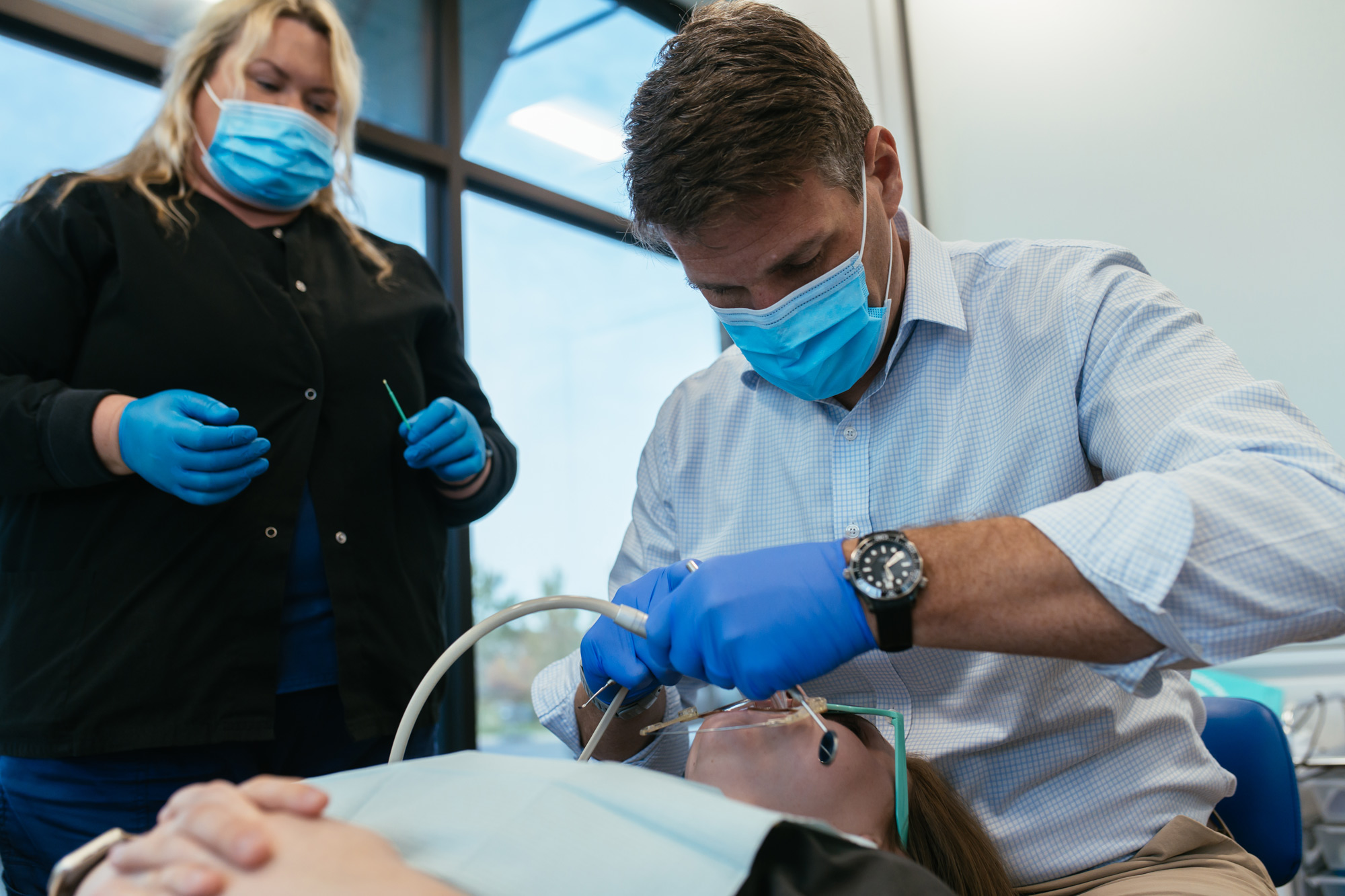
Why your dentist recommended an orthodontic evaluation by age 7
The American Association of Orthodontists recommends a first orthodontic checkup by age seven, and this is the part that worries parents, because it sounds like a recommendation for braces at seven. It isn’t.
By age seven, enough adult teeth have come in and enough jaw growth has happened that we can spot things developing early: a narrow upper jaw, a crossbite, severe crowding, or a bite drifting the wrong way. Spotting a problem early is not the same as treating it early. It means your orthodontist can tell you whether to act now, keep a casual eye on it, or stop thinking about it entirely.
Your general or pediatric dentist sees your child regularly and knows when a second set of eyes is worth it. That referral is a good catch on their part, and we work right alongside the dentists who send families our way. Often the answer we send back is reassuring: everything is on track, see you at the next check-in.
Most kids we see this young don’t need treatment yet
We want to be upfront, because we know cost and necessity are the two things on your mind. A large share of these early visits end with us saying some version of “this is all developing normally, let’s just check back in periodically.” There is no charge to hear that, and no pressure to do anything else.
Early treatment usually isn’t the right call when a child has mild crowding that can wait for full braces later, a minor bite quirk with no skeletal piece to it, or baby teeth that simply look a little crooked while everything is still shifting around. Crooked baby teeth on their own are rarely a reason to start anything.
In those cases, the smarter and less expensive path is to do nothing yet and watch. We will see your child for quick growth check-ins every so often, so if something does start to develop, we catch it at the right moment. And if it never does, you have not spent years and dollars chasing a treatment your child never needed. Recommending less, when less is right, is just part of doing this honestly.
Not sure which one your child is?
A free evaluation gives you a straight answer, with no obligation and no pressure to start anything. If waiting is the smarter call, we will say so.
Book a free consultationSigns that make an early orthodontic evaluation worth booking
Most children we see at seven or eight are fine to wait. Still, a few things make a child’s evaluation worth booking sooner rather than later:
Worth a closer look if you notice
Spotting one of these does not mean treatment is needed. It means it is worth a look.
- Adult teeth coming in badly crowded or overlapping, with no room to fit
- A crossbite, where some upper teeth bite inside the lower ones
- Trouble biting or chewing, or a jaw that shifts to one side on closing
- An underbiteor front teeth that stick out noticeably
- An open bite, where the front teeth do not meet when the back teeth close
- Baby teeth lost a lot earlier than they should be
- Thumb or finger sucking still going strong past the toddler years
- Mostly mouth breathing or snoring, or a top jaw that looks narrow or pinched
If one or more of these sounds familiar, a free evaluation will tell you whether to act now or simply keep watching.
Book a free evaluationSpotting one of these does not mean your child needs treatment. It means it’s worth a closer look so we can tell you whether to act on it now or keep watching. That’s the whole job of the visit.
When early treatment makes a real difference
For the kids who do benefit, it comes down to a handful of issues that depend on growth. Here is where catching it early actually changes the outcome, and what we would typically reach for.
A narrow upper jaw or crossbite
The jaw can be widened gently while the bones are still separated, before they fuse in the early teens.
A palatal expanderSevere crowding with no room for adult teeth
Guiding growth and creating space can reduce the chance of pulling permanent teeth later.
Expansion, sometimes a short course of bracesA thumb or finger habit shaping the bite
Stopping the habit early lets the bite settle on its own before it locks in.
A gentle habit applianceA bite growing unevenly, with a skeletal piece
Growth can be steered while it is actively happening.
Growth guidance, often with limited bracesBaby teeth lost much earlier than expected
Holding the space keeps nearby teeth from drifting into the gap.
A small space-holding applianceEvery child is different, which is why none of this gets decided from a webpage. It gets decided after one of our orthodontists looks in your child’s mouth. You can read more about the appliances and options on our early orthodontic treatment page.
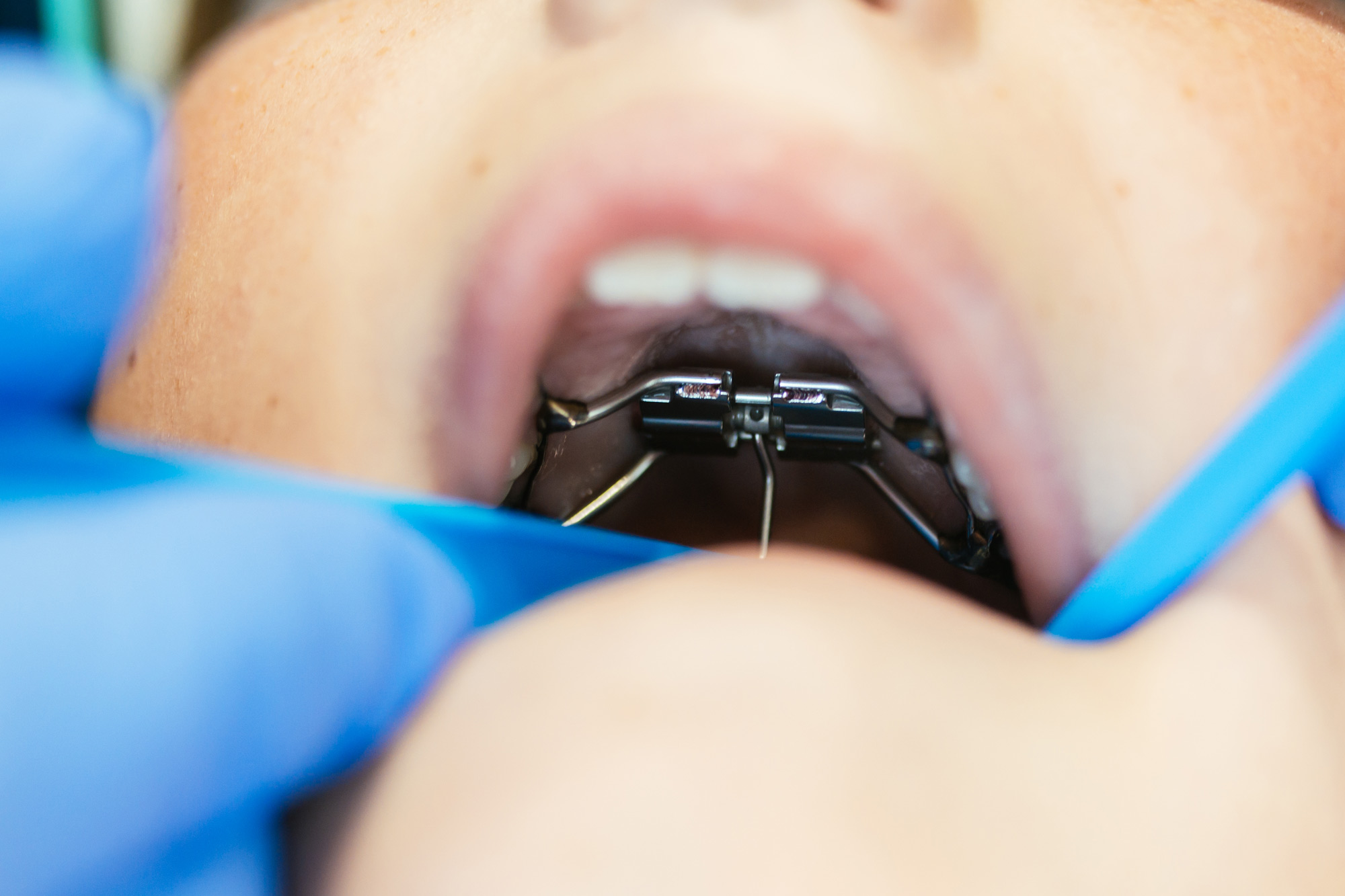
What early care looks like at RPDO
When we do recommend treatment, it is usually one focused appliance for a few months, not years of hardware. Kids adapt to an expander or a habit appliance faster than parents expect, and any pressure after an adjustment passes quickly.
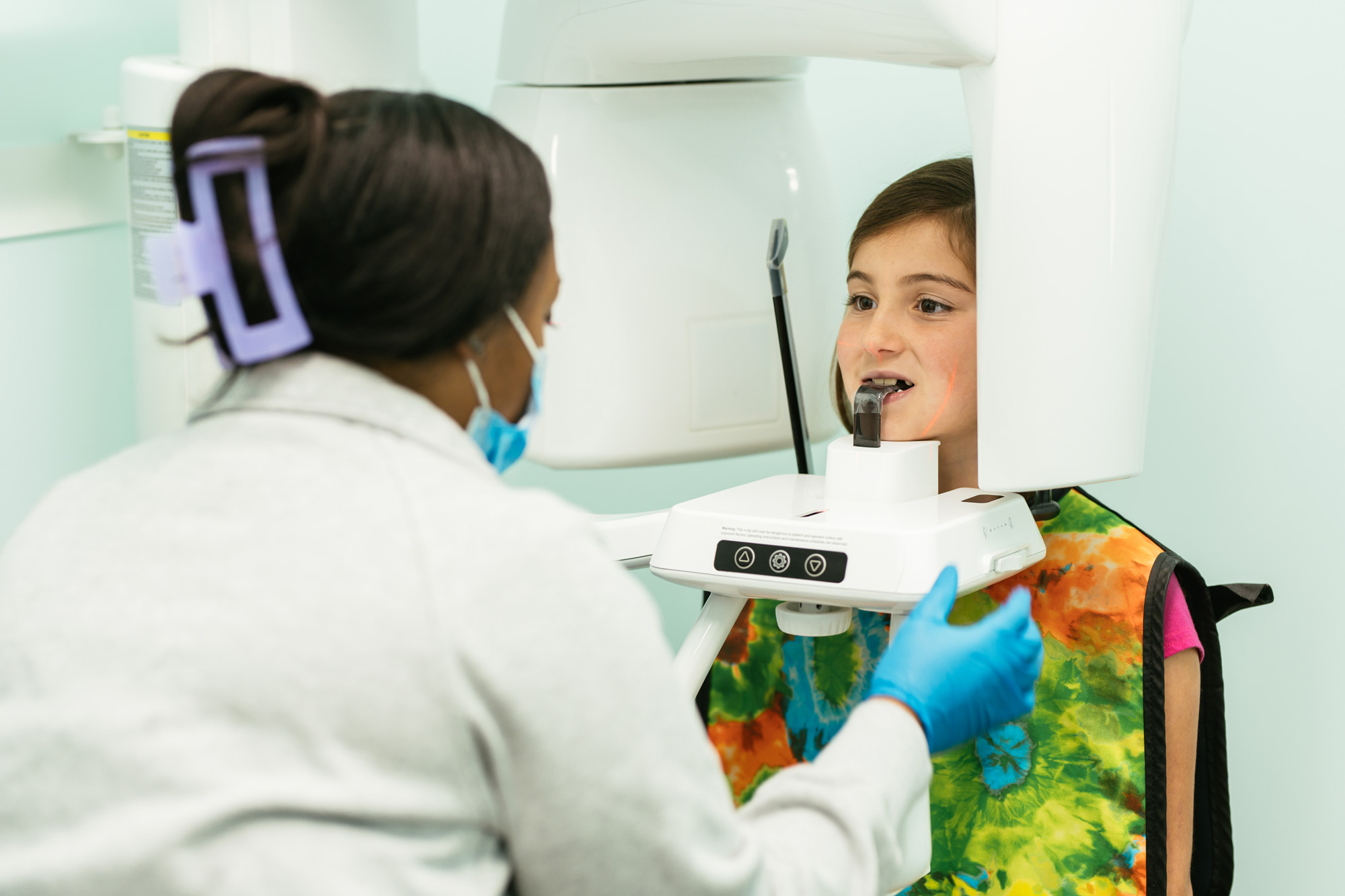
Most early treatment that involves a short course of braces runs somewhere between 9 and 18 months, depending on the case, and wraps up well before full teen braces would start. Along the way we keep records and imaging so we can track how your child is growing, and for families who want fewer trips in, our virtual smile assessments and remote dental monitoring let us keep an eye on progress between visits.
Watch
Phase 1, from age 7 to a finished smile
Sophie started at 7. Her story shows what early treatment does, and the video beside it covers when to bring your child in.
What Richmond families say about us
Real reviews from parents across Short Pump, Mechanicsville, Midlothian, and Richmond.
Where breathing and your child’s airway fit in
A lot of the videos that bring parents to us touch on mouth breathing, snoring, and how a narrow jaw can affect the way a child breathes. It is a real topic and we take it seriously, so let’s be clear about what orthodontics can and cannot do here.
We do not diagnose sleep apnea or other breathing disorders, and early treatment is not a cure for them. What we can do is look at the structural pieces that sometimes play a part, like a narrow upper jaw or a crossbite, and tell you whether they show up in your child’s picture. When they do, gently widening a narrow upper arch while your child is still growing can create more room, and that can be one helpful piece of a bigger puzzle.
The honest version is that we are usually one part of a team rather than the whole answer. If your child snores, breathes mainly through their mouth, or seems tired during the day, the right path often involves your pediatrician, and sometimes an ENT or sleep specialist, with us contributing on the orthodontic side. You can read more about how we approach this on our airway orthodontics page.
A quick word on breathing
We can play a part. We are not the whole answer. We do not diagnose or cure breathing disorders, but we can look at structural pieces like a narrow upper jaw and work alongside your pediatrician, and when needed an ENT or sleep specialist.
The advantage of pediatric dentistry and orthodontics under one roof
Here is something a stand-alone orthodontist can’t offer. RPDO is a bi-specialty practice, which means your child’s pediatric dentist and orthodontist are part of the same team, in the same building. When a cleaning raises a question about crowding or a crossbite, the orthodontist is right down the hall, and the two specialties can compare notes on the same child instead of trading faxes across town. For early treatment, where timing is everything, that coordination matters. Your child never has to switch practices as they grow from baby teeth to braces.
What it costs, and how we keep it clear
Because Phase 1 is focused and time-limited rather than a full course of treatment, it usually costs less than a full set of braces. The exact figure depends on which appliance your child needs and how involved the correction is, which is why we give you a real number at the consultation instead of a vague range online.
We go over your specific insurance benefits with you at that free visit, so there are no surprises. You will see a clear breakdown of what treatment runs, what insurance covers, and what is left, along with flexible payment plans to spread it out. For a fuller look at orthodontic pricing for families in the area, our guide to how much braces cost in Richmond, VA walks through what to expect.
No surprises on cost
- Because Phase 1 is focused and time-limited, it usually costs less than a full set of braces.
- You get a real figure at the free visit, not a vague range, with insurance benefits reviewed together.
- Flexible payment plans let you spread it out. See our guide to braces costs in Richmond for the bigger picture.
Your child’s first visit, start to finish
The first appointment is free, runs about an hour, and is built to answer your questions, not to push you anywhere:
A warm welcome
Your family gets greeted up front, and most kids relax once they realize the place feels friendlier than clinical.
Digital records and images
We capture your child’s teeth, bite, and jaw development so we have a clear picture to work from.
A real exam, explained plainly
One of our orthodontists examines your child personally and walks you through what they see in everyday language.
A clear recommendation
Early treatment now, periodic check-ins to monitor growth, or nothing needed yet. You will know which.
Costs up front, if it applies
If treatment makes sense, you see the full cost breakdown before you commit to anything.
You can see more about how we run that appointment on our what to expect at your consultation page.
Why Richmond families choose RPDO for their kids
Choosing who guides your child’s care is a bigger call than picking where to get teeth straightened. You want someone you trust, and an experience that does not feel like a factory line.
Our orthodontists, Dr. Kevin Bibona and Dr. Payton Cook, are specialty-trained orthodontists. Dr. Bibona completed his orthodontic training at VCU, and Dr. Cook completed hers at the University of Texas Health Science Center at Houston. Dr. Bibona was named a 2025 Virginia Living Magazine Top Dentist in the orthodontic category, an honor awarded by peers in the dental community. RPDO has been part of the fabric of Richmond for generations of local families, and you will find us across the metro with orthodontic offices in Short Pump, Mechanicsville, Midlothian, and on Patterson Avenue.
If a recommendation from anywhere ever feels rushed or oversized, a second opinion is a smart, reasonable step, and we welcome it. A practice confident in its advice has no reason to fear a fresh set of eyes.
Questions parents ask about Phase 1
Does my child actually need Phase 1, or can we wait?
Many kids do not need early treatment, and waiting is often the right call. The only way to know is an evaluation. Our orthodontist will look at your child’s teeth and bite, tell you honestly whether early care would help, and explain why. If waiting is smarter, we will say so.
Isn’t seven too young for braces?
An evaluation at seven does not mean braces at seven. The age-7 recommendation exists so an orthodontist can spot developing issues early, not so every child starts treatment that young. Most seven-year-olds who come in are simply monitored.
How long does Phase 1 treatment take?
Phase 1 is short and focused, not a multi-year process. Most early treatment runs somewhere between a few months and about a year and a half, depending on what is being corrected, and it usually wraps up well before full braces would start. You will get a clear timeline before anything begins.
Will my child still need braces as a teen?
Often, yes. Phase 1 handles specific growth-related problems early, and a second round of braces or aligners as a teen usually follows once all the permanent teeth are in. The upside is that the early work tends to make that later round shorter and simpler.
Does my child have to get a palatal expander?
No. A palatal expander is one of the most common early appliances, but it is only used when a child has a narrow upper jaw, a crossbite, or another issue that benefits from widening the arch. Plenty of kids who need early care never get one.
Does early treatment hurt?
Kids usually feel mild pressure or soreness for a few days after an appliance is placed or adjusted, easily handled with children’s over-the-counter pain relief. With an expander, the pressure right after each adjustment is brief. Most kids adjust faster than their parents expect.
Can starting early help my child avoid jaw surgery later?
Sometimes. When a bite problem has a skeletal component, guiding jaw growth while your child is still developing can lower the odds of a more involved correction in adulthood. It is not a guarantee and only applies to certain cases, which is exactly the kind of thing we evaluate at the consultation.
Can early treatment help with my child’s mouth breathing or airway?
Sometimes, as one piece of a bigger picture. We do not diagnose or cure breathing disorders, but we can look at structural factors like a narrow upper jaw or a crossbite that can play a part, and widening the arch while your child is still growing may help create more room. If breathing is a concern, we work alongside your pediatrician, and sometimes an ENT or sleep specialist, rather than treating it on our own.
Where can my child be seen for early orthodontic treatment?
We see kids for early orthodontic evaluations at our Short Pump, Mechanicsville, Midlothian, and Patterson Avenue (Richmond) offices. You can pick whichever location is easiest for your family when you request your appointment.
Visit us
We see kids for free early orthodontic evaluations at all four of our orthodontic offices across the Greater Richmond area, serving families in Henrico, Hanover, and Chesterfield counties.
Short Pump
OrthodonticsOff West Broad Street, near Short Pump Town Center, serving Henrico families.
12270 W Broad St, Richmond, VA 23233 Book at Short PumpMechanicsville
OrthodonticsJust off I-295 on Right Flank Road, serving Hanover families.
7521 Right Flank Rd #110, Mechanicsville, VA 23116 Book at MechanicsvilleMidlothian
OrthodonticsAt Coalfield Commons, serving Chesterfield families.
13901 Coalfield Commons Pl, Suite 101, Midlothian, VA 23114 Book at MidlothianRichmond (Patterson Ave)
OrthodonticsOn Patterson Avenue in Richmond, easy to reach from Henrico and the city’s western neighborhoods.
8503 Patterson Ave, Richmond, VA 23229 Book at Patterson AveThe first step is simple and free: a thorough exam with one of our orthodontists, a clear explanation of what we find, and an honest recommendation about whether early treatment makes sense for your child.
Find out where your child stands
The first visit is free: a thorough exam with one of our orthodontists, a clear explanation of what we find, and an honest recommendation. Nothing more unless it is needed.
Book your child’s free consultationMost kids who come in are simply monitored. You will leave knowing exactly what is, and is not, needed.